Ch. 10 The Muscular System
Marieb - Human Anatomy & Physiology 11th Edition
Marieb, Hoehn11th EditionHuman Anatomy & PhysiologyISBN: 9780136874034Not the one you use?Change textbook
Chapter 10, Problem 7

Muscles that depress the hyoid bone and larynx include all but the:
a. Sternohyoid
b. Omohyoid
c. Geniohyoid
d. Sternothyroid

Verified step by step guidance
1
Step 1: Understand the function of the muscles listed. The question asks which muscle does NOT depress the hyoid bone and larynx. Depressing means moving these structures downward.
Step 2: Review the actions of each muscle: Sternohyoid, Omohyoid, and Sternothyroid are known infrahyoid muscles that typically depress the hyoid bone and larynx.
Step 3: Examine the Geniohyoid muscle. This muscle is a suprahyoid muscle, which generally elevates the hyoid bone and moves it forward, rather than depressing it.
Step 4: Compare the functions: Since Sternohyoid, Omohyoid, and Sternothyroid depress the hyoid bone and larynx, and Geniohyoid elevates it, the Geniohyoid is the exception.
Step 5: Conclude that the muscle which does not depress the hyoid bone and larynx is the Geniohyoid.

Verified video answer for a similar problem:

This video solution was recommended by our tutors as helpful for the problem above.
Video duration:
1m
Was this helpful?

Key Concepts

Here are the essential concepts you must grasp in order to answer the question correctly.

Muscles of the Hyoid Bone

The hyoid bone is a U-shaped bone in the neck that supports the tongue and is involved in swallowing and speech. Various muscles attach to it, either elevating or depressing it, which affects the position of the larynx and throat structures.
Recommended video:
Guided course
2:21
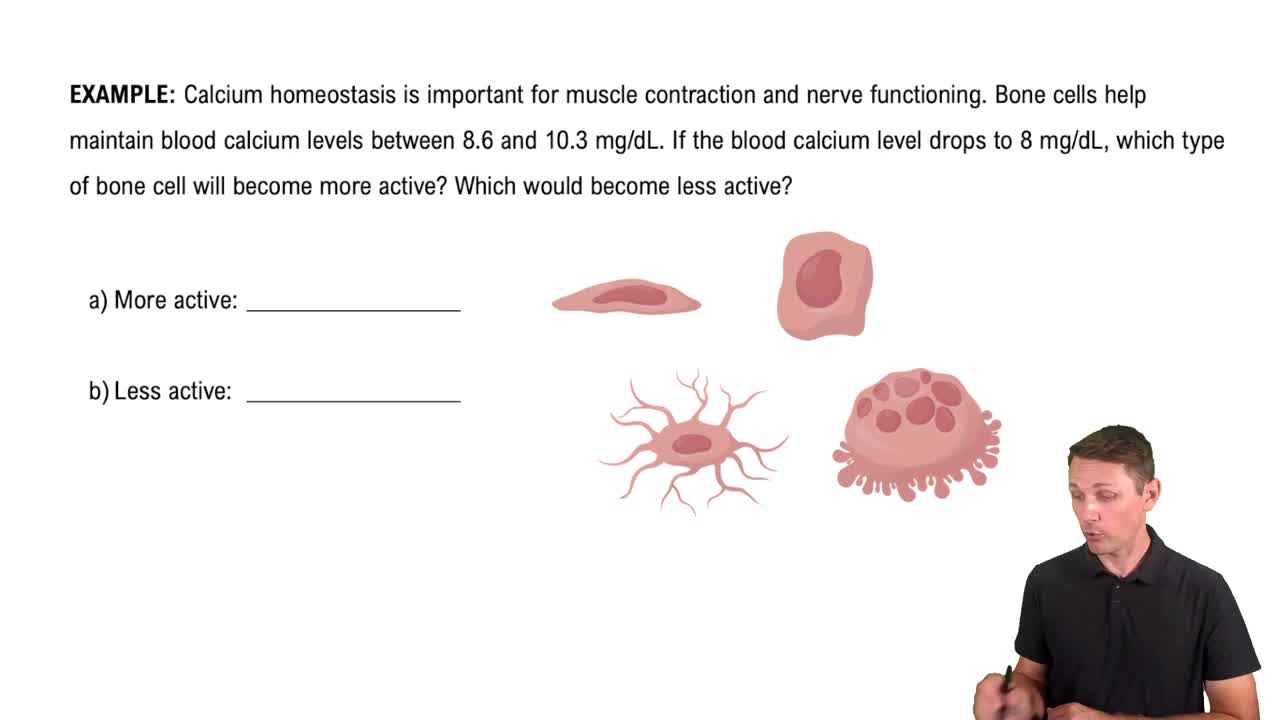
Microscopic Anatomy of Bones - Bone Cells Example 1

Depressor Muscles of the Hyoid and Larynx

Depressor muscles lower the hyoid bone and larynx during actions like swallowing and speaking. Key depressors include the sternohyoid, omohyoid, and sternothyroid muscles, which pull these structures downward to facilitate airway and digestive tract functions.
Recommended video:
Guided course
2:00
Introduction to Muscles and Muscle Tissue Example 1

Geniohyoid Muscle Function

The geniohyoid muscle elevates the hyoid bone and moves it forward, aiding in swallowing. Unlike the depressor muscles, it acts as a suprahyoid muscle, lifting the hyoid rather than depressing it, which is critical for distinguishing its role in neck anatomy.
Recommended video:
06:04
Functional Groups