

Ch. 7 The Skeleton
Hoehn - Marieb Human Anatomy & Physiology, 12th edition
Hoehn, Haynes, Abbott12th EditionMarieb Human Anatomy & PhysiologyISBN: 9780138242732Not the one you use?Change textbook
Chapter 7, Problem 18

Mr. Wright had polio as a boy and was partially paralyzed in one lower limb for over a year. Although no longer paralyzed, he now has a severe lateral curvature of the lumbar spine. Explain what has happened and identify his condition.

Verified step by step guidance
1
Step 1: Understand the background of the problem. Mr. Wright had polio, a viral infection that can damage motor neurons in the spinal cord, leading to muscle weakness or paralysis, especially in limbs.
Step 2: Recognize that the partial paralysis in one lower limb likely caused muscle weakness or imbalance around the lumbar spine, as muscles on one side became weaker or atrophied compared to the other side.
Step 3: Explain that this muscle imbalance can lead to abnormal forces on the vertebral column, causing the spine to curve laterally (sideways) to compensate for the uneven muscle pull.
Step 4: Identify the condition as scoliosis, specifically a lateral curvature of the spine, which in this case is secondary to muscle weakness from polio.
Step 5: Summarize that the severe lateral curvature of the lumbar spine in Mr. Wright is a form of scoliosis caused by muscle imbalance following polio-induced paralysis, which altered the normal alignment and support of the spine.

Verified video answer for a similar problem:

This video solution was recommended by our tutors as helpful for the problem above.
Video duration:
1m
Was this helpful?

Key Concepts

Here are the essential concepts you must grasp in order to answer the question correctly.

Poliomyelitis and its Effects on Motor Neurons

Poliomyelitis is a viral infection that primarily affects motor neurons in the spinal cord, leading to muscle weakness or paralysis. Damage to these neurons can cause muscle atrophy and imbalance, which may result in long-term musculoskeletal deformities even after recovery.
Recommended video:
1:32
Effects of the Complement System

Muscle Imbalance and Spinal Deformities

When certain muscles weaken or become paralyzed, opposing muscles may pull unevenly on the spine. This imbalance can cause abnormal curvatures, such as scoliosis, where the spine curves laterally, often as a compensatory mechanism to maintain posture.
Recommended video:
Guided course
2:00
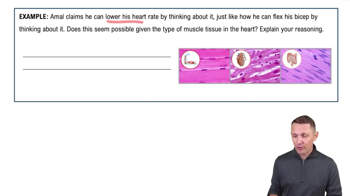
Introduction to Muscles and Muscle Tissue Example 1

Scoliosis as a Secondary Condition

Scoliosis is a lateral curvature of the spine that can develop due to neuromuscular conditions like polio. In this case, the severe lumbar scoliosis likely resulted from muscle weakness and paralysis during childhood, causing structural changes in the spine over time.
Recommended video:
Guided course
10:41
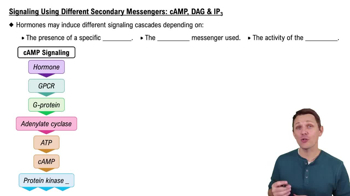
Secondary Messengers