Ch. 28 Pregnancy and Human Development
Hoehn, Haynes, Abbott12th EditionMarieb Human Anatomy & PhysiologyISBN: 9780138242732
Not the one you use?Change textbookSelect a different textbook
Table of contents
- Ch. 1 The Human Body: An Orientation25
- Ch. 2 Chemistry Comes Alive24
- Ch. 3 Cells: The Living Units24
- Ch. 4 Tissue: The Living Fabric19
- Ch. 5 The Integumentary System12
- Ch. 6 Bones and Skeletal Tissues19
- Ch. 7 The Skeleton14
- Ch. 8 Joints7
- Ch. 9 Muscles and Muscle Tissue26
- Ch. 10 The Muscular System25
- Ch. 11 Fundamentals of the Nervous System and Nervous Tissue23
- Ch. 12 The Central Nervous System25
- Ch. 13 The Peripheral Nervous System and Reflex Activity30
- Ch. 14 The Autonomic Nervous System16
- Ch. 15 The Special Senses26
- Ch. 16 The Endocrine System26
- Ch. 17 Blood27
- Ch. 18 The Cardiovascular System: The Heart25
- Ch. 19 The Cardiovascular System: Blood Vessels27
- Ch. 20 The Lymphatic System and Lymphoid Organs and Tissues16
- Ch. 21 The Immune System: Innate and Adaptive Body Defenses27
- Ch. 22 The Respiratory System21
- Ch. 23 The Digestive System31
- Ch. 24 Nutrition, Metabolism, and Energy Balance26
- Ch. 25 The Urinary System26
- Ch. 26 Fluid, Electrolyte, and Acid-Base Balance24
- Ch. 27 The Reproductive System24
- Ch. 28 Pregnancy and Human Development25
- Ch. 29 Heredity11
Hoehn, Haynes, Abbott12th EditionMarieb Human Anatomy & PhysiologyISBN: 9780138242732Not the one you use?Change textbook

Chapter 28, Problem 12
What factors are believed to bring about uterine contractions at the termination of pregnancy?
 Verified step by step guidance
1
Understand that uterine contractions at the termination of pregnancy are primarily triggered by hormonal and biochemical changes in the mother's body.
Identify the key hormone oxytocin, which is released from the posterior pituitary gland and stimulates uterine muscle contractions by binding to oxytocin receptors on the myometrium.
Recognize the role of prostaglandins, which are lipid compounds produced by the uterus and fetal membranes that increase the sensitivity of the uterus to oxytocin and directly promote contractions.
Consider the decrease in progesterone levels near term, which reduces the relaxation effect on the uterine muscles, allowing contractions to occur more easily.
Acknowledge mechanical factors such as stretching of the uterus and cervix, which stimulate nerve endings and promote the release of oxytocin through a positive feedback loop known as the Ferguson reflex.
Key Concepts
Here are the essential concepts you must grasp in order to answer the question correctly.
Hormonal Regulation of Labor
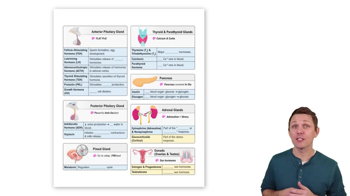
Hormones such as oxytocin and prostaglandins play a crucial role in initiating uterine contractions. Oxytocin, released by the posterior pituitary, stimulates muscle contractions, while prostaglandins help soften the cervix and increase uterine sensitivity to oxytocin, facilitating labor.
Recommended video:
 13:06
13:06
Review of Major Hormones
Role of the Fetal Signals
The fetus contributes to the onset of labor by releasing signals like cortisol, which promote the production of prostaglandins and the maturation of the fetal lungs. These signals help trigger the hormonal changes in the mother that lead to uterine contractions.
Recommended video:
 1:12
1:12Placentation Example 1
Mechanical Stretch and Uterine Sensitivity
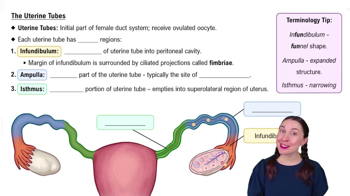
As the pregnancy progresses, the growing fetus stretches the uterine muscles, increasing their sensitivity to contractile stimuli. This mechanical stretch, combined with hormonal changes, primes the uterus for effective contractions at the end of pregnancy.
Recommended video:
 3:58
3:58The Uterine Tubes
Related Practice