
Ch. 25 The Urinary System
Hoehn - Marieb Human Anatomy & Physiology, 12th edition
Hoehn, Haynes, Abbott12th EditionMarieb Human Anatomy & PhysiologyISBN: 9780138242732Not the one you use?Change textbook
Chapter 25, Problem 8

If a freshly voided urine sample contains excessive amounts of urochrome, it has
a. An ammonia-like odor
b. A pH below normal
c. A dark yellow color
d. A pH above normal

Verified step by step guidance
1
Understand that urochrome is the pigment responsible for the normal yellow color of urine.
Recognize that an excessive amount of urochrome would intensify the color of the urine, making it darker than usual.
Recall that urochrome does not affect the odor of urine, so an ammonia-like smell is unrelated to urochrome concentration.
Know that urochrome concentration does not directly influence the pH level of urine, so options related to pH changes are unlikely.
Conclude that excessive urochrome in freshly voided urine results in a dark yellow color.

Verified video answer for a similar problem:

This video solution was recommended by our tutors as helpful for the problem above.
Video duration:
3m
Was this helpful?

Key Concepts

Here are the essential concepts you must grasp in order to answer the question correctly.

Urochrome and Urine Color

Urochrome is the pigment responsible for the typical yellow color of urine. Higher concentrations of urochrome result in a darker yellow or amber color, indicating concentrated urine or increased pigment presence.
Recommended video:
6:14
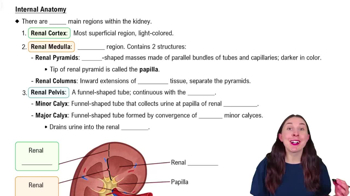
Internal Anatomy

Urine pH Levels

Urine pH measures its acidity or alkalinity, typically ranging from 4.5 to 8.0. Variations in pH can indicate different physiological or pathological states but are not directly related to urochrome concentration.
Recommended video:
07:58
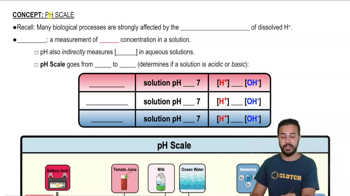
pH Scale

Odor Characteristics of Urine

Urine odor can vary due to diet, hydration, or infection. An ammonia-like odor often suggests bacterial activity or infection, but it is unrelated to the amount of urochrome present.
Recommended video:
Guided course
00:48
5 Characteristics of Epithelia