Ch. 23 The Digestive System
Hoehn - Marieb Human Anatomy & Physiology, 12th edition
Hoehn, Haynes, Abbott12th EditionMarieb Human Anatomy & PhysiologyISBN: 9780138242732Not the one you use?Change textbook
Chapter 23, Problem 4

Carbohydrates are acted on by:
a. Peptidases, trypsin, and chymotrypsin
b. Amylase, maltase, and sucrase
c. Lipases
d. Peptidases, lipases, and galactase

Verified step by step guidance
1
Step 1: Understand the role of carbohydrates in the body. Carbohydrates are macromolecules that serve as a primary energy source. They are broken down into simpler sugars during digestion.
Step 2: Identify the enzymes responsible for carbohydrate digestion. Carbohydrates are acted upon by enzymes that specifically target polysaccharides and disaccharides, breaking them into monosaccharides.
Step 3: Recall the specific enzymes involved in carbohydrate digestion. Amylase breaks down starch into maltose, maltase converts maltose into glucose, and sucrase breaks down sucrose into glucose and fructose.
Step 4: Eliminate incorrect options by understanding the roles of other enzymes. For example, peptidases, trypsin, and chymotrypsin are involved in protein digestion, while lipases target fats.
Step 5: Match the correct enzymes (amylase, maltase, and sucrase) to the digestion of carbohydrates and confirm that these are the enzymes responsible for breaking down carbohydrates into simpler sugars.

Verified video answer for a similar problem:

This video solution was recommended by our tutors as helpful for the problem above.
Video duration:
1m
Was this helpful?

Key Concepts

Here are the essential concepts you must grasp in order to answer the question correctly.

Carbohydrate Digestion

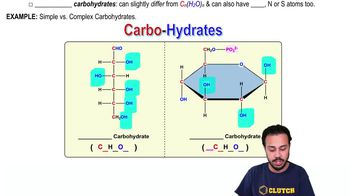
Carbohydrate digestion involves the breakdown of complex carbohydrates into simpler sugars. This process begins in the mouth with salivary amylase and continues in the small intestine, where enzymes like maltase and sucrase further hydrolyze disaccharides into monosaccharides, which can be absorbed into the bloodstream.
Recommended video:
04:53
Carbohydrates

Digestive Enzymes

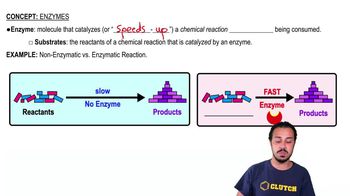
Digestive enzymes are biological catalysts that facilitate the breakdown of food substances. In the context of carbohydrates, enzymes such as amylase, maltase, and sucrase specifically target carbohydrate molecules, aiding in their conversion to simpler sugars for absorption and utilization by the body.
Recommended video:
02:55
Enzymes

Types of Enzymes

Enzymes can be categorized based on the type of substrate they act upon. Amylases are specific for carbohydrates, while proteases (like peptidases, trypsin, and chymotrypsin) target proteins, and lipases focus on fats. Understanding these distinctions is crucial for identifying which enzymes are involved in the digestion of specific macronutrients.
Recommended video:
02:55
Enzymes