Ch. 22 The Respiratory System
Hoehn - Marieb Human Anatomy & Physiology, 12th edition
Hoehn, Haynes, Abbott12th EditionMarieb Human Anatomy & PhysiologyISBN: 9780138242732Not the one you use?Change textbook
Chapter 22, Problem 7

The nutrient blood supply of the lungs is provided by:
a. The pulmonary arteries
b. The aorta
c. The pulmonary veins
d. The bronchial arteries

Verified step by step guidance
1
Understand the difference between the functional and nutrient blood supply of the lungs. The functional blood supply is provided by the pulmonary arteries and veins, which are involved in gas exchange. The nutrient blood supply, however, provides oxygen and nutrients to the lung tissue itself.
Recall that the pulmonary arteries carry deoxygenated blood from the heart to the lungs for oxygenation, and the pulmonary veins return oxygenated blood to the heart. These vessels are part of the functional blood supply, not the nutrient supply.
Consider the bronchial arteries, which branch off from the aorta. These arteries are responsible for delivering oxygenated blood to the lung tissue, including the bronchi and connective tissue, as part of the nutrient blood supply.
Eliminate options that do not align with the nutrient blood supply. For example, the pulmonary arteries and veins are part of the functional blood supply, not the nutrient supply.
Conclude that the bronchial arteries, which originate from the aorta, are the correct answer for providing the nutrient blood supply to the lungs.

Verified video answer for a similar problem:

This video solution was recommended by our tutors as helpful for the problem above.
Video duration:
2m
Was this helpful?

Key Concepts

Here are the essential concepts you must grasp in order to answer the question correctly.

Pulmonary Circulation

Pulmonary circulation refers to the pathway in which deoxygenated blood is transported from the right side of the heart to the lungs via the pulmonary arteries. In the lungs, carbon dioxide is exchanged for oxygen, and the now oxygenated blood returns to the left side of the heart through the pulmonary veins. This process is essential for oxygenating blood before it is distributed to the rest of the body.
Recommended video:
Guided course
3:49
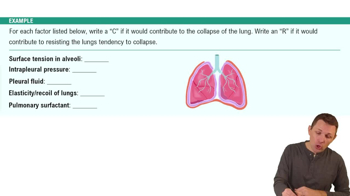
Pressure in the Lungs and Pleural Cavity Example 1

Bronchial Arteries

Bronchial arteries are responsible for supplying oxygenated blood to the tissues of the lungs themselves, including the bronchi and bronchioles. Unlike the pulmonary arteries, which carry deoxygenated blood to the lungs, bronchial arteries branch off from the aorta and ensure that the lung tissues receive the necessary nutrients and oxygen for their metabolic needs.
Recommended video:
14:43
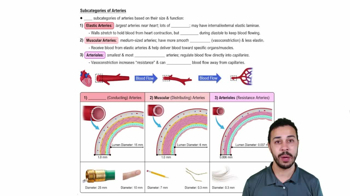
Subcategories of Arteries

Oxygenation Process

The oxygenation process occurs in the alveoli of the lungs, where oxygen from inhaled air diffuses into the blood while carbon dioxide diffuses out to be exhaled. This exchange is crucial for maintaining the body's oxygen levels and removing waste gases. Understanding this process helps clarify the role of the pulmonary arteries and veins in the circulatory system.
Recommended video:
04:19
1) RNA Processing