Ch. 21 The Immune System: Innate and Adaptive Body Defenses
Hoehn - Marieb Human Anatomy & Physiology, 12th edition
Hoehn, Haynes, Abbott12th EditionMarieb Human Anatomy & PhysiologyISBN: 9780138242732Not the one you use?Change textbook
Chapter 21, Problem 3

Antibodies released by plasma cells are involved in:
a. Humoral immunity
b. Immediate hypersensitivity reactions
c. Autoimmune disorders
d. All of the above

Verified step by step guidance
1
Step 1: Understand the role of antibodies released by plasma cells. Antibodies are proteins produced by plasma cells (differentiated B cells) that specifically bind to antigens to neutralize or mark them for destruction.
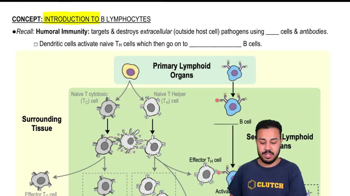
Step 2: Recognize that antibodies are the main effectors in humoral immunity, which is the branch of the adaptive immune system involving B cells and antibody production to fight extracellular pathogens.
Step 3: Consider that antibodies can also participate in immediate hypersensitivity reactions (allergic responses), where IgE antibodies bind to allergens and trigger mast cell degranulation.
Step 4: Note that antibodies can be involved in autoimmune disorders when they mistakenly target the body's own tissues, leading to pathological immune responses.
Step 5: Conclude that since antibodies are involved in all these processes, the correct comprehensive answer is that antibodies released by plasma cells are involved in all of the above (humoral immunity, immediate hypersensitivity reactions, and autoimmune disorders).

Verified video answer for a similar problem:

This video solution was recommended by our tutors as helpful for the problem above.
Video duration:
2m
Was this helpful?

Key Concepts

Here are the essential concepts you must grasp in order to answer the question correctly.

Humoral Immunity

Humoral immunity is the aspect of the immune system that involves antibodies produced by plasma cells. These antibodies circulate in body fluids and help neutralize pathogens like bacteria and viruses, providing targeted defense against infections.
Recommended video:
3:55
Humoral Immunity

Immediate Hypersensitivity Reactions

Immediate hypersensitivity reactions are rapid allergic responses mediated by antibodies, especially IgE. These antibodies bind to allergens and trigger the release of histamine and other chemicals from mast cells, causing symptoms like itching, swelling, and anaphylaxis.
Recommended video:
01:56
Chemical Reactions

Autoimmune Disorders

Autoimmune disorders occur when the immune system mistakenly produces antibodies against the body’s own tissues. These autoantibodies can cause inflammation and tissue damage, leading to diseases such as rheumatoid arthritis and lupus.
Recommended video:
05:21
Autosomal Disorders