Ch. 18 The Cardiovascular System: The Heart
Hoehn - Marieb Human Anatomy & Physiology, 12th edition
Hoehn, Haynes, Abbott12th EditionMarieb Human Anatomy & PhysiologyISBN: 9780138242732Not the one you use?Change textbook
Chapter 18, Problem 15

The activity of the heart depends on intrinsic properties of cardiac muscle and on neural factors. Thus:
a. Vagus nerve stimulation of the heart reduces heart rate
b. Sympathetic nerve stimulation of the heart decreases time available for ventricular filling
c. Sympathetic stimulation of the heart increases its force of contraction
d. All of the above

Verified step by step guidance
1
Step 1: Understand the role of the vagus nerve in heart function. The vagus nerve is part of the parasympathetic nervous system and generally acts to slow down the heart rate by releasing acetylcholine, which decreases the rate of depolarization in the sinoatrial (SA) node.
Step 2: Consider the effect of sympathetic nerve stimulation on the heart rate and ventricular filling time. Sympathetic stimulation increases heart rate, which reduces the duration of diastole, thereby decreasing the time available for ventricular filling.
Step 3: Analyze how sympathetic stimulation affects the force of contraction. Sympathetic nerves release norepinephrine, which increases calcium availability in cardiac muscle cells, enhancing the force of contraction (positive inotropic effect).
Step 4: Evaluate each statement individually based on the physiological effects described: (a) vagus nerve stimulation reduces heart rate, (b) sympathetic stimulation decreases ventricular filling time, and (c) sympathetic stimulation increases contraction force.
Step 5: Conclude whether all statements are correct by confirming that each aligns with known cardiac physiology, leading to the correct choice among the options.

Verified video answer for a similar problem:

This video solution was recommended by our tutors as helpful for the problem above.
Video duration:
4m
Was this helpful?

Key Concepts

Here are the essential concepts you must grasp in order to answer the question correctly.

Autonomic Nervous System Regulation of the Heart

The autonomic nervous system controls heart activity through two main branches: the parasympathetic (vagus nerve) and sympathetic nerves. The vagus nerve decreases heart rate by releasing acetylcholine, which slows the pacemaker cells. In contrast, sympathetic stimulation increases heart rate and contractility by releasing norepinephrine.
Recommended video:
1:10
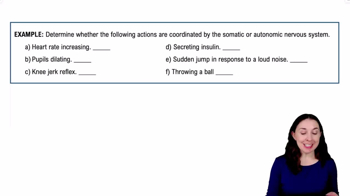
Introduction to the Autonomic Nervous System Example 1

Effect of Sympathetic Stimulation on Heart Rate and Ventricular Filling

Sympathetic stimulation raises heart rate, which shortens the cardiac cycle and reduces the time available for ventricular filling during diastole. This can affect stroke volume but is compensated by increased contractile force to maintain cardiac output.
Recommended video:
Guided course
6:13
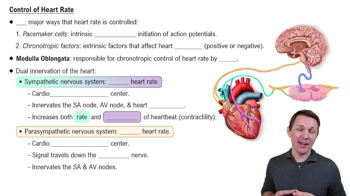
Control of Heart Rate

Sympathetic Influence on Cardiac Contractility

Sympathetic nerves increase the force of heart contractions by enhancing calcium influx into cardiac muscle cells. This positive inotropic effect improves stroke volume and overall cardiac output, enabling the heart to pump more blood during stress or exercise.
Recommended video:
Guided course
9:39
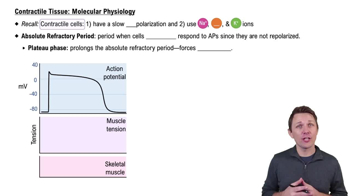
Contractile Tissue: Molecular Physiology