Ch. 16 The Endocrine System
Hoehn - Marieb Human Anatomy & Physiology, 12th edition
Hoehn, Haynes, Abbott12th EditionMarieb Human Anatomy & PhysiologyISBN: 9780138242732Not the one you use?Change textbook
Chapter 16, Problem 4

Parathyroid hormone:
a. Increases bone formation and lowers blood calcium levels
b. Increases calcium excretion from the body
c. Decreases calcium absorption from the gut
d. Demineralizes bone and raises blood calcium levels

Verified step by step guidance
1
Step 1: Understand the role of parathyroid hormone (PTH) in calcium homeostasis. PTH is secreted by the parathyroid glands and primarily functions to increase blood calcium levels when they are low.
Step 2: Recall that PTH acts on bones by stimulating osteoclasts, which break down bone tissue, releasing calcium into the bloodstream. This process is called bone demineralization.
Step 3: Recognize that PTH also acts on the kidneys to reduce calcium excretion, meaning it helps the body retain calcium rather than lose it through urine.
Step 4: Note that PTH indirectly increases calcium absorption from the gut by stimulating the production of active vitamin D (calcitriol), which enhances calcium uptake from food.
Step 5: Based on these actions, identify the correct description of PTH's effect: it demineralizes bone and raises blood calcium levels.

Verified video answer for a similar problem:

This video solution was recommended by our tutors as helpful for the problem above.
Video duration:
2m
Was this helpful?

Key Concepts

Here are the essential concepts you must grasp in order to answer the question correctly.

Parathyroid Hormone (PTH) Function

Parathyroid hormone is a key regulator of calcium homeostasis in the body. It primarily acts to increase blood calcium levels by stimulating bone resorption, enhancing calcium reabsorption in the kidneys, and promoting calcium absorption in the intestines indirectly through activation of vitamin D.
Recommended video:
Guided course
13:06
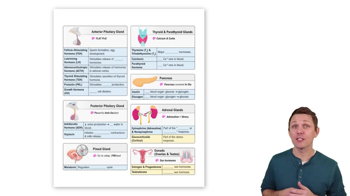
Review of Major Hormones

Bone Remodeling and Calcium Mobilization

Bone remodeling involves the balance between bone formation and resorption. PTH promotes bone resorption by activating osteoclasts, which break down bone tissue, releasing calcium into the bloodstream, thus increasing blood calcium levels.
Recommended video:
Guided course
06:31
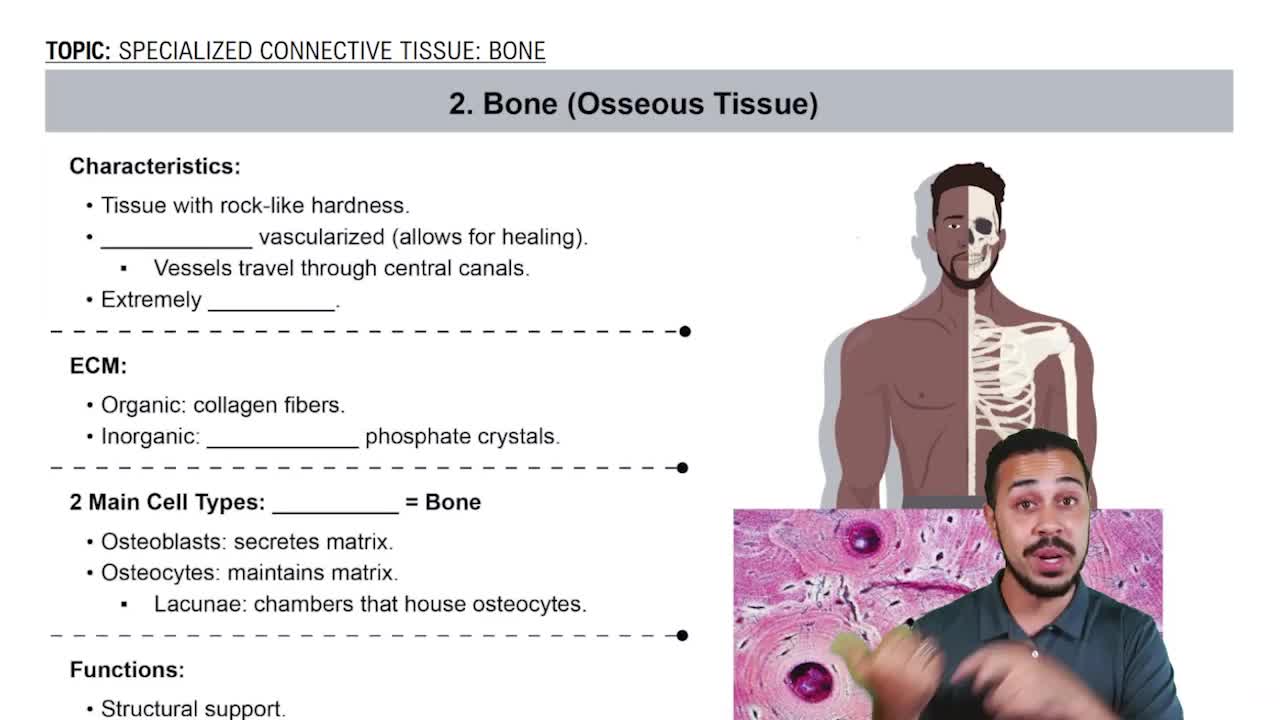
Intro to Bones

Calcium Absorption and Excretion

Calcium absorption occurs mainly in the intestines and is enhanced by active vitamin D, which is stimulated by PTH. PTH also reduces calcium excretion by the kidneys, conserving calcium in the body and contributing to elevated blood calcium levels.
Recommended video:
01:50
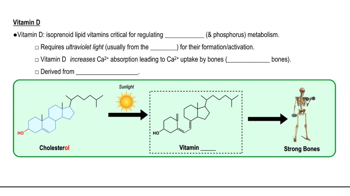
Vitamin D
Related Practice
Textbook Question

A hormone not involved in glucose metabolism is:

a. Glucagon

b. Cortisone

c. Aldosterone

d. Insulin

1
views
Textbook Question

A hypodermic injection of epinephrine would:

a. Increase heart rate, increase blood pressure, dilate the bronchioles of the lungs, and increase digestive activity

b. Decrease heart rate, decrease blood pressure, constrict the bronchioles, and increase digestive activity

c. Decrease heart rate, increase blood pressure, constrict the bronchioles, and decrease digestive activity

d. Increase heart rate, increase blood pressure, dilate the bronchioles, and decrease digestive activity

1
views
Textbook Question

The anterior pituitary secretes all but:

a. Antidiuretic hormone

b. Growth hormone

c. Gonadotropins

d. TSH

2
views
Textbook Question

The major stimulus for the release of parathyroid hormone is:

a. Hormonal

b. Humoral

c. Neural

1
views
Textbook Question

Testosterone is to the male as which hormone is to the female?

a. Luteinizing hormone

b. Progesterone

c. Estrogen

d. Prolactin

1
views
Textbook Question

Choose from the following key to identify the hormones described.

Key:

a. Aldosterone

b. Antidiuretic hormone

c. Growth hormone

d. Luteinizing hormone

e. oxytocin f. prolactin

g. T₄ and T₃

h. TSH ______ 

(1) Important anabolic hormone; many of its effects mediated by IGFs ______ 

(2) Cause the kidneys to conserve water and/or salt (two choices) ______ 

(3) Stimulates milk production ______ 

(4) Tropic hormone that stimulates the gonads to secrete sex hormones ______ 

(5) Increases uterine contractions during birth ______ 

(6) Major metabolic hormone(s) of the body ______ 

(7) Causes reabsorption of sodium ions by the kidneys ______ 

(8) Tropic hormone that stimulates the thyroid gland to secrete thyroid hormone ______ 

(9) Secreted by the posterior pituitary (two choices) ______

(10) The only steroid hormone in the list

1
views