Ch. 15 The Special Senses
Hoehn - Marieb Human Anatomy & Physiology, 12th edition
Hoehn, Haynes, Abbott12th EditionMarieb Human Anatomy & PhysiologyISBN: 9780138242732Not the one you use?Change textbook
Chapter 15, Problem 29

Maria, a 9-year-old girl, told the clinic physician that her “ear lump hurt” and she kept “getting dizzy and falling down.” As she told her story, she pointed to her mastoid process. An otoscopic examination of the external acoustic meatus revealed a red, swollen eardrum, and her throat was inflamed. Her condition was described as mastoiditis with secondary labyrinthitis (inflammation of the labyrinth). Describe the most likely route of infection and the infected structures in Maria’s case. Also explain the cause of her dizziness and falling.

Verified step by step guidance
1
Step 1: Identify the initial site of infection based on the symptoms and examination findings. Maria has a red, swollen eardrum and an inflamed throat, indicating an infection likely started as otitis media (middle ear infection) and possibly pharyngitis (throat infection).
Step 2: Understand the anatomical relationship between the middle ear, mastoid process, and labyrinth. The mastoid process contains air cells connected to the middle ear cavity, so infection can spread from the middle ear to the mastoid air cells, causing mastoiditis.
Step 3: Recognize that the labyrinth (inner ear structure responsible for balance) lies adjacent to the middle ear. Inflammation of the labyrinth (labyrinthitis) can occur secondary to the spread of infection from the middle ear or mastoid region.
Step 4: Explain the cause of dizziness and falling. The labyrinth contains the vestibular apparatus, which controls balance and spatial orientation. Inflammation disrupts its function, leading to vertigo (a sensation of spinning) and loss of balance, causing dizziness and falls.
Step 5: Summarize the infection route: the infection likely started in the throat or middle ear, spread to the mastoid air cells causing mastoiditis, and then extended to the labyrinth causing labyrinthitis, which explains the symptoms Maria experiences.

Key Concepts

Here are the essential concepts you must grasp in order to answer the question correctly.

Mastoiditis and Its Pathophysiology

Mastoiditis is an infection of the mastoid air cells located in the mastoid process behind the ear, often resulting from untreated or severe middle ear infections (otitis media). The infection causes inflammation, swelling, and pain in the mastoid region. Understanding mastoiditis involves recognizing how middle ear infections can spread to adjacent bony structures, leading to complications.
Recommended video:
Guided course
2:51
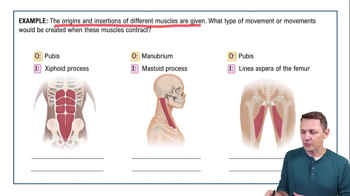
Origin and Insertion Example 1

Anatomical Relationship Between Middle Ear, Mastoid, and Inner Ear

The middle ear connects to the mastoid air cells and lies adjacent to the inner ear structures, including the labyrinth. Infection can spread from the middle ear to the mastoid and then to the labyrinth through thin bony partitions or via vascular channels. This anatomical proximity explains how mastoiditis can lead to secondary labyrinthitis.
Recommended video:
Guided course
02:06
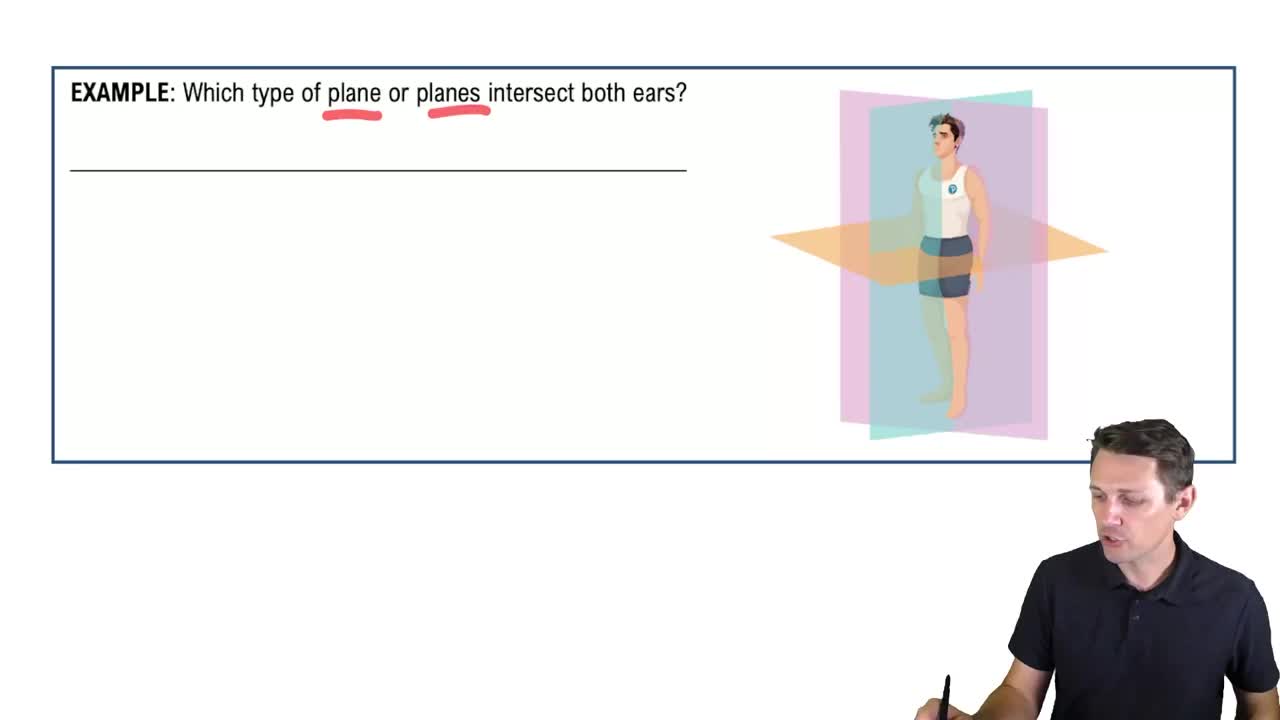
Anatomical Planes & Sections Example 1

Labyrinthitis and Its Effect on Balance

Labyrinthitis is inflammation of the inner ear's labyrinth, which contains the vestibular apparatus responsible for balance. Inflammation disrupts normal vestibular function, causing dizziness, vertigo, and balance problems, which explains Maria’s symptoms of dizziness and falling. This highlights the link between inner ear infection and vestibular disturbances.
Recommended video:
1:32
Effects of the Complement System