Ch. 4 Histology
Amerman- Human Anatomy & Physiology 3e
Amerman3rd EditionHuman Anatomy & PhysiologyISBN: 9780138247201, 9780138247928, 9780138201814Not the one you use?Change textbook
Chapter 4, Problem 3e

Describe the roles of the following components of the ECM:
Glycoproteins (cell-adhesion molecules)

Verified step by step guidance
1
Understand that the extracellular matrix (ECM) is a complex network of proteins and carbohydrates that provides structural and biochemical support to surrounding cells.
Recognize that glycoproteins, specifically cell-adhesion molecules (CAMs), are a key component of the ECM. These molecules are proteins with carbohydrate groups attached to them, which play a role in cell signaling and adhesion.
Learn that glycoproteins in the ECM, such as fibronectin and laminin, help anchor cells to the ECM by binding to integrins (receptors on the cell surface). This connection stabilizes tissues and facilitates communication between cells and their environment.
Understand that glycoproteins also play a role in guiding cell migration during processes like wound healing and embryonic development by creating pathways or signals for cells to follow.
Recognize that glycoproteins contribute to tissue organization and repair by mediating interactions between cells and other ECM components, such as collagen and proteoglycans, ensuring proper structural integrity and function of tissues.

Verified video answer for a similar problem:

This video solution was recommended by our tutors as helpful for the problem above.
Was this helpful?

Key Concepts

Here are the essential concepts you must grasp in order to answer the question correctly.

Extracellular Matrix (ECM)

The extracellular matrix (ECM) is a complex network of proteins and carbohydrates that provides structural and biochemical support to surrounding cells. It plays a crucial role in tissue and organ function, influencing cell behavior, migration, and differentiation. The ECM is composed of various components, including glycoproteins, proteoglycans, and fibrous proteins, which together create a dynamic environment for cells.
Recommended video:

Glycoproteins

Glycoproteins are proteins that have carbohydrate chains attached to them, which can influence their function and interactions. In the context of the ECM, glycoproteins serve as cell-adhesion molecules, facilitating the attachment of cells to the matrix and to each other. This adhesion is vital for maintaining tissue integrity and enabling communication between cells, which is essential for processes like wound healing and immune response.
Recommended video:
Guided course
04:39
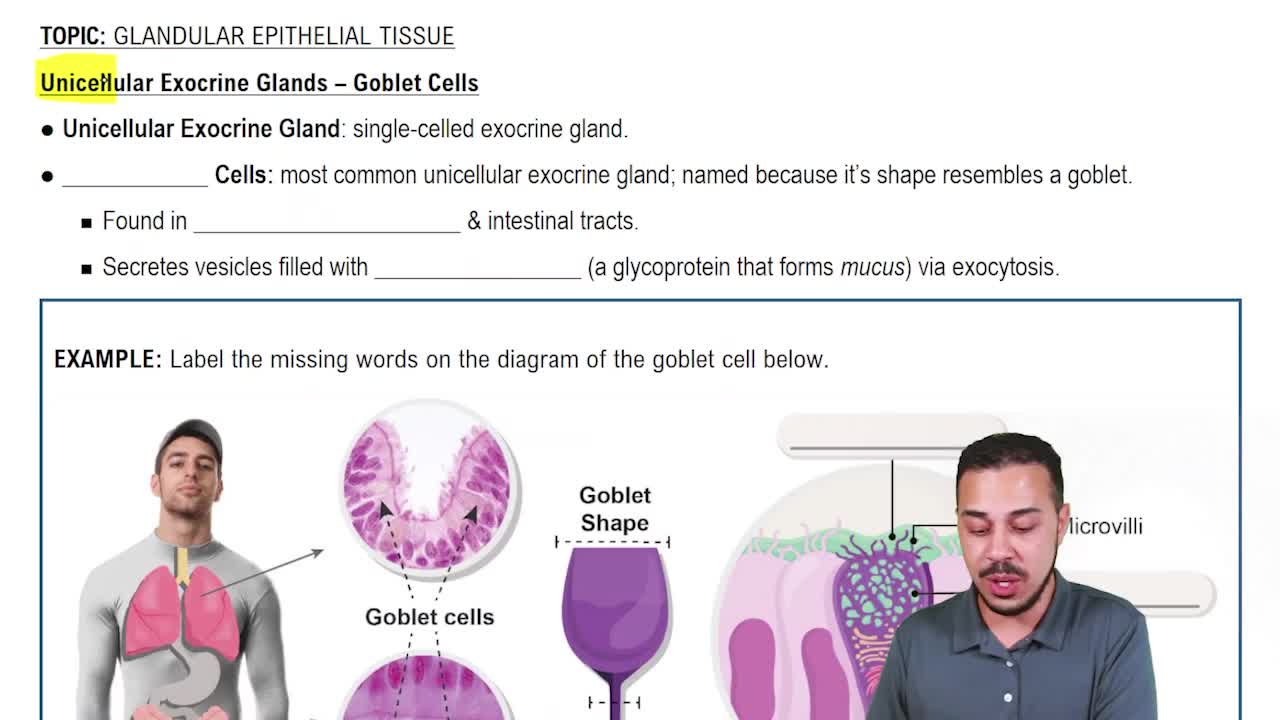
Unicellular Exocrine Glands - Goblet Cells

Cell-Adhesion Molecules (CAMs)

Cell-adhesion molecules (CAMs) are a group of proteins located on the cell surface that mediate the binding of cells to each other and to the ECM. They play a critical role in maintaining tissue architecture and facilitating cellular communication. CAMs, including certain glycoproteins, are involved in various biological processes such as embryogenesis, immune response, and tissue repair, highlighting their importance in both normal physiology and disease states.
Recommended video:
2:58
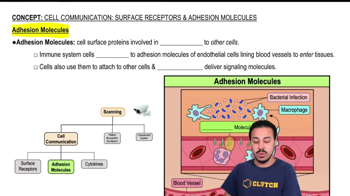
Adhesion Molecules