Ch. 25 Fluid, Electrolyte, and Acid-Base Homeostasis
Amerman- Human Anatomy & Physiology 3e
Amerman3rd EditionHuman Anatomy & PhysiologyISBN: 9780138247201, 9780138247928, 9780138201814Not the one you use?Change textbook
Chapter 25, Problem 4

As a percentage of body weight, the total body water tends to be higher in ________ and lower in ________ .
a. infants; men
b. women; men
c. men; infants
d. infants; women

Verified step by step guidance
1
Understand the concept of total body water (TBW): Total body water is the amount of water in a person's body, expressed as a percentage of their body weight. It varies based on factors such as age, sex, and body composition.
Recall that infants have a higher percentage of total body water compared to adults. This is because their bodies are composed of a larger proportion of water relative to their body weight.
Recognize that women generally have a lower percentage of total body water compared to men. This is due to differences in body composition, as women tend to have a higher proportion of adipose tissue (fat), which contains less water than lean tissue.
Eliminate incorrect options by matching the descriptions to the groups: Infants have the highest percentage of total body water, and women have the lowest percentage.
Select the correct answer based on the analysis: The total body water tends to be higher in infants and lower in women.

Verified video answer for a similar problem:

This video solution was recommended by our tutors as helpful for the problem above.
Was this helpful?

Key Concepts

Here are the essential concepts you must grasp in order to answer the question correctly.

Total Body Water (TBW)

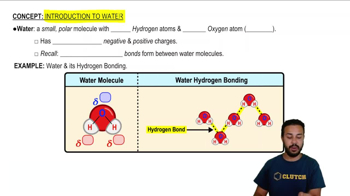
Total Body Water refers to the amount of water contained in the body, which is crucial for various physiological functions. It is typically expressed as a percentage of body weight and varies among different populations due to factors like age, sex, and body composition.
Recommended video:
01:54
Introduction to Water

Body Composition Differences

Body composition differences, particularly between genders and age groups, significantly influence TBW percentages. Generally, infants have a higher percentage of water due to their lower body fat and higher metabolic needs, while women typically have a lower percentage compared to men due to higher fat mass.
Recommended video:
Guided course
1:21
Organization of the Body: Body Cavities Example 1

Physiological Implications of TBW

The percentage of total body water has important physiological implications, affecting hydration status, nutrient transport, and thermoregulation. Understanding these differences helps in clinical assessments and interventions, particularly in vulnerable populations like infants and the elderly.
Recommended video:
Guided course
02:52
What is Anatomy & Physiology? Example 1
Related Practice
Textbook Question

What do you think has happened to Elise's ECF volume and osmolarity over the past 3 days? Will this lead to a change in the volume of water in the cytosol of her cells? Explain.

1
views

Textbook Question

A laboratory printout of arterial blood gases indicates that a patient has an increased Pco₂ , decreased pH, and normal bicarbonate ion concentration. Is this patient in acidosis or alkalosis? Is the pH disturbance respiratory or metabolic in nature? Explain your reasoning. How long do you think the patient has had this pH disturbance? (Hint: Look at the bicarbonate ion concentration. What system controls the concentration of bicarbonate ions, and how quickly does it compensate for pH disturbances?)

1
views
Textbook Question

Mark the following statements as true or false. If a statement is false, correct it to make a true statement.

b. The sensible water loss includes the water lost from the body via the skin and the respiratory system.

1
views
Textbook Question

A cell in a/an ________ fluid will lose water, and a cell in a/an ________ fluid will gain water.

1
views
Textbook Question

Ms. Johanssen is a patient in the hospital. The nurse examines her laboratory reports and notices that she has developed hyperkalemia and acidosis over the past several days. On closer examination of her medical chart, the nurse also sees that her physician recently doubled her dose of spironolactone, an aldosterone-blocking diuretic. How does this explain her laboratory findings?

1
views
Textbook Question

Mark the following statements as true or false. If a statement is false, correct it to make a true statement.

a. The thirst mechanism is mediated by osmoreceptors located in the cerebral cortex.

6
views