

Ch. 24 The Urinary System
Amerman- Human Anatomy & Physiology 3e
Amerman3rd EditionHuman Anatomy & PhysiologyISBN: 9780138247201, 9780138247928, 9780138201814Not the one you use?Change textbook
Chapter 24, Problem L3.A3

Deana is a 4-year-old girl with a rare genetic defect that causes the Na+/glucose symporters in the proximal tubule to reabsorb fewer glucose and sodium ions than normal. Predict the effects this defect will have on the composition and volume of Deana's urine. Explain why you would expect to see increased activity of the tubuloglomerular feedback and the renin-angiotensin-aldosterone system in Deana's kidneys.

Verified step by step guidance
1
Understand the role of Na+/glucose symporters in the proximal tubule: These transporters are responsible for reabsorbing sodium (Na+) and glucose from the filtrate back into the bloodstream. A defect in these symporters means less glucose and sodium will be reabsorbed, leading to higher concentrations of these substances in the filtrate and, consequently, in the urine.
Predict the effects on urine composition: With less glucose and sodium being reabsorbed, more glucose will remain in the filtrate, leading to glucosuria (glucose in the urine). Sodium retention in the filtrate will also increase, which can lead to osmotic diuresis (increased urine volume) as water follows the solutes into the urine due to osmotic gradients.
Explain the increased activity of tubuloglomerular feedback: The macula densa cells in the distal tubule detect increased sodium levels in the filtrate. This triggers tubuloglomerular feedback, which reduces the glomerular filtration rate (GFR) to prevent excessive loss of sodium and water. However, in Deana's case, the defect in the symporters may cause persistent sodium loss, leading to sustained activation of this feedback mechanism.
Discuss the activation of the renin-angiotensin-aldosterone system (RAAS): The loss of sodium and water can lead to decreased blood volume and blood pressure. This stimulates the juxtaglomerular cells in the kidney to release renin, which activates the RAAS. The system works to increase sodium reabsorption (via aldosterone) and water retention (via antidiuretic hormone, ADH) to restore blood volume and pressure.
Summarize the overall effects: Deana's urine will likely have increased glucose and sodium concentrations, as well as a higher volume due to osmotic diuresis. The persistent sodium and water loss will lead to compensatory mechanisms, including increased tubuloglomerular feedback and activation of the RAAS, in an attempt to maintain homeostasis.

Verified video answer for a similar problem:

This video solution was recommended by our tutors as helpful for the problem above.
Was this helpful?

Key Concepts

Here are the essential concepts you must grasp in order to answer the question correctly.

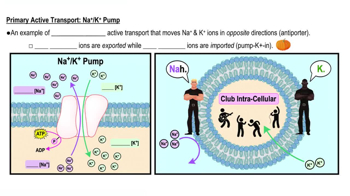
Na+/Glucose Symporters

Na+/glucose symporters are transport proteins located in the proximal tubule of the nephron that facilitate the reabsorption of glucose and sodium ions from the filtrate back into the bloodstream. In Deana's case, a defect in these symporters leads to decreased reabsorption, resulting in higher levels of glucose and sodium remaining in the urine, which can affect urine composition and volume.
Recommended video:
06:57
Primary Active Transport: Na+/K+ Pump

Tubuloglomerular Feedback

Tubuloglomerular feedback is a mechanism by which the kidneys regulate glomerular filtration rate (GFR) based on the composition of the fluid in the distal tubule. When sodium and chloride concentrations are low due to decreased reabsorption, the macula densa cells signal the afferent arterioles to dilate, increasing GFR to enhance sodium and fluid reabsorption, which would be heightened in Deana's condition.
Recommended video:
Guided course
02:43
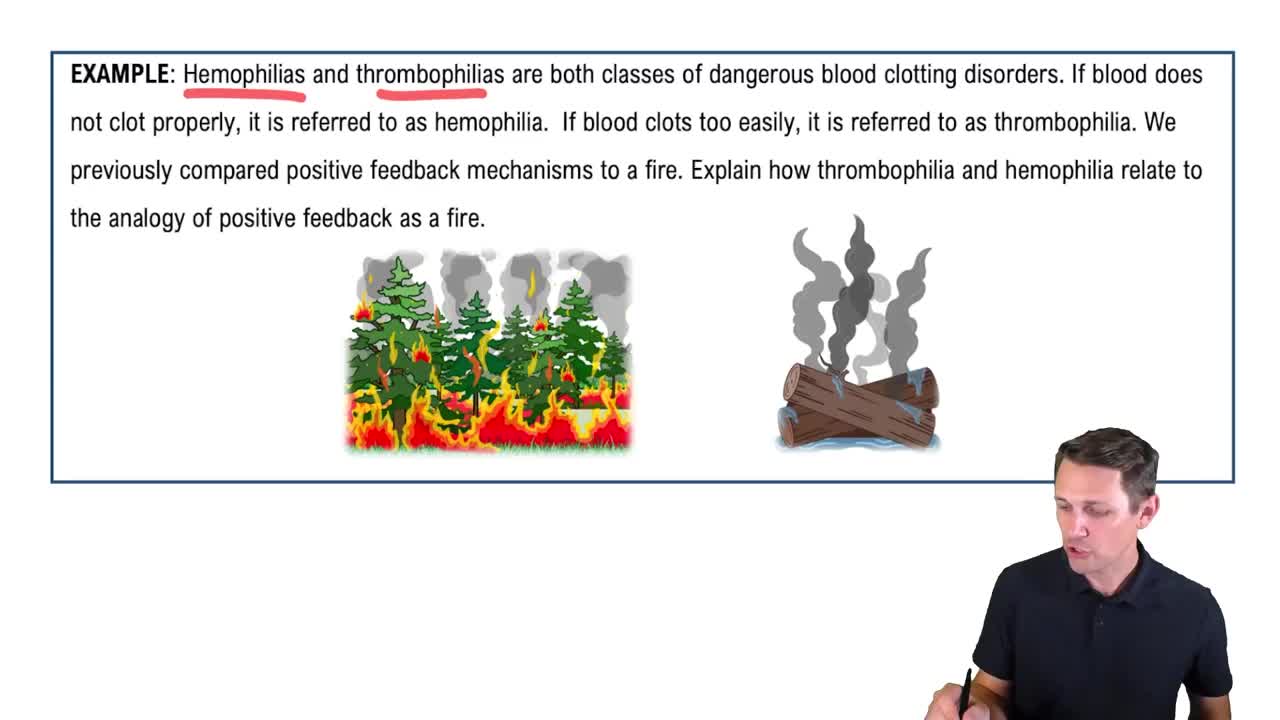
Feedback Loops: Positive Feedback Example 1

Renin-Angiotensin-Aldosterone System (RAAS)

The renin-angiotensin-aldosterone system is a hormone system that regulates blood pressure and fluid balance. In response to low sodium levels and decreased blood volume from the defect in glucose and sodium reabsorption, the kidneys release renin, leading to the production of angiotensin II and aldosterone, which promote sodium reabsorption and increase blood pressure, thus compensating for the loss of sodium in Deana's urine.
Recommended video:
11:30
Renin-Angiotensin-Aldosterone-System
Related Practice
Textbook Question

Drugs that treat hypertension, or high blood pressure, have the following actions. Discuss the specific effect that each drug will have on the kidneys.

b. Blocking the receptor for angiotensin-II on blood vessels and in the renal tubule cells

Textbook Question

Mr. Yao is a patient with kidney disease who presents to your clinic for monitoring. You notice on his chart that his GFR was estimated through inulin administration to be about 35 ml/min. What does this tell you about the health of his kidneys? Mr. Yao is taking a medication that is normally excreted from the body in the urine. You order blood work and find that the concentration of this medication in his plasma is much higher than normal. How does his decreased GFR explain the elevated level of medication in his plasma?

1
views
Textbook Question

Explain how each of the drugs in question 1 from this section would lower blood pressure.

1
views
Textbook Question

What might it mean if you found a high concentration of urobilinogen in your patient's urine? (Hint: Consider the source of urobilinogen.)

5
views
Textbook Question

Drugs that treat hypertension, or high blood pressure, have the following actions. Discuss the specific effect that each drug will have on the kidneys.

c. Blocking the Na+/Cl−/2K+ transport pumps in the thick ascending limb of the nephron loop

2
views
Textbook Question

Drugs that treat hypertension, or high blood pressure, have the following actions. Discuss the specific effect that each drug will have on the kidneys.

a. Blocking the action of aldosterone on the kidneys

1
views