Ch. 23 Metabolism and Nutrition
Amerman- Human Anatomy & Physiology 3e
Amerman3rd EditionHuman Anatomy & PhysiologyISBN: 9780138247201, 9780138247928, 9780138201814Not the one you use?Change textbook
Chapter 23, Problem 20

Which of the following statements is false?
a. Fiber is a polysaccharide that is completely or partially indigestible by the human body.
b. A complete protein contains all the essential amino acids.
c. Saturated fats contain hydrogen atoms arranged on opposite sides of the carbon-carbon double bond.
d. Linoleic and linolenic acid are essential fatty acids.

Verified step by step guidance
1
Step 1: Begin by analyzing each statement individually to determine its accuracy based on your knowledge of Anatomy & Physiology and biochemistry.
Step 2: For statement (a), recall that fiber is a type of carbohydrate, specifically a polysaccharide, that the human body cannot fully digest due to the lack of enzymes to break down certain bonds. This statement is true.
Step 3: For statement (b), understand that a complete protein is defined as one that contains all nine essential amino acids that the body cannot synthesize. This statement is true.
Step 4: For statement (c), review the structure of saturated and unsaturated fats. Saturated fats do not contain carbon-carbon double bonds, while unsaturated fats do. Additionally, the arrangement of hydrogen atoms on opposite sides of a carbon-carbon double bond describes a trans fat, not a saturated fat. This statement is false.
Step 5: For statement (d), recognize that linoleic acid (omega-6) and linolenic acid (omega-3) are essential fatty acids because the body cannot synthesize them and they must be obtained through the diet. This statement is true.

Verified video answer for a similar problem:

This video solution was recommended by our tutors as helpful for the problem above.
Was this helpful?

Key Concepts

Here are the essential concepts you must grasp in order to answer the question correctly.

Fiber

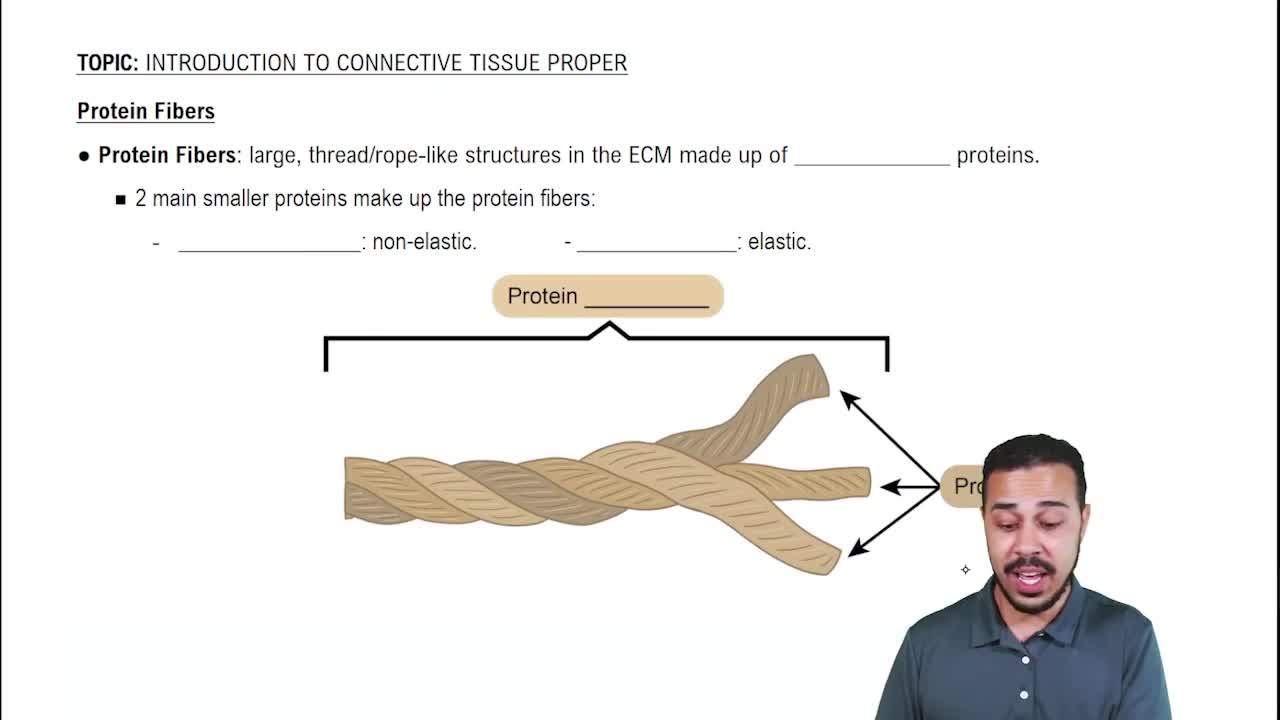
Fiber is a type of carbohydrate known as a polysaccharide that the human body cannot fully digest. It is categorized into soluble and insoluble fiber, both of which play crucial roles in digestive health. Soluble fiber can dissolve in water and helps lower blood cholesterol and glucose levels, while insoluble fiber adds bulk to stool and aids in bowel regularity.
Recommended video:
Guided course
03:00
Protein Fibers

Complete Proteins

Complete proteins are those that contain all nine essential amino acids that the body cannot synthesize on its own. These amino acids are vital for various bodily functions, including tissue repair and muscle growth. Sources of complete proteins include animal products like meat, dairy, and eggs, as well as some plant-based sources like quinoa and soy.
Recommended video:
02:50
Proteins

Saturated Fats

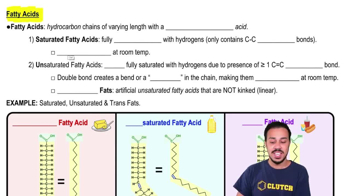
Saturated fats are a type of fat molecule characterized by having no double bonds between carbon atoms, which means they are saturated with hydrogen atoms. This structure typically results in fats that are solid at room temperature. Common sources include animal fats and certain plant oils, and while they can be part of a balanced diet, excessive intake is linked to health risks such as heart disease.
Recommended video:
06:59
Fatty Acids