Ch. 22 The Digestive System
Amerman- Human Anatomy & Physiology 3e
Amerman3rd EditionHuman Anatomy & PhysiologyISBN: 9780138247201, 9780138247928, 9780138201814Not the one you use?Change textbook
Chapter 22, Problem 4b

Mark the following statements as true or false. If a statement is false, correct it to make a true statement.
The muscularis externa of most of the alimentary canal consists of inner circular and outer longitudinal layers of smooth muscle.

Verified step by step guidance
1
Understand the structure of the muscularis externa: The muscularis externa is a layer of the alimentary canal wall that is primarily responsible for peristalsis and segmentation. It typically consists of two layers of smooth muscle: an inner circular layer and an outer longitudinal layer.
Evaluate the statement: The statement claims that the muscularis externa of most of the alimentary canal consists of inner circular and outer longitudinal layers of smooth muscle. This is generally true for most parts of the alimentary canal, such as the esophagus, stomach, small intestine, and large intestine.
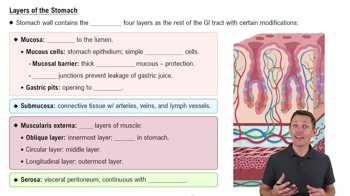
Identify exceptions: Note that there are exceptions to this general structure. For example, in the stomach, there is an additional oblique layer of smooth muscle, making it unique compared to other parts of the alimentary canal.
Determine the truth of the statement: Since the statement specifies 'most of the alimentary canal,' and the described structure applies to the majority of the alimentary canal, the statement is true.
Conclude and correct if necessary: If the statement were false, you would need to correct it by specifying the exceptions (e.g., the stomach's additional oblique layer). However, in this case, no correction is needed as the statement is accurate.

Verified video answer for a similar problem:

This video solution was recommended by our tutors as helpful for the problem above.
Was this helpful?

Key Concepts

Here are the essential concepts you must grasp in order to answer the question correctly.

Muscularis Externa

The muscularis externa is a layer of the alimentary canal that primarily consists of two layers of smooth muscle: an inner circular layer and an outer longitudinal layer. This structure is crucial for the peristaltic movements that propel food through the digestive tract. Understanding its anatomy and function is essential for analyzing statements related to the digestive system.
Recommended video:
Guided course
6:17
Layers of the Stomach

Alimentary Canal

The alimentary canal, also known as the gastrointestinal tract, is a continuous tube that extends from the mouth to the anus. It includes various organs such as the esophagus, stomach, and intestines, each playing a specific role in digestion and absorption. Knowledge of its structure and function is vital for evaluating statements about its components.
Recommended video:
Guided course
3:34
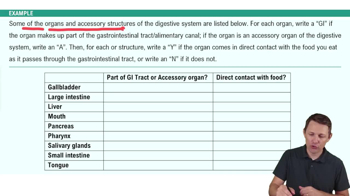
Introduction to the Digestive System Example 1

Smooth Muscle

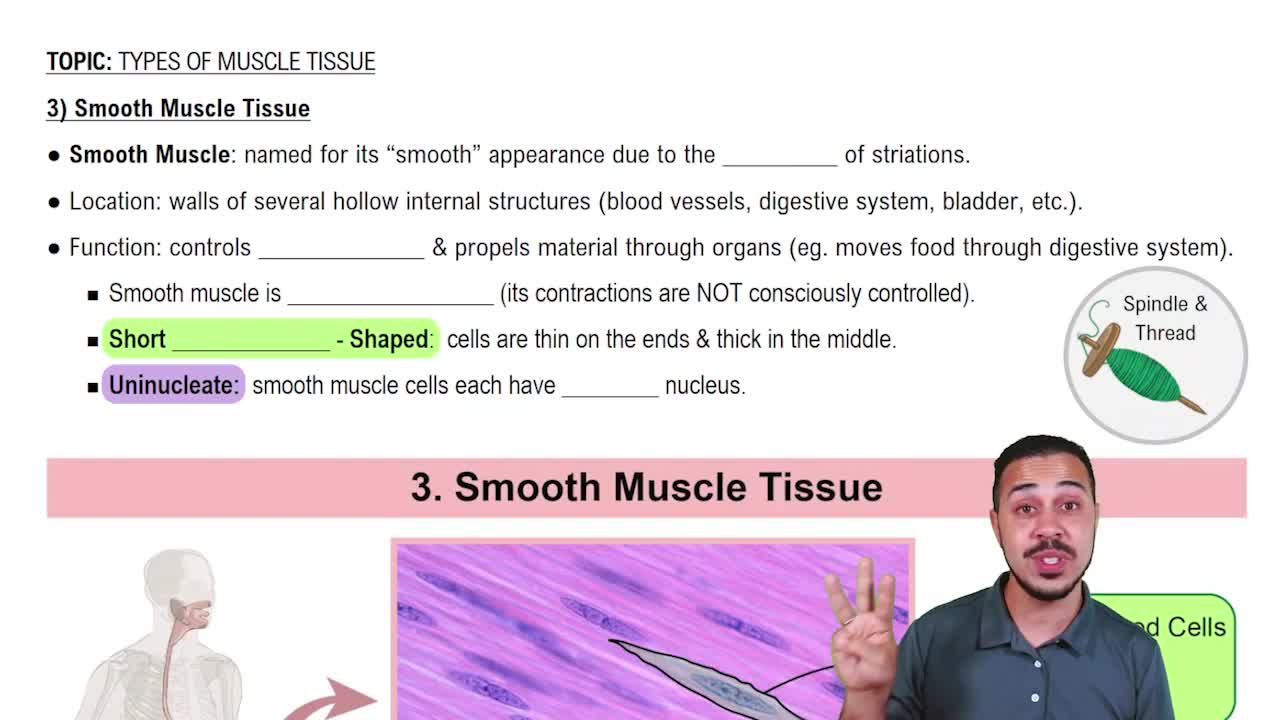
Smooth muscle is a type of involuntary muscle found in various organs, including the alimentary canal. It is responsible for involuntary movements such as peristalsis, which helps move food along the digestive tract. Recognizing the characteristics and functions of smooth muscle is important for understanding the mechanics of the muscularis externa.
Recommended video:
Guided course
06:27
Smooth Muscle Tissue
Related Practice
Textbook Question

How does absorption of lipids differ from absorption of carbohydrates and proteins in the small intestine?

a. Lipids are absorbed into a capillary; carbohydrates and proteins are absorbed into a lacteal.

b. Lipids are not absorbed in the small intestine.

c. Lipids are absorbed into a lacteal; carbohydrates and proteins are absorbed into a capillary.

d. They are all absorbed into the same structure.

2
views
Textbook Question

Mr. Williams presents to your clinic with a complaint of abdominal pain in the right upper quadrant. He says that the pain worsens when he eats, particularly when he eats fatty meals. He has noticed that his stool has been an unusual clay color recently. You perform an ultrasound of his abdomen and find that gallstones are blocking his common bile duct, preventing bile from entering the duodenum.

You test Mr. Williams's stool and find high amounts of undigested fats. Explain this finding.

2
views
Textbook Question

Individuals experiencing prolonged vomiting lose a great deal of hydrochloric acid with the vomitus. Predict the effect this loss of acid will have on the pH of the blood. How will the respiratory system respond to the change in pH?

1
views
Textbook Question

Mark the following statements as true or false. If a statement is false, correct it to make a true statement.

The mucosa of the esophagus, pharynx, and oral cavity contains simple squamous epithelium to protect it from abrasion.

1
views
Textbook Question

The primary hormone that triggers the secretion of pancreatic juice and bile is:

a. Gastric inhibitory peptide

b. Cholecystokinin

c. Motilin

d. Somatostatin

7
views
Textbook Question

Mark the following statements as true or false. If a statement is false, correct it to make a true statement.

The mucosa from the stomach to the anus consists of an inner layer of stratified columnar epithelium.

1
views