Ch. 15 The Special Senses
Amerman- Human Anatomy & Physiology 3e
Amerman3rd EditionHuman Anatomy & PhysiologyISBN: 9780138247201, 9780138247928, 9780138201814Not the one you use?Change textbook
Chapter 15, Problem 19

Which of the following is not part of the auditory pathway in the CNS?
a. Superior temporal lobe
b. Superior colliculus
c. Medial geniculate nucleus
d. Nuclei in the pons
e. Cochlear nuclei

Verified step by step guidance
1
Step 1: Understand the auditory pathway in the central nervous system (CNS). The auditory pathway involves structures that process sound signals from the cochlea to the auditory cortex in the brain. Key components include the cochlear nuclei, superior olivary complex, inferior colliculus, medial geniculate nucleus, and the auditory cortex in the superior temporal lobe.
Step 2: Review the role of each structure listed in the options. For example, the cochlear nuclei are the first relay station for auditory signals in the brainstem, and the medial geniculate nucleus is part of the thalamus that relays auditory information to the auditory cortex.
Step 3: Identify the superior colliculus in the list. The superior colliculus is primarily involved in visual processing and reflexive eye movements, not auditory processing. This makes it distinct from the other structures listed.
Step 4: Compare the superior colliculus to the other options. The superior temporal lobe, cochlear nuclei, nuclei in the pons, and medial geniculate nucleus are all directly involved in the auditory pathway, whereas the superior colliculus is not.
Step 5: Conclude that the superior colliculus is the correct answer because it is not part of the auditory pathway in the CNS, unlike the other options provided.

Verified video answer for a similar problem:

This video solution was recommended by our tutors as helpful for the problem above.
Was this helpful?

Key Concepts

Here are the essential concepts you must grasp in order to answer the question correctly.

Auditory Pathway

The auditory pathway refers to the neural pathways that transmit sound information from the ear to the brain. This pathway includes structures such as the cochlear nuclei, superior olivary complex, inferior colliculus, and medial geniculate nucleus, which process and relay auditory signals to the auditory cortex in the temporal lobe.
Recommended video:
4:40
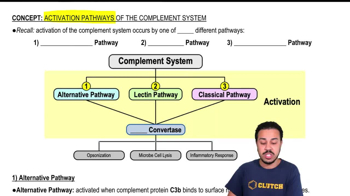
Alternative Pathway

CNS Structures

The central nervous system (CNS) consists of the brain and spinal cord, which coordinate sensory information and motor responses. Key structures involved in auditory processing include the superior temporal lobe, which houses the primary auditory cortex, and various nuclei in the brainstem that facilitate sound localization and processing.
Recommended video:
3:34
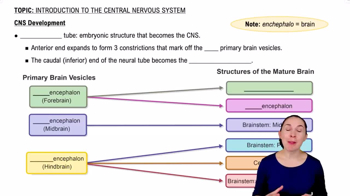
CNS Development

Superior Colliculus

The superior colliculus is a structure located in the midbrain that is primarily involved in visual processing and reflexive eye movements. While it plays a role in integrating sensory information, it is not directly part of the auditory pathway, distinguishing it from other auditory-related structures listed in the question.
Recommended video:
Guided course
03:39
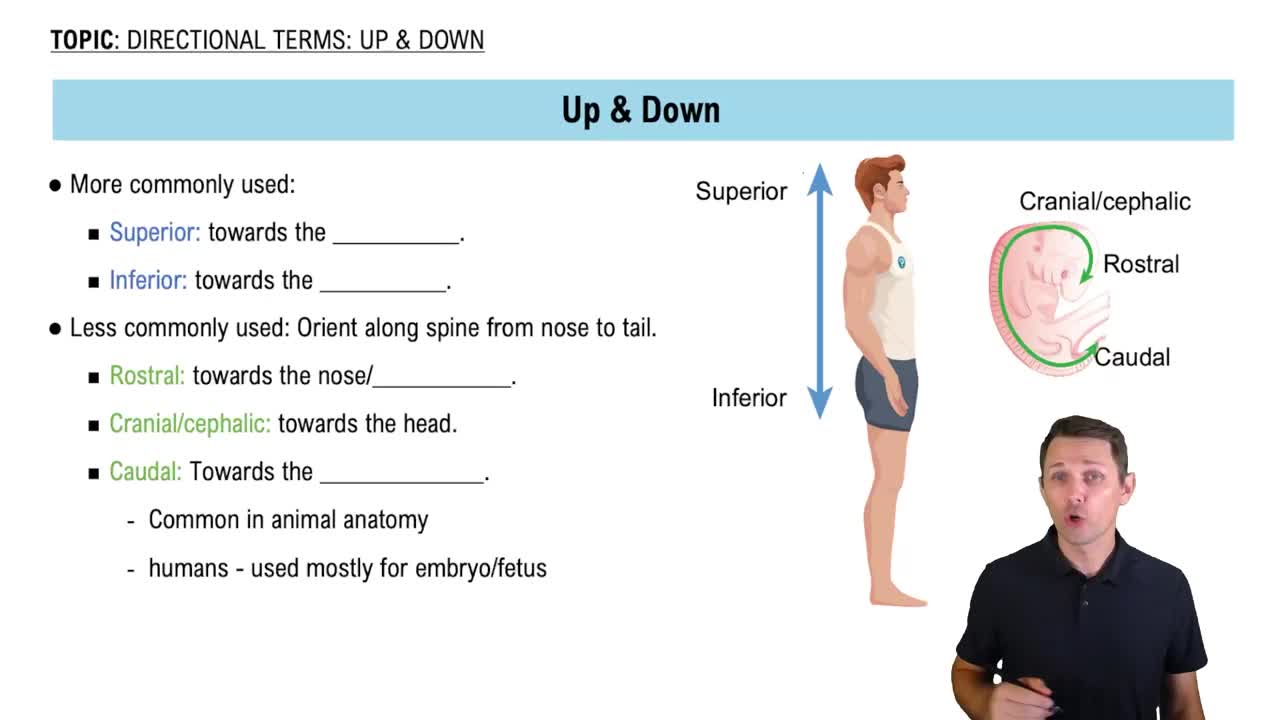
Superior and Inferior