Ch. 12 The Central Nervous System
Amerman- Human Anatomy & Physiology 3e
Amerman3rd EditionHuman Anatomy & PhysiologyISBN: 9780138247201, 9780138247928, 9780138201814Not the one you use?Change textbook
Chapter 12, Problem 17d

Mark the following statements on the role of the brain in movement as true or false. If a statement is false, correct it to make a true statement. 
The correction of motor error by the cerebellum can occur over the long term by motor learning.

Verified step by step guidance
1
Step 1: Understand the role of the cerebellum in movement. The cerebellum is responsible for coordinating voluntary movements, maintaining balance, and correcting motor errors. It plays a key role in motor learning, which involves adapting and refining movements over time.
Step 2: Analyze the statement provided. The statement claims that the correction of motor error by the cerebellum can occur over the long term through motor learning. This aligns with the known function of the cerebellum in motor learning and error correction.
Step 3: Determine whether the statement is true or false. Based on the understanding of the cerebellum's role, the statement is true because motor learning is a long-term process facilitated by the cerebellum to improve movement accuracy.
Step 4: If the statement were false, the correction would involve clarifying the cerebellum's role in motor learning and its ability to refine movements over time. However, in this case, no correction is needed as the statement is accurate.
Step 5: Conclude that the statement is true and explain why. The cerebellum's ability to correct motor errors and contribute to motor learning over the long term is well-supported by physiological evidence.

Verified video answer for a similar problem:

This video solution was recommended by our tutors as helpful for the problem above.
Was this helpful?

Key Concepts

Here are the essential concepts you must grasp in order to answer the question correctly.

Cerebellum Function

The cerebellum is a critical brain structure involved in the coordination and regulation of motor control. It processes sensory information and fine-tunes movements, ensuring smooth and accurate execution. Its role extends to correcting motor errors, which can be adjusted through practice and experience.
Recommended video:
06:04
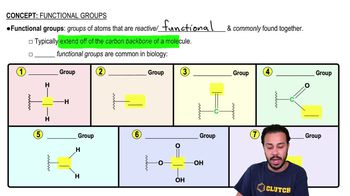
Functional Groups

Motor Learning

Motor learning refers to the process through which individuals acquire and refine skills through practice and experience. It involves changes in the brain and nervous system that enhance the ability to perform movements more efficiently and accurately over time. This learning can lead to long-term retention of motor skills.
Recommended video:
4:31
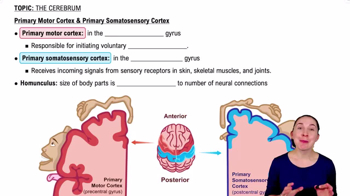
Primary Motor Cortex & Primary Somatosensory Cortex

Motor Error Correction

Motor error correction is the mechanism by which the brain detects and adjusts for discrepancies between intended and actual movements. This process is essential for improving performance and is facilitated by feedback from sensory systems. The cerebellum plays a key role in this correction, allowing for adjustments during both immediate and long-term practice.
Recommended video:
4:31
Primary Motor Cortex & Primary Somatosensory Cortex
Related Practice
Textbook Question

The two components of the CNS that are responsible for maintenance of homeostasis are the ________ and the ________. 
Textbook Question

Mark the following statements on the role of the brain in movement as true or false. If a statement is false, correct it to make a true statement. 

The dopaminergic neurons of the substantia nigra enhance the actions of the caudate nucleus and putamen.

Textbook Question

Mark the following statements on the role of the brain in movement as true or false. If a statement is false, correct it to make a true statement. 

The cerebellum monitors the initiation of movement but does not monitor ongoing movements. 

Textbook Question

Match the term on the left with its correct description from the column on the right.     


____ REM sleep     

____ Stage I sleep     

____ Delta waves     

____ Beta waves     

____ Theta waves     

____ Stage IV sleep


a. The EEG pattern seen in the deepest stage of sleep

b. The deepest stage of sleep

c. The EEG pattern seen in an alert, awake adult

d. Drowsiness or the lightest stage of sleep

e. The EEG pattern seen in lighter stages of sleep

f. The stage of sleep during which most dreaming takes place

1
views
Textbook Question

Mark the following statements on the role of the brain in movement as true or false. If a statement is false, correct it to make a true statement. 

The basal nuclei inhibit inappropriate movements and are required for the initiation of movement. 

1
views
Textbook Question

The part of the brain responsible for the production of language is known as:

a. Wernicke's area

b. The prefrontal cortex

c. The auditory association area

d. Broca's area