
Ch. 12 The Central Nervous System
Amerman- Human Anatomy & Physiology 3e
Amerman3rd EditionHuman Anatomy & PhysiologyISBN: 9780138247201, 9780138247928, 9780138201814Not the one you use?Change textbook
Chapter 12, Problem L3.4

A new diet wonder drug is designed to block the release of orexins. How might this cause weight loss? Predict the potential adverse effects that might come from blocking orexin release.

Verified step by step guidance
1
Understand the role of orexins: Orexins are neuropeptides produced in the hypothalamus that play a key role in regulating appetite, wakefulness, and energy homeostasis. They stimulate food intake and are involved in maintaining alertness.
Explain how blocking orexins could lead to weight loss: By inhibiting the release of orexins, the drug reduces the stimulation of appetite and food intake. This could lead to decreased caloric consumption, resulting in weight loss over time.
Predict potential adverse effects on sleep regulation: Orexins are also critical for maintaining wakefulness and preventing narcolepsy. Blocking orexin release might lead to excessive sleepiness or disruptions in sleep-wake cycles.
Consider effects on energy balance and metabolism: Orexins influence energy expenditure and metabolic rate. Blocking their release could potentially lower energy levels and slow metabolism, which might counteract weight loss or cause fatigue.
Evaluate broader physiological impacts: Orexins are involved in stress responses and cardiovascular regulation. Blocking their release might lead to adverse effects such as increased susceptibility to stress or changes in blood pressure and heart rate.

Verified video answer for a similar problem:

This video solution was recommended by our tutors as helpful for the problem above.
Was this helpful?

Key Concepts

Here are the essential concepts you must grasp in order to answer the question correctly.

Orexins

Orexins, also known as hypocretins, are neuropeptides produced in the hypothalamus that play a crucial role in regulating arousal, wakefulness, and appetite. They stimulate hunger and energy expenditure, thus influencing body weight. By blocking orexin release, the drug may reduce appetite and promote weight loss, as the signals that encourage eating are diminished.

Weight Loss Mechanism

The mechanism of weight loss through orexin blockade involves decreased appetite and altered energy balance. When orexin levels are reduced, the drive to consume food diminishes, leading to lower caloric intake. Additionally, the drug may affect metabolism and energy expenditure, further contributing to weight loss by shifting the body's energy utilization.
Recommended video:
1:52
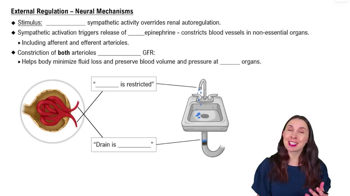
External Regulation – Neural Mechanisms

Potential Adverse Effects

Blocking orexin release can lead to several adverse effects, including excessive daytime sleepiness, fatigue, and potential disruptions in sleep patterns. Since orexins are also involved in maintaining wakefulness, their inhibition may result in a state of lethargy or increased risk of sleep disorders. Furthermore, long-term effects on metabolism and mood could arise, necessitating careful consideration of the drug's safety profile.
Recommended video:
1:32
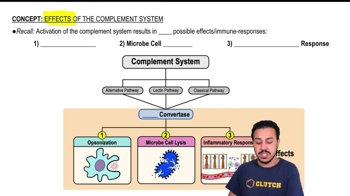
Effects of the Complement System
Related Practice
Textbook Question

Ms. Norris is brought to the emergency department with injuries to the posterior of her head resulting from a motor vehicle accident. Which lobes of the cerebrum likely sustained injuries? Predict the main signs and symptoms you will see resulting from the injury to these cerebral lobes.

3
views
Textbook Question

Mark the following statements as true or false. If the statement is false, correct it to make it a true statement.

Aggregates of Golgi apparatus and lysosomes form dark-staining Nissl bodies within the cell body.

Textbook Question

In a diving accident, Arlene damages the left side of her upper thoracic spinal cord. On which side of the body will she lose: muscle control, tactile sensation, and pain sensation? Explain.

Textbook Question

On further examination, Ms. Norris is shown to be in a state of unarousable unconsciousness, or coma. Which area or system of the brain is likely damaged? Explain.

2
views
Textbook Question

Which statement about cerebral white matter is false?

a. Commissural fibers connect the right and left cerebral hemispheres.

b. Projection fibers connect the cerebral cortex of one hemisphere with structures in the other hemisphere.

c. The corpus callosum is the largest bundle of white matter in the brain.

d. Association fibers connect the gyri of the cerebral cortex with one another.

1
views
Textbook Question

Mark the following statements about the brain as true or false. If a statement is false, correct it to make a true statement.

The cerebrum is responsible for our basic, involuntary functions and reflexes.

3
views