
Ch. 1 Introduction to Anatomy and Physiology
Amerman- Human Anatomy & Physiology 3e
Amerman3rd EditionHuman Anatomy & PhysiologyISBN: 9780138247201, 9780138247928, 9780138201814Not the one you use?Change textbook
Chapter 1, Problem 8

Which of the following best describes the position of a tissue in the levels of organization of the human body?
a. Tissues are the most fundamental level of organization.
b. Tissues are between cells and organs in the levels of organization.
c. Tissues are the most complex level of organization.
d. Tissues are between organs and systems in the levels of organization.

Verified step by step guidance
1
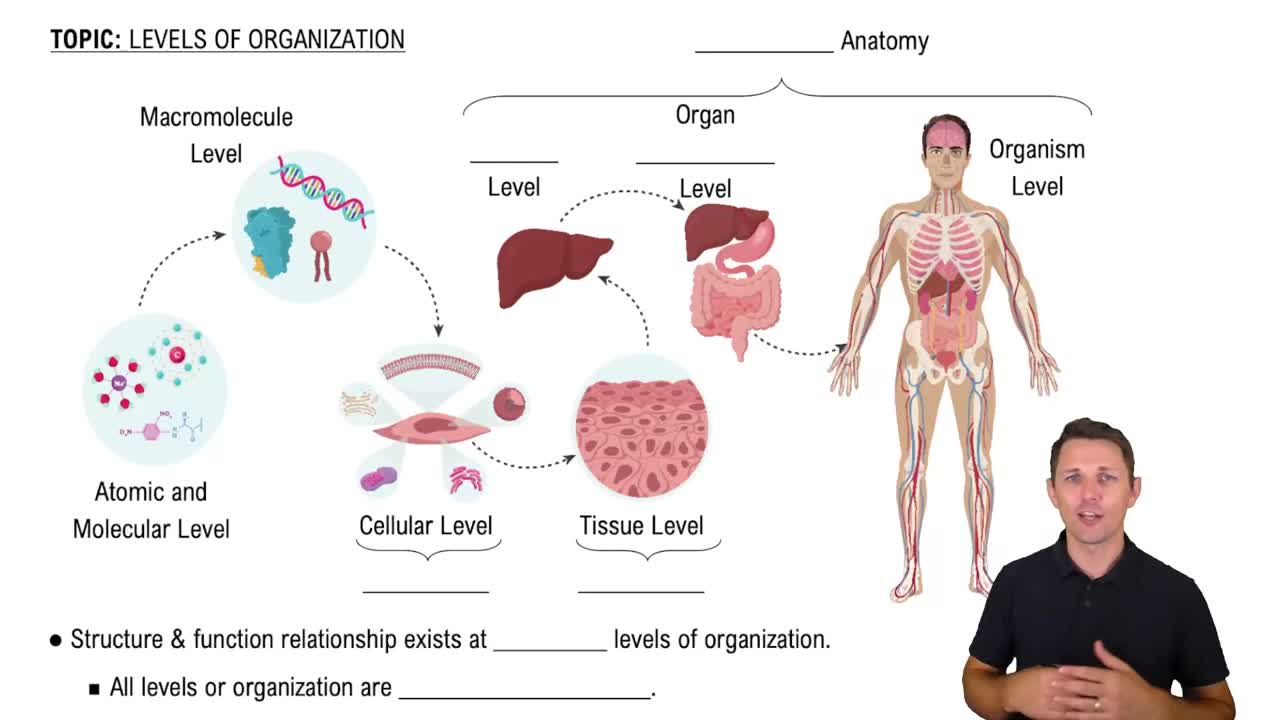
Understand the levels of organization in the human body: The human body is organized into hierarchical levels, starting from the simplest to the most complex. These levels are: cells, tissues, organs, organ systems, and the organism itself.
Define what tissues are: Tissues are groups of similar cells that work together to perform a specific function. Examples include epithelial tissue, connective tissue, muscle tissue, and nervous tissue.
Identify the position of tissues in the hierarchy: Tissues are formed by the organization of cells, and they combine to form organs. Therefore, tissues are positioned between cells and organs in the levels of organization.
Eliminate incorrect options: Option a is incorrect because cells, not tissues, are the most fundamental level of organization. Option c is incorrect because tissues are not the most complex level; the organism is. Option d is incorrect because tissues are not between organs and systems; they are between cells and organs.
Select the correct answer: Based on the hierarchy, the correct description is that tissues are between cells and organs in the levels of organization.

Verified video answer for a similar problem:

This video solution was recommended by our tutors as helpful for the problem above.
Was this helpful?

Key Concepts

Here are the essential concepts you must grasp in order to answer the question correctly.

Levels of Organization

The levels of organization in the human body refer to the hierarchical structure that ranges from the simplest to the most complex. It typically includes cells, tissues, organs, and systems. Understanding this hierarchy is crucial for identifying where tissues fit within the broader context of biological organization.
Recommended video:
Guided course
05:04
The Levels of Organization

Tissues

Tissues are groups of similar cells that work together to perform a specific function. In the human body, there are four primary types of tissues: epithelial, connective, muscle, and nervous. Recognizing the role of tissues helps clarify their position between cells and organs in the organizational structure.
Recommended video:
4:55
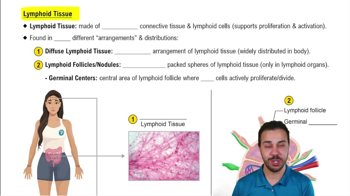
Lymphoid Tissue

Organs and Systems

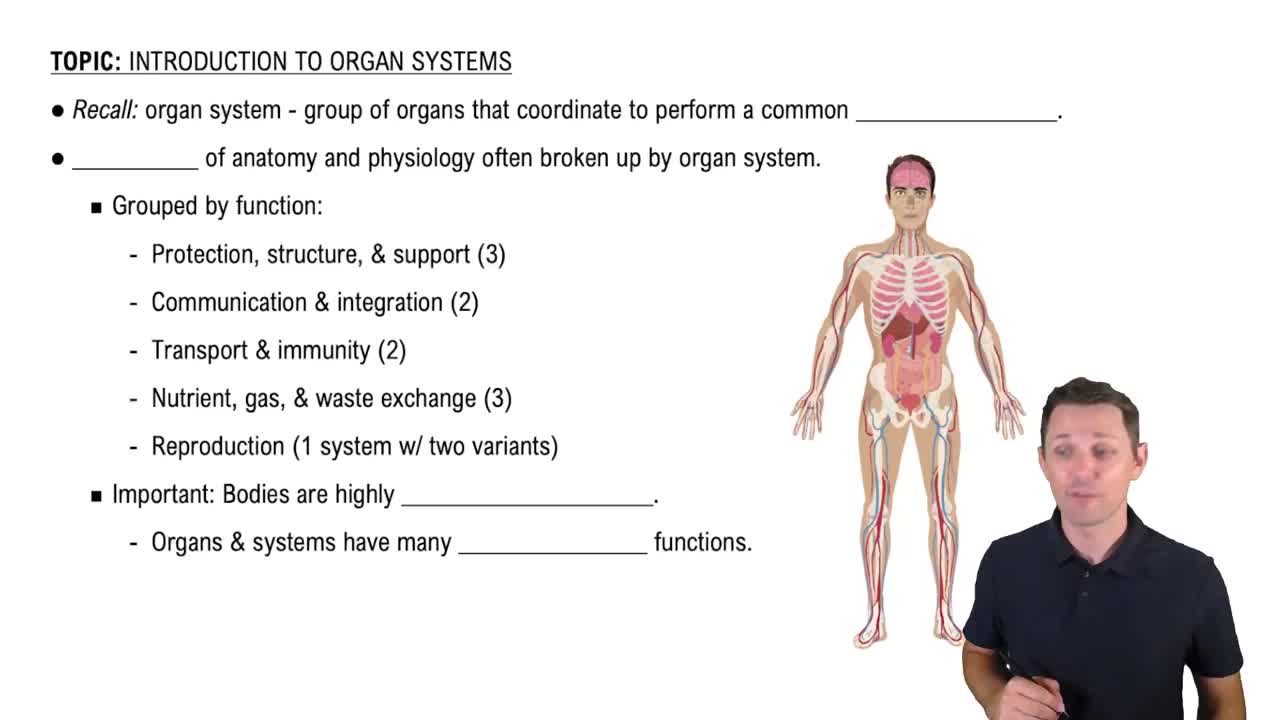
Organs are structures composed of different types of tissues that work together to perform specific functions, while systems are groups of organs that collaborate to carry out complex processes. Understanding the relationship between tissues, organs, and systems is essential for accurately determining the position of tissues in the levels of organization.
Recommended video:
Guided course
02:29
Introduction to Organ Systems