Ch. 6 Bones and Bone Tissue
Amerman - Human Anatomy & Physiology 2nd Edition
Amerman2nd EditionHuman Anatomy & PhysiologyISBN: 9780136873822Not the one you use?Change textbook
Chapter 6, Problem L2.1

Explain why a person who is wheelchair-bound or bed-bound often has very low bone mass, especially in his or her legs.

Verified step by step guidance
1
Understand the concept of Wolff's Law: Bone tissue adapts to the mechanical stresses placed upon it. When bones experience regular stress, such as weight-bearing activities, they remodel and strengthen. Conversely, a lack of stress leads to bone resorption and weakening.
Recognize that wheelchair-bound or bed-bound individuals experience significantly reduced mechanical stress on their lower limbs. Without regular weight-bearing activities like walking or standing, the bones in the legs are not stimulated to maintain their density.
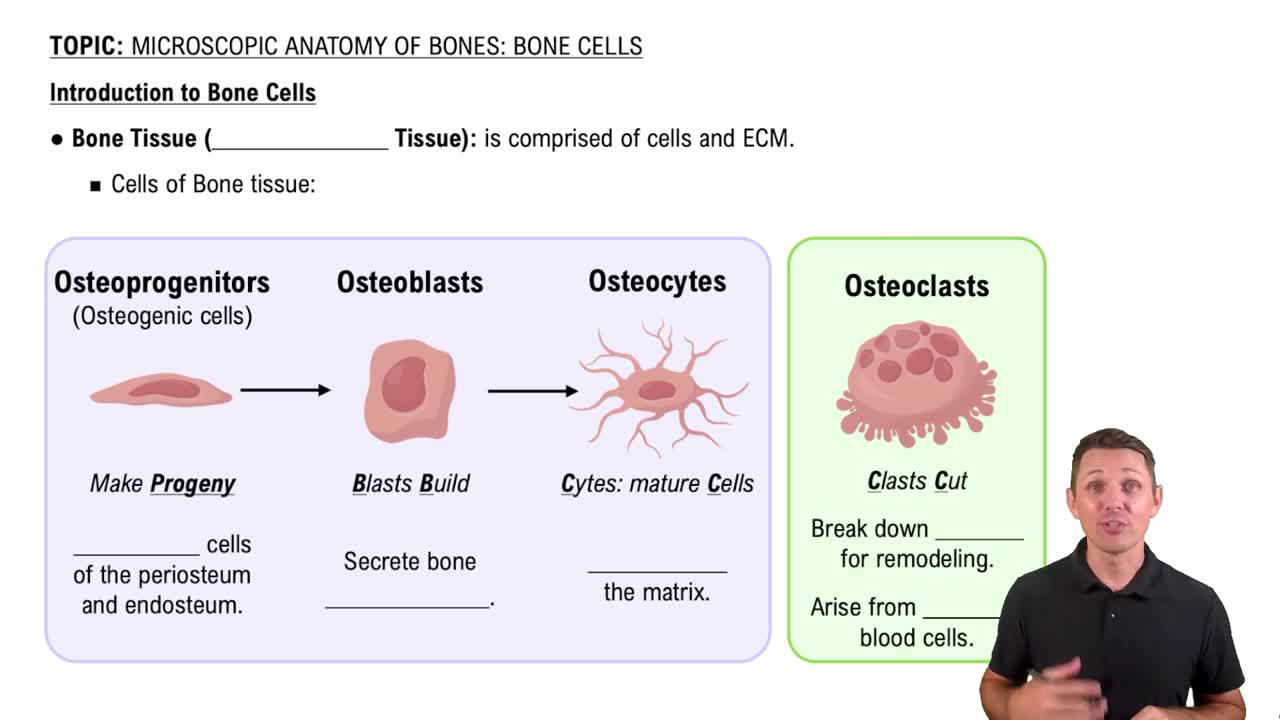
Consider the role of osteoblasts and osteoclasts: Osteoblasts are responsible for building bone, while osteoclasts break down bone. In the absence of mechanical stress, osteoclast activity may outpace osteoblast activity, leading to a net loss of bone mass.
Acknowledge the impact of muscle activity: Muscle contractions during movement also exert forces on bones, stimulating bone remodeling. Reduced muscle activity in the legs of immobile individuals further contributes to bone loss.
Factor in potential secondary effects: Prolonged immobility can lead to other physiological changes, such as reduced blood flow and nutrient delivery to the bones, which may exacerbate bone loss over time.

Verified video answer for a similar problem:

This video solution was recommended by our tutors as helpful for the problem above.
Was this helpful?

Key Concepts

Here are the essential concepts you must grasp in order to answer the question correctly.

Bone Remodeling

Bone remodeling is a continuous process where old bone tissue is replaced by new bone tissue. This process is influenced by mechanical stress; when bones are subjected to weight-bearing activities, they adapt by becoming denser. In individuals who are wheelchair-bound or bed-bound, the lack of mechanical loading leads to decreased stimulation for bone formation, resulting in lower bone mass.
Recommended video:
Guided course
4:19
Introduction to Bone Cells

Osteoporosis

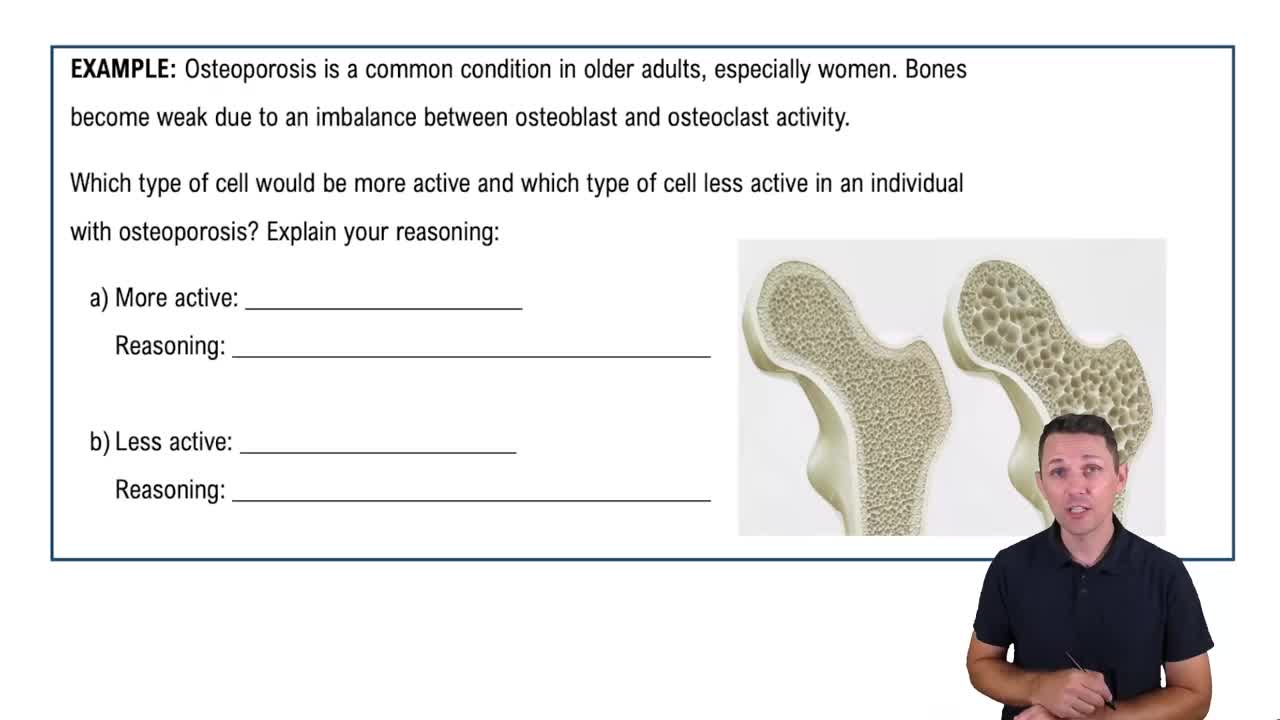
Osteoporosis is a condition characterized by weakened bones and a decrease in bone density, making them more susceptible to fractures. In individuals with limited mobility, such as those who are wheelchair-bound or bed-bound, the risk of developing osteoporosis increases due to insufficient physical activity and the resultant lack of bone-strengthening forces, particularly in the legs.
Recommended video:
Guided course
1:57
Microscopic Anatomy of Bones - Bone Cells Example 2

Muscle-Bone Interaction

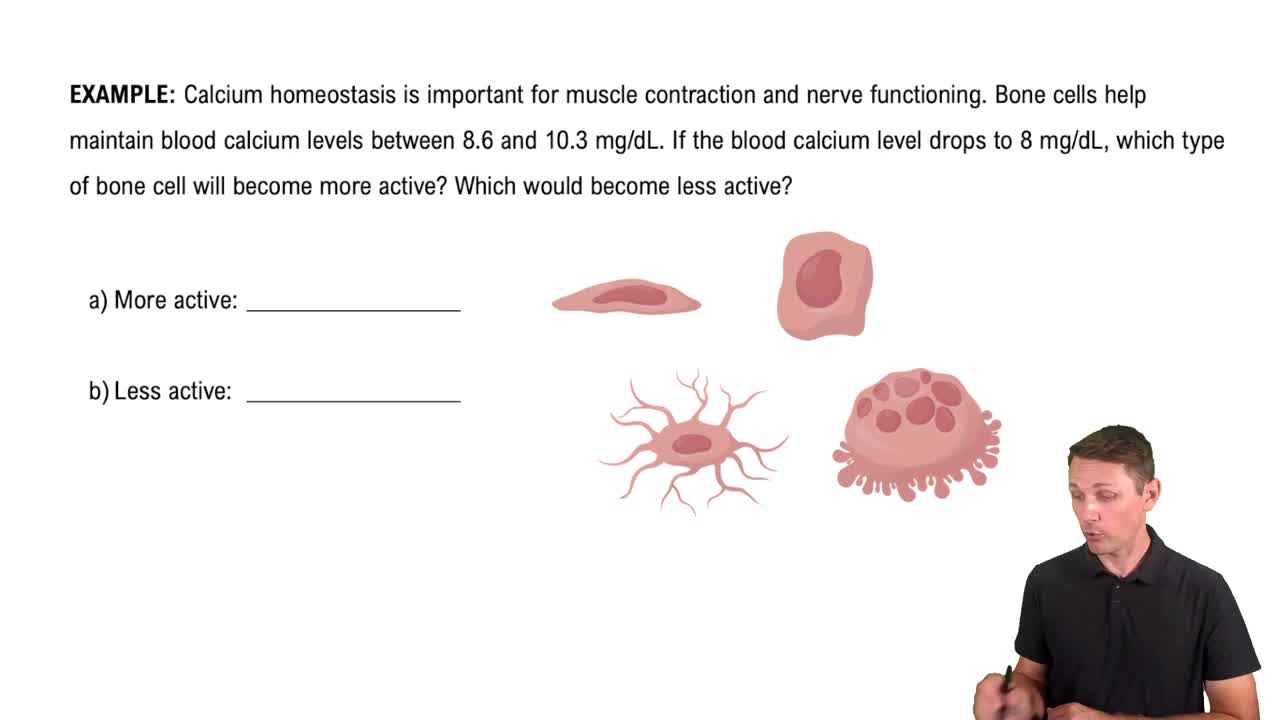
The interaction between muscles and bones is crucial for maintaining bone health. Muscles exert forces on bones during movement, which stimulates bone growth and maintenance. In individuals with limited mobility, the reduced muscle activity leads to decreased mechanical loading on the bones, contributing to lower bone mass, especially in the legs, where muscle strength is vital for bone density.
Recommended video:
Guided course
2:21
Microscopic Anatomy of Bones - Bone Cells Example 1