
Ch. 21 The Respiratory System
Amerman - Human Anatomy & Physiology 2nd Edition
Amerman2nd EditionHuman Anatomy & PhysiologyISBN: 9780136873822Not the one you use?Change textbook
Chapter 21, Problem 3b

Mark the following statements as true or false. If a statement is false, correct it to make a true statement.
Goblet cells secrete serous fluid into the respiratory tract.

Verified step by step guidance
1
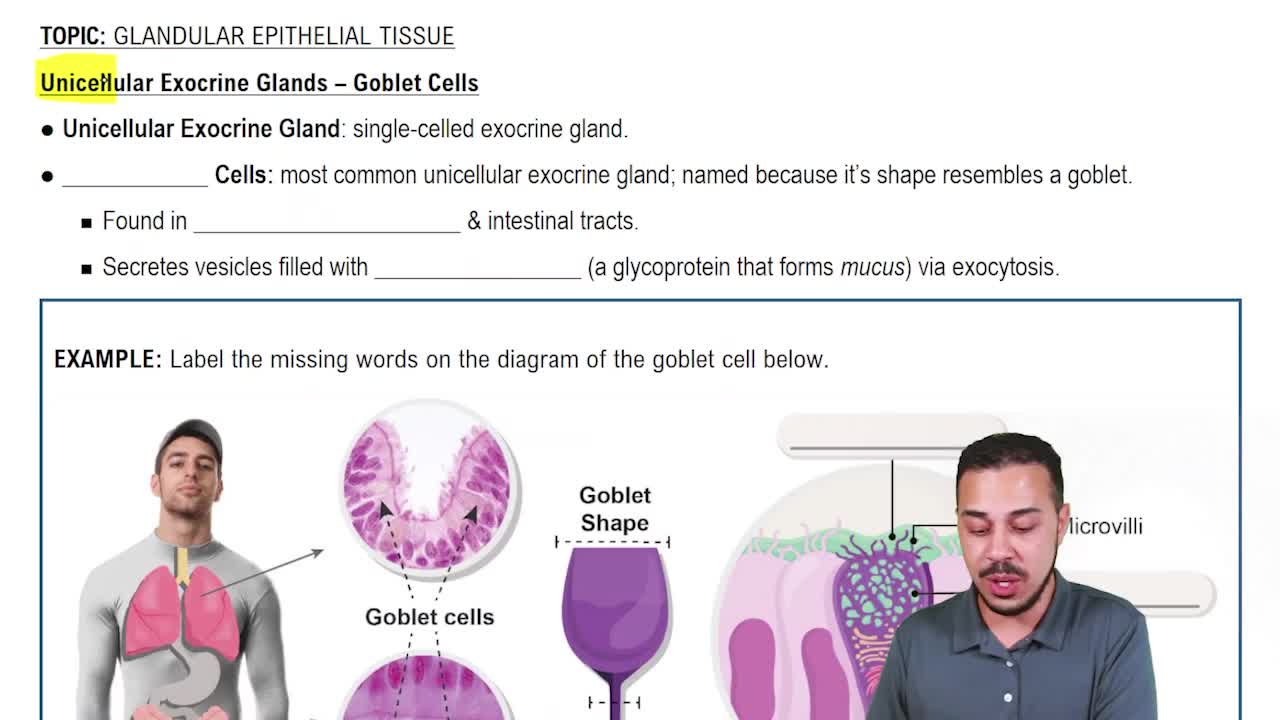
Step 1: Understand the role of goblet cells in the respiratory tract. Goblet cells are specialized epithelial cells found in the lining of the respiratory and digestive tracts. Their primary function is to secrete mucus, not serous fluid.
Step 2: Define mucus and serous fluid. Mucus is a thick, sticky substance that traps dust, pathogens, and other particles, helping to protect the respiratory tract. Serous fluid, on the other hand, is a watery fluid that reduces friction between tissues, such as in serous membranes.
Step 3: Evaluate the statement provided. The statement claims that goblet cells secrete serous fluid into the respiratory tract. Based on the function of goblet cells, this statement is false because goblet cells secrete mucus, not serous fluid.
Step 4: Correct the false statement. The corrected statement should read: 'Goblet cells secrete mucus into the respiratory tract.'
Step 5: Review the importance of mucus in the respiratory system. Mucus plays a critical role in maintaining respiratory health by trapping harmful particles and facilitating their removal through mechanisms like ciliary movement and coughing.

Verified video answer for a similar problem:

This video solution was recommended by our tutors as helpful for the problem above.
Was this helpful?

Key Concepts

Here are the essential concepts you must grasp in order to answer the question correctly.

Goblet Cells

Goblet cells are specialized epithelial cells found in various mucous membranes, including the respiratory tract. Their primary function is to secrete mucus, which helps to trap pathogens and particulates, providing a protective barrier and facilitating the movement of materials out of the airways.
Recommended video:
Guided course
04:39
Unicellular Exocrine Glands - Goblet Cells

Serous Fluid

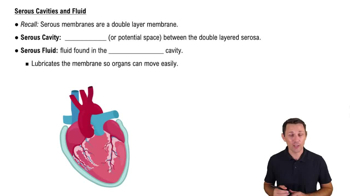
Serous fluid is a clear, watery fluid produced by serous glands, which are different from mucous glands. In the respiratory system, serous fluid is typically secreted by serous cells, not goblet cells, and serves to lubricate surfaces and facilitate gas exchange, but it is not the primary secretion of goblet cells.
Recommended video:
Guided course
3:33
Serous Cavity and Fluid

Respiratory Tract Secretions

The respiratory tract contains various types of secretions that play crucial roles in maintaining respiratory health. Mucus, primarily secreted by goblet cells, traps dust and microbes, while serous fluid, produced by serous glands, helps to keep the airway surfaces moist. Understanding the distinction between these secretions is essential for accurately assessing respiratory function.
Recommended video:
01:33
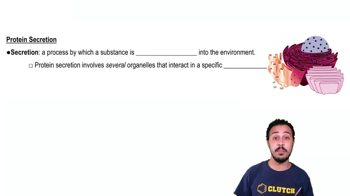
Protein Secretion