
Ch. 17 The Cardiovascular System I: The Heart
Amerman - Human Anatomy & Physiology 2nd Edition
Amerman2nd EditionHuman Anatomy & PhysiologyISBN: 9780136873822Not the one you use?Change textbook
Chapter 17, Problem L3.1

You are an athletic trainer who is working with someone planning to run a marathon. Your trainee tells you to give him a workout that will make his heart 'beat faster than ever before.' What do you tell him about the effects of too rapid a heart rate?

Verified step by step guidance
1
Explain that the heart rate is controlled by the autonomic nervous system, specifically the sympathetic and parasympathetic branches, and that an excessively rapid heart rate (tachycardia) can have negative effects on the body.
Describe how an excessively high heart rate reduces the time available for ventricular filling during diastole, which can decrease stroke volume (the amount of blood ejected by the heart per beat).
Discuss how a reduced stroke volume can lead to a decrease in cardiac output, which is calculated as \( \text{Cardiac Output} = \text{Heart Rate} \times \text{Stroke Volume} \). This means that even though the heart is beating faster, the overall blood flow to tissues may be compromised.
Explain that insufficient blood flow can impair oxygen delivery to muscles and organs, which is critical during a marathon. This can lead to fatigue, dizziness, or even fainting in extreme cases.
Advise the trainee to focus on balanced cardiovascular training that improves heart efficiency and endurance rather than pushing the heart to extreme rates, emphasizing the importance of maintaining a healthy heart rate range during exercise.

Verified video answer for a similar problem:

This video solution was recommended by our tutors as helpful for the problem above.
Was this helpful?

Key Concepts

Here are the essential concepts you must grasp in order to answer the question correctly.

Heart Rate and Exercise Intensity

Heart rate is a key indicator of exercise intensity, reflecting how hard the heart is working to supply oxygen to the muscles. During intense workouts, such as marathon training, the heart rate increases to meet the body's demands. However, it's important to maintain a heart rate within a safe range to avoid potential health risks.
Recommended video:
Guided course
6:13
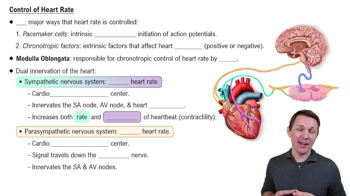
Control of Heart Rate

Aerobic vs. Anaerobic Exercise

Aerobic exercise, which includes activities like long-distance running, relies on oxygen for energy production and is typically performed at a moderate intensity. In contrast, anaerobic exercise involves short bursts of high intensity, leading to rapid heart rates. Understanding the difference helps in designing effective training programs that enhance endurance without overexerting the heart.
Recommended video:
03:35
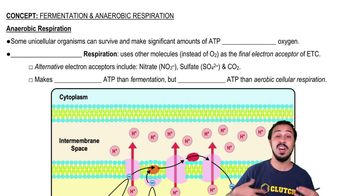
Anaerobic Respiration

Risks of Excessive Heart Rate

Exceeding a safe heart rate can lead to various health risks, including arrhythmias, decreased cardiac efficiency, and potential heart damage. It's crucial for athletes to monitor their heart rate during training to ensure they are not pushing beyond their limits, which can result in fatigue, injury, or serious cardiovascular issues.
Recommended video:
Guided course
6:13
Control of Heart Rate
Related Practice
Textbook Question

The pericardial cavity is located between:

a. The parietal pericardium and the fibrous pericardium.

b. The fibrous pericardium and the myocardium.

c. The parietal pericardium and the visceral pericardium.

d. The epicardium and the endocardium.

2
views
Textbook Question

Which of the following statements is true?

a. The tricuspid valve is located between the right atrium and the right ventricle.

b. The mitral valve is located between the pulmonary veins and the left atrium.

c. The pulmonary valve is located between the pulmonary artery and the pulmonary veins.

d. The aortic valve is located between the right ventricle and the aorta.

3
views
Textbook Question

Mr. Watson has been diagnosed with mitral insufficiency, or a malfunctioning mitral valve, which causes the valve to not close properly. Predict the signs and symptoms you might expect from a disease of this valve. What would happen to the patient's stroke volume and cardiac output? Explain. What might help improve his cardiac output?

2
views
Textbook Question

Mark the following statements as true or false. If a statement is false, correct it to make a true statement.

The heart plays a role in the regulation of blood pressure and secretes the hormone atrial natriuretic peptide.

2
views
Textbook Question

A newer drug, ivabradine, lowers the heart rate by blocking the nonselective HCN cation channels. Why would this action decrease the heart rate? Would this drug have an effect on pacemaker cells, contractile cells, or both? Explain.

1
views
Textbook Question

An experimental toxin makes the refractory period of cardiac muscle cells equal in length to that of skeletal muscle fibers. Predict the consequences of this toxin.

1
views