 Back
BackAnatomy & Physiology: Basics and Relationship
 3:06
3:06
Terms in this set (20)
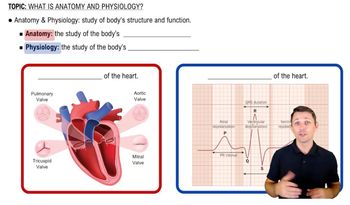
Anatomy is the study of the body’s structure.
Physiology is the study of the body’s function.
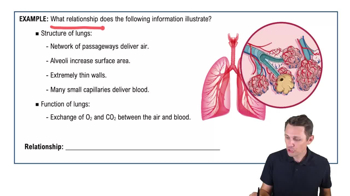
Structure exists to perform a function, so understanding an organ’s structure helps explain its function, and vice versa.
The principle that function is determined by structure, meaning to understand how something works, you must understand how it is built.
The pulmonary, tricuspid, aortic, and mitral valves are structural parts of the heart.
The heart valves ensure blood flows in only one direction during pumping.
Network of passageways, alveoli that increase surface area, thin walls, and many small capillaries.
Exchange of oxygen (O2) and carbon dioxide (CO2) between air and blood.
It causes bones to become thicker and restructured internally, resulting in stronger bones.
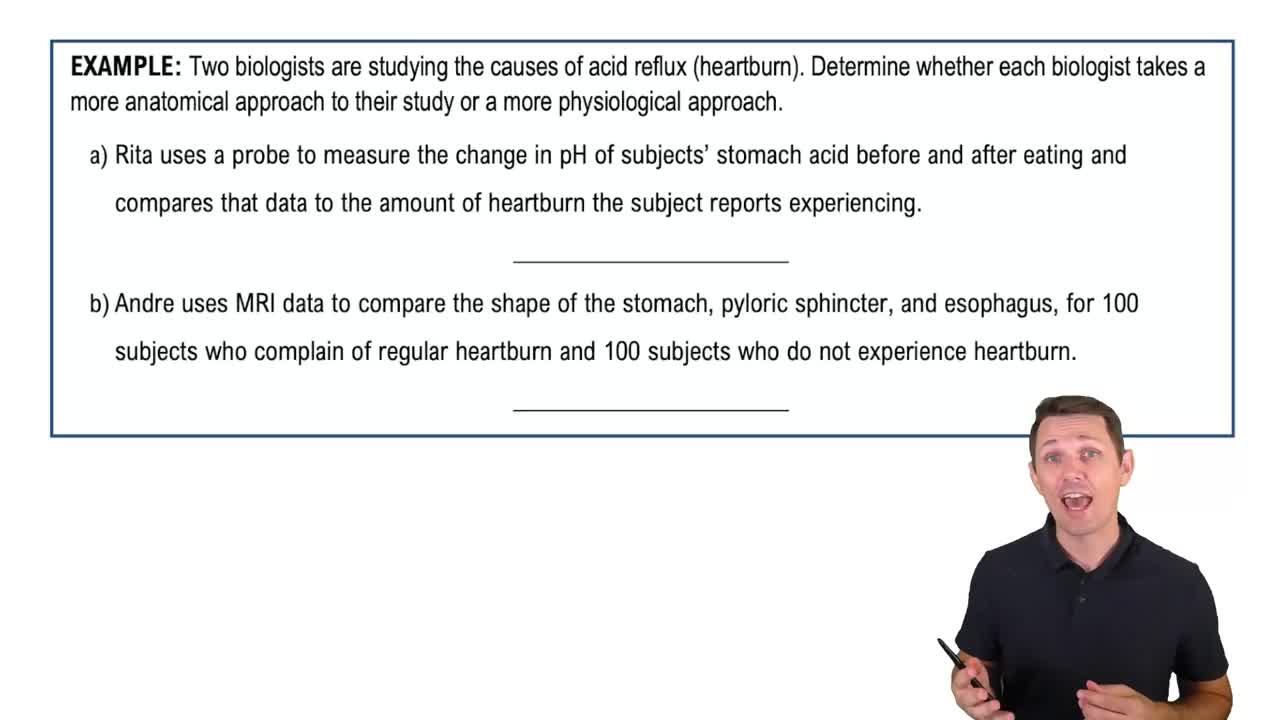
This relates to physiology because it describes a function or process.
This relates to anatomy because it describes body structure.
Because how something functions depends directly on its structure.
Measuring stomach acid pH changes is physiology; comparing stomach shape is anatomy.
Many levels of organization from molecular to whole body.
To ensure blood flows in only one direction when the heart pumps.
The lung’s structure (passageways, alveoli, thin walls, capillaries) supports its function of gas exchange.
Electric charge is maintained through an ion gradient across the cell membrane.
Collagen fibers.
There are 206 named bones.
Heart rate increases and blood pressure elevates.