Which lymphoid organ is primarily active during the early years of life?
The thymus is primarily active during the early years of life.
What is the function of each lymphoid organ?
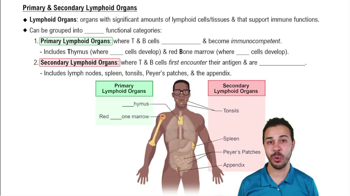
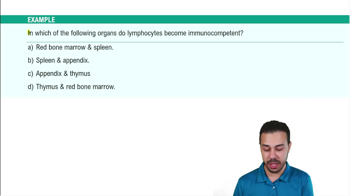
Primary lymphoid organs (thymus and red bone marrow) are where T and B cells mature, while secondary lymphoid organs (lymph nodes, spleen, MALT) are where these cells encounter antigens and participate in immune responses.
Which of these lymphoid organs is the thymus?
The thymus is a primary lymphoid organ where T cells develop and mature.
What is the largest lymphoid organ in the body?
Spleen is the largest lymphoid organ in the body.
Which organ is not classified as a lymphoid organ: thymus, spleen, liver, or lymph nodes?
Liver would not be classified as a lymphoid organ.
Where do T cells mature and become immunocompetent?
T cells mature and become immunocompetent in the thymus.
What is the role of secondary lymphoid organs?
Secondary lymphoid organs are where T and B cells first encounter antigens and actively participate in immune responses.
What are MALT and where are they found?
MALT, or mucosal-associated lymphoid tissues, include tonsils and Peyer's patches, found in the head and digestive system respectively.
What happens to T and B cells after they mature in primary lymphoid organs?
After maturing, T and B cells migrate to secondary lymphoid organs where they encounter antigens and participate in immune responses.
 Back
Back

 1:20
1:20