Back

Levels of Organization quiz #2

Control buttons has been changed to "navigation" mode.
1/33
  • What is the correct order of body layers from superficial to deep?

    A) Skin, muscle, bone
  • Which level is the most specific? A) Organism B) Organ system C) Organ D) Tissue

    D) Tissue
  • What is the correct order of organizational levels from simplest to most complex?

    A) Cell, tissue, organ, organ system, organism
  • How does the human body illustrate levels of organization?

    The human body illustrates levels of organization by having cells form tissues, tissues form organs, organs form organ systems, and organ systems form the organism.
  • Which list describes the organization of the human body from the most complex to the least complex? A) Organism, organ system, organ, tissue, cell B) Cell, tissue, organ, organ system, organism C) Organ system, organism, organ, tissue, cell D) Tissue, cell, organ, organ system, organism

    A) Organism, organ system, organ, tissue, cell
  • At which level of structural organization is the stomach?

    The stomach is at the organ level of structural organization.
  • Which level of structural organization is considered to be the highest level?

    The organismal level is considered to be the highest level of structural organization.
  • What behavior reflects Kohlberg’s preconventional moral reasoning?

    Obeying rules to avoid punishment
  • Which of these levels of organization includes all the other levels? A) Cellular B) Tissue C) Organ D) Organismal

    D) Organismal
  • Which are included in learning domains? Select all that apply. A) Cognitive B) Affective C) Psychomotor D) All of the above

    D) All of the above
  • Which level of biological organization includes all the others: cellular, tissue, organ, or organismal?

    Organismal
  • Which is the correct order of structure from smallest to largest?

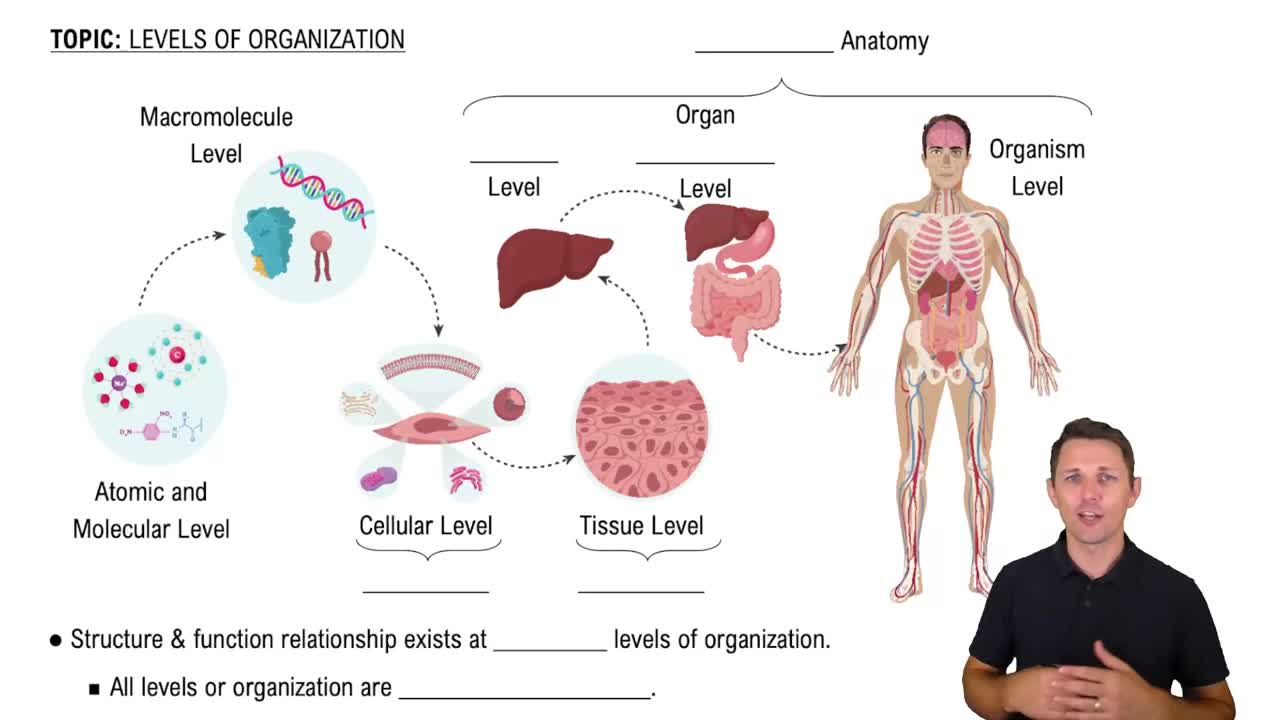
    The correct order of structure from smallest to largest is atomic/molecular, macromolecule, cellular, tissue, organ, organ system, and organismal.
  • Which level includes all the other levels? A) Cellular B) Tissue C) Organ D) Organismal

    D) Organismal
  • Which sequence represents increasing complexity in humans? A) Cell, tissue, organ, organ system, organism B) Organism, organ system, organ, tissue, cell C) Tissue, cell, organ, organ system, organism D) Organ system, organism, organ, tissue, cell

    A) Cell, tissue, organ, organ system, organism
  • The human respiratory system is an example of what level of organization?

    The human respiratory system is an example of the organ system level of organization.
  • Which structural level of organization is the most complex: cellular, tissue, organ, or organismal?

    Organismal
  • What are examples of the organ system level of biological organization?

    Digestive system, Respiratory system, Circulatory system
  • What are the organizational levels of the human body?

    The organizational levels of the human body are atomic/molecular, macromolecule, cellular, tissue, organ, organ system, and organismal.
  • Why do multicellular organisms need specialized cells?

    Multicellular organisms need specialized cells to perform specific functions efficiently, allowing for greater complexity and survival.
  • What does an age structure diagram show?

    An age structure diagram shows the distribution of various age groups in a population, which can indicate growth trends and social dynamics.
  • What distinguishes a coelomate animal from a pseudocoelomate animal?

    A coelomate animal has a true coelom, a body cavity completely lined with mesoderm, while a pseudocoelomate has a body cavity partially lined with mesoderm.
  • What are the levels of organization in an organism?

    The levels of organization in an organism are atomic/molecular, macromolecule, cellular, tissue, organ, organ system, and organismal.
  • Why do animals such as humans need levels of organization?

    Levels of organization allow for specialization and division of labor, enabling complex functions and efficient survival in animals like humans.
  • What is an accurate description of the pseudocoelom?

    A pseudocoelom is a body cavity that is not completely lined with mesoderm, found in pseudocoelomate animals.
  • Which cognitive ability does a child in the concrete operational stage struggle with the most?

    Abstract reasoning
  • What is the smallest level of biological organization in the human body?

    The atomic and molecular level, which involves the chemistry of the body.
  • What is the basic unit of life, and what does it consist of?

    The cell is the basic unit of life, consisting of organelles and cell parts.
  • What defines the organ level of organization?

    The organ level is defined by groups of tissues working together to perform a common function.
  • How are all levels of biological organization connected?

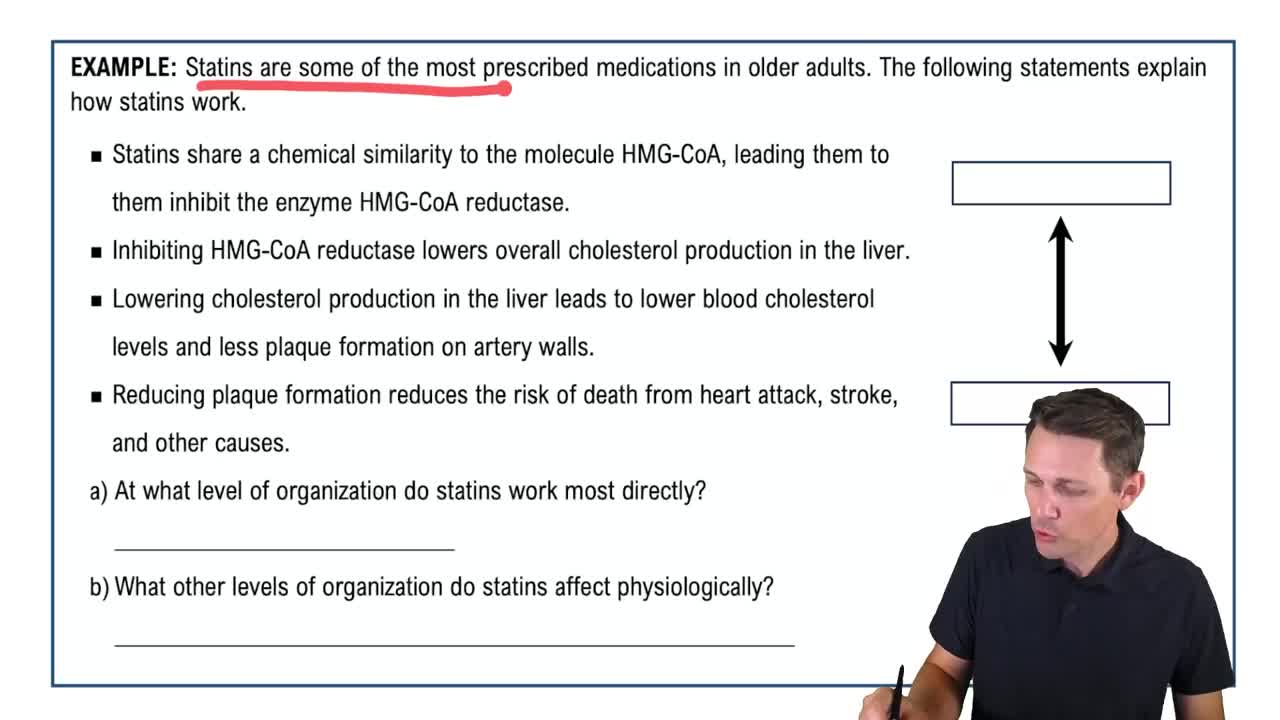
    A change at one level can have ripple effects on other levels, showing that all levels are interconnected.
  • What is cytology, and at which level of organization is it studied?

    Cytology is the study of cells, which is the cellular level of organization.
  • What is gross anatomy, and which levels of organization does it include?

    Gross anatomy is the study of anatomical structures visible without a microscope, including the organ, organ system, and organismal levels.
  • How can a change at the macromolecule level affect the entire organism?

    A change at the macromolecule level can impact cellular function, which can then affect tissues, organs, organ systems, and ultimately the whole organism.
  • How does the study of anatomy and physiology progress through the levels of organization?

    The study progresses from the smallest level (atomic/molecular) up through macromolecules, cells, tissues, organs, organ systems, and finally the whole organism.