Back

Introduction to Organ Systems quiz #5

Control buttons has been changed to "navigation" mode.
1/37
  • What is the defining characteristic of antisocial personality disorder?

    Disregard for others' rights
  • Which organs or parts of organs are considered to be retroperitoneal? Check all that apply. a) Kidneys b) Liver c) Pancreas d) Stomach

    a) Kidneys, c) Pancreas
  • What is essential for the nurse to obtain before administering a medication to the client? a) Client's favorite color b) Informed consent c) Client's family history d) Client's dietary preferences

    b) Informed consent
  • A patient is scheduled for a chest x-ray. What information is necessary to schedule the procedure? a) Patient's favorite movie b) Patient's medical history c) Patient's clothing size d) Patient's dietary habits

    b) Patient's medical history
  • Where are most of the worm’s internal organs located? a) In the head b) In the segments c) In the tail d) In the legs

    b) In the segments
  • Which organ system removes carbon dioxide from the bloodstream? a) Digestive system b) Respiratory system c) Nervous system d) Integumentary system

    b) Respiratory system
  • What does the epiglottis do? a) Produces sound b) Prevents food from entering the airway c) Filters air d) Absorbs nutrients

    b) Prevents food from entering the airway
  • What is an example of an organ?

    Heart
  • Which body system supports and protects the other body system? a) Muscular system b) Skeletal system c) Digestive system d) Endocrine system

    b) Skeletal system
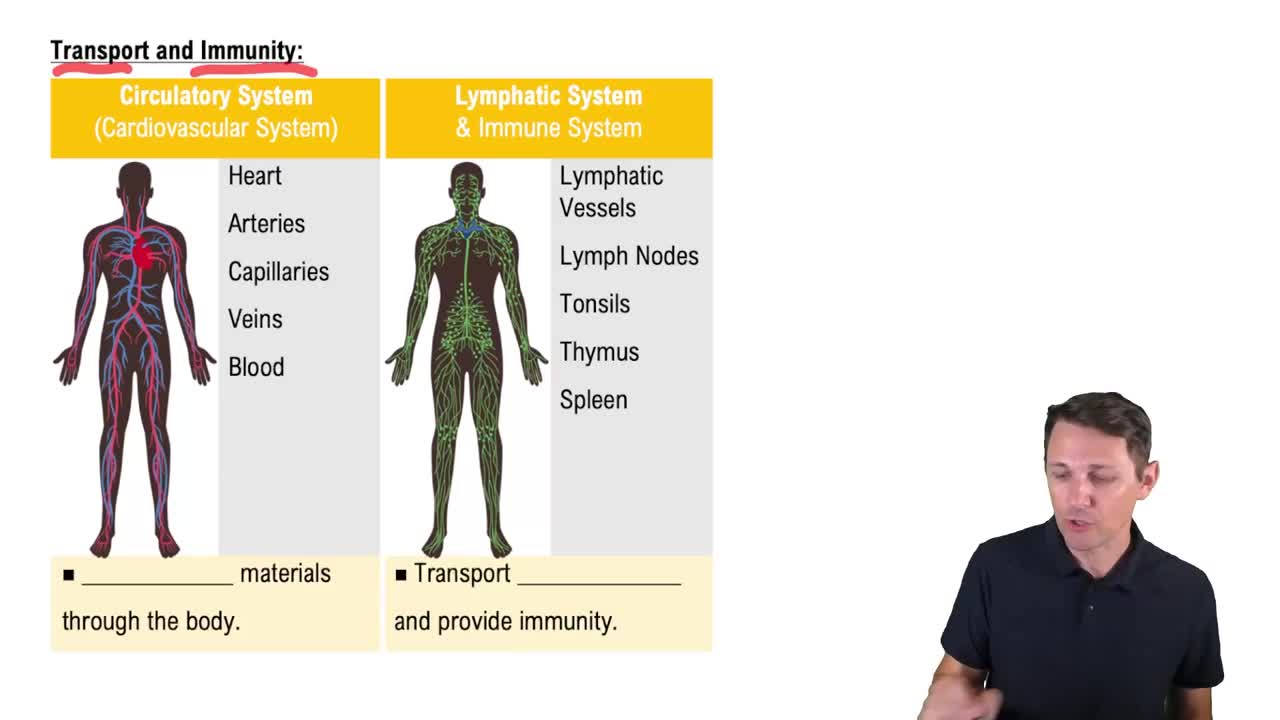
  • Which two systems work together to deliver oxygen to all organs of the human body? a) Respiratory and circulatory systems b) Digestive and nervous systems c) Muscular and skeletal systems d) Endocrine and integumentary systems

    a) Respiratory and circulatory systems
  • What preparation is required for an IVP (Intravenous Pyelogram)?

    Fasting
  • Which of these is the uppermost ocean zone? a) Abyssal zone b) Bathyal zone c) Epipelagic zone d) Hadal zone

    c) Epipelagic zone
  • What is the first step in conducting a cross-sectional study?

    Defining the population
  • Which part of the nursing process involves the nurse setting short-term goals for the patient? a) Assessment b) Diagnosis c) Planning d) Evaluation

    c) Planning
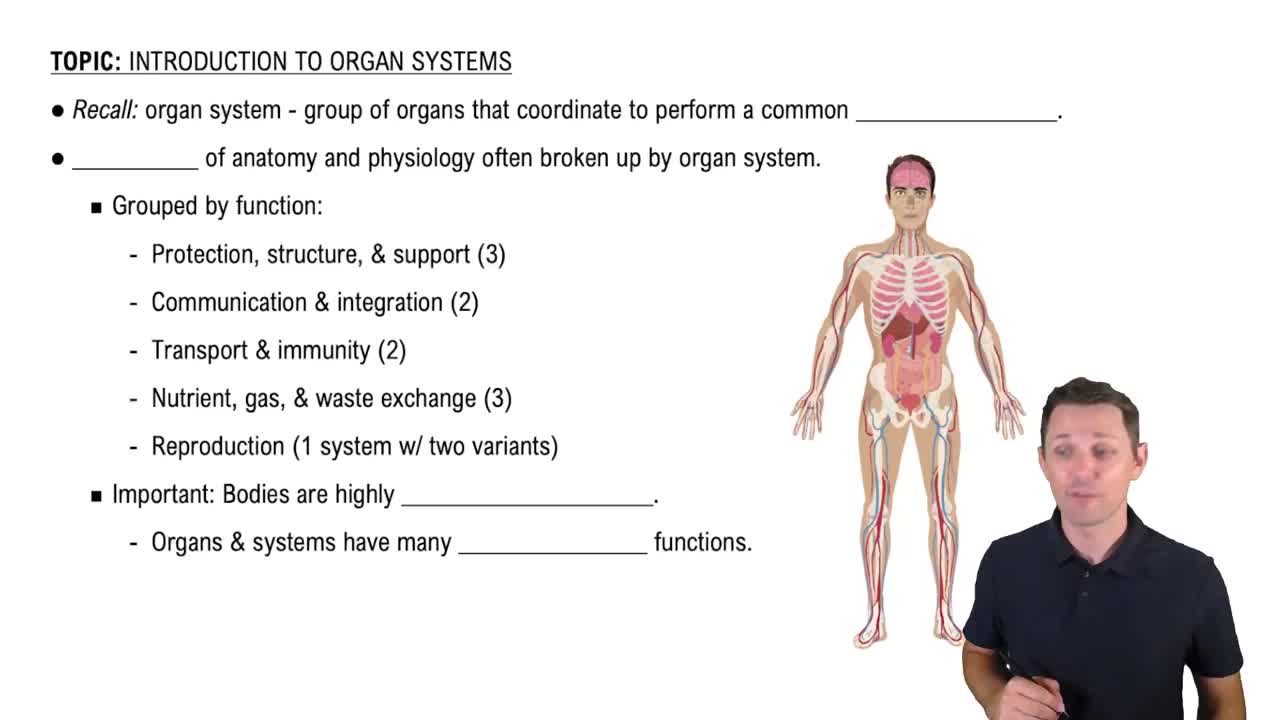
  • Which organ system functions to keep the body protected from the outside world? a) Integumentary system b) Digestive system c) Nervous system d) Endocrine system

    a) Integumentary system
  • Which body system has a function most similar to the role the lysosome plays for a cell? a) Digestive system b) Respiratory system c) Nervous system d) Circulatory system

    a) Digestive system
  • What is an example of vehicle transmission?

    Contaminated food
  • Which function is not performed by hepatocytes?

    Producing insulin
  • What are some common traits of primates?

    Opposable thumbs, large brain relative to body size, forward-facing eyes
  • Which of these is an example of secondary prevention? a) Immunization b) Screening tests c) Rehabilitation d) Health education

    b) Screening tests
  • Which client should the nurse assess first? a) A client with stable vital signs b) A client with chest pain c) A client who is sleeping d) A client with a mild headache

    b) A client with chest pain
  • What components can be found within the stroma of a chloroplast?

    Thylakoids, ribosomes, DNA
  • What constitutes the body's first line of defense against pathogens?

    Skin and mucous membranes
  • What type of conditioning was first demonstrated by Ivan Pavlov?

    Classical conditioning
  • Which statement by the new nurse indicates understanding of the nurse’s role in pain management? a) 'I will ignore the patient's pain.' b) 'I will assess and document the patient's pain level regularly.' c) 'I will only give pain medication when asked.' d) 'I will avoid discussing pain with the patient.'

    b) 'I will assess and document the patient's pain level regularly.'
  • What does the sublingual route of medication administration involve?

    Medication is placed under the tongue
  • You are assessing a client for acute cholecystitis. What sign would you assess for? a) Murphy's sign b) Babinski's sign c) Tinel's sign d) Romberg's sign

    a) Murphy's sign
  • What is the term for the flexible rod-like tissue that extends along the dorsal side of a chordate? a) Notochord b) Spine c) Cartilage d) Ligament

    a) Notochord
  • What is alcoholism classified as?

    It is a chronic disease
  • Which intervention should the nurse initiate first for a patient with difficulty breathing? a) Administer oxygen b) Call the family c) Provide a meal d) Take a break

    a) Administer oxygen
  • What is an example of objective data in patient assessment?

    Patient's temperature
  • Which body system eliminates waste from the circulatory system?

    Urinary system
  • Which pediatric client requires immediate intervention by the nurse? a) A child with a mild fever b) A child with difficulty breathing c) A child who is sleeping d) A child with a runny nose

    b) A child with difficulty breathing
  • Which anatomical structure is not part of the conducting zone of the respiratory system?

    Alveoli
  • How is the outer core of the Earth described in terms of its state and composition?

    It is liquid and composed of iron and nickel
  • Which nursing intervention is an example of tertiary preventive care? a) Immunization b) Rehabilitation c) Health education d) Screening tests

    b) Rehabilitation
  • What is a barrier to learning in the psychomotor domain?

    Physical disability