Anatomy & Physiology
My Course
Learn
Exam Prep
AI Tutor
Study Guides
Textbook Solutions
Flashcards
Explore
Try the app
My Course
Learn
Exam Prep
AI Tutor
Study Guides
Textbook Solutions
Flashcards
Explore
Try the app
Back
Cells of the Immune System: Agranulocytes definitions
You can tap to flip the card.
Agranulocytes
You can tap to flip the card.
👆
Agranulocytes
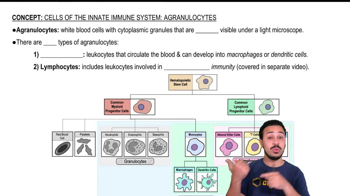
Leukocytes lacking visible cytoplasmic granules, including monocytes and lymphocytes, crucial for immune responses.
Track progress
Control buttons has been changed to "navigation" mode.
1/15
Related flashcards
Recommended videos
Cells of the Immune System: Agranulocytes quiz
Cells of the Immune System: Agranulocytes
10 Terms
Cells of the Immune System: Agranulocytes quiz #1
Cells of the Immune System: Agranulocytes
10 Terms
3:12
Lymphocytes
1
views
7:02
Monocytes
1
views
3:43
Aganulocytes
Terms in this set (15)
Hide definitions
Agranulocytes
Leukocytes lacking visible cytoplasmic granules, including monocytes and lymphocytes, crucial for immune responses.
Monocytes
White blood cells circulating in the blood, capable of differentiating into macrophages or dendritic cells.
Macrophages
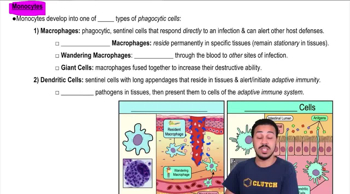
Phagocytic cells acting as sentinel cells, responding to infections and alerting other immune defenses.
Dendritic cells
Sentinel cells with long appendages, ingesting pathogens and activating adaptive immune cells.
Lymphocytes
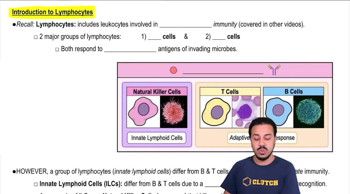
Leukocytes involved in adaptive immunity, including T cells, B cells, and natural killer cells.
Natural killer cells
Innate lymphoid cells that kill various cell types without specific antigen recognition.
T cells
Lymphocytes part of adaptive immunity, specifically targeting antigens of invading microbes.
B cells
Lymphocytes involved in adaptive immunity, producing antibodies against specific antigens.
Hematopoietic stem cell
Progenitor cell differentiating into myeloid or lymphoid progenitor cells, giving rise to various blood cells.
Resident macrophages
Macrophages residing permanently in tissues, ready to respond to infections.
Wandering macrophages
Macrophages circulating in the blood, recruited to infection sites.
Giant cells
Fused macrophages with increased destructive abilities, formed during immune responses.
Innate lymphoid cells
Lymphocytes part of innate immunity, lacking specific antigen recognition, including natural killer cells.
Adaptive immunity
Immune response involving specific recognition of antigens by T and B cells.
Sentinel cells
Cells acting as scouts, detecting infections and alerting the immune system.