All of the following are considered innate body defenses except: a. Complement b. Phagocytosis c. Antibodies d. Lysozyme e. Inflammation
Verified step by step guidance
1
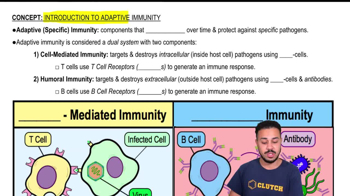
Step 1: Understand the difference between innate and adaptive (acquired) immunity. Innate immunity refers to the body's nonspecific defense mechanisms that are present from birth and provide immediate protection. Adaptive immunity involves specific responses to pathogens and develops over time, including the production of antibodies.
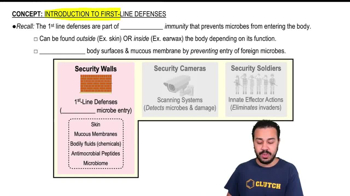
Step 2: Review each option to determine whether it is part of the innate or adaptive immune system. Innate defenses include physical barriers, chemical barriers, and cellular responses like phagocytosis and inflammation.
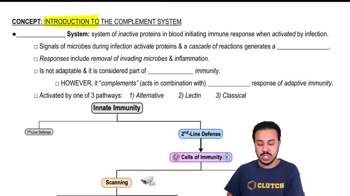
Step 3: Analyze option (a) Complement. Complement proteins are part of the innate immune system; they help destroy pathogens by promoting inflammation and cell lysis.
Step 4: Analyze option (b) Phagocytosis. Phagocytosis is an innate defense where cells like macrophages engulf and destroy pathogens nonspecifically.
Step 5: Analyze option (c) Antibodies. Antibodies are produced by B cells as part of the adaptive immune response, targeting specific antigens, so this is not an innate defense.
Verified video answer for a similar problem:
This video solution was recommended by our tutors as helpful for the problem above
Video duration:
2m
Play a video:
0 Comments
Key Concepts
Here are the essential concepts you must grasp in order to answer the question correctly.
Innate Body Defenses
Innate body defenses are the non-specific, first-line immune responses present from birth. They include physical barriers, chemical secretions, and cellular responses that protect against pathogens without prior exposure. Examples are inflammation, phagocytosis, complement proteins, and enzymes like lysozyme.
Adaptive immunity is a specific immune response that develops after exposure to a pathogen. It involves lymphocytes producing antibodies, which target specific antigens. Unlike innate defenses, antibodies are not present at birth but are generated in response to infection or vaccination.
The complement system is a group of proteins in the blood that enhances innate immunity by promoting inflammation, opsonization, and lysis of pathogens. It acts quickly and non-specifically to help clear infections and is considered part of the innate immune response.