Mark the following statements as true or false. If a statement is false, correct it to make a true statement. During exercise, the parasympathetic nervous system increases the metabolic rate.
Verified step by step guidance
1
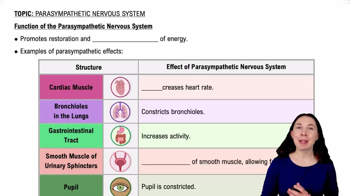
Step 1: Begin by understanding the role of the parasympathetic nervous system. The parasympathetic nervous system is part of the autonomic nervous system and is primarily responsible for 'rest and digest' activities, such as reducing heart rate, promoting digestion, and conserving energy.
Step 2: Contrast the parasympathetic nervous system with the sympathetic nervous system, which is responsible for 'fight or flight' responses. During exercise, the sympathetic nervous system is activated to increase metabolic rate, heart rate, and energy mobilization.
Step 3: Evaluate the statement provided. The statement claims that the parasympathetic nervous system increases the metabolic rate during exercise. Based on the roles of the autonomic nervous system, this statement is false because the parasympathetic nervous system does not increase metabolic rate during exercise.
Step 4: Correct the false statement to make it true. The corrected statement should be: 'During exercise, the sympathetic nervous system increases the metabolic rate.'
Step 5: Review the corrected statement and ensure it aligns with the physiological functions of the autonomic nervous system during exercise.
Verified video answer for a similar problem:
This video solution was recommended by our tutors as helpful for the problem above
Play a video:
0 Comments
Key Concepts
Here are the essential concepts you must grasp in order to answer the question correctly.
Parasympathetic Nervous System
The parasympathetic nervous system is part of the autonomic nervous system responsible for promoting 'rest and digest' functions. It conserves energy by slowing the heart rate and increasing intestinal and gland activity. During exercise, this system typically decreases in activity, allowing the sympathetic nervous system to dominate.
The sympathetic nervous system prepares the body for 'fight or flight' responses during stressful situations, including exercise. It increases heart rate, dilates airways, and boosts metabolic rate to provide more energy. Understanding its role is crucial to recognizing how the body responds to physical activity.
Metabolic rate refers to the rate at which the body expends energy or burns calories. During exercise, the metabolic rate typically increases due to heightened energy demands. This concept is essential for understanding how the body adapts to physical activity and the role of different nervous system components in regulating these changes.