More than one choice may apply. Which of the following connect to the lymph node at the hilum? a. Afferent lymphatic vessels b. Efferent lymphatic vessels c. Trabeculae d. Anchoring filaments
Verified step by step guidance
1
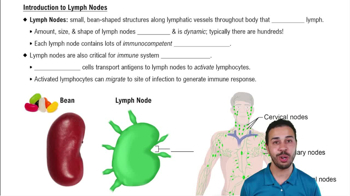
Understand the anatomy of a lymph node: The lymph node is a small, bean-shaped structure that filters lymph fluid. It has a hilum, which is an indented region where certain structures connect to the node.
Differentiate between afferent and efferent lymphatic vessels: Afferent lymphatic vessels bring lymph fluid into the lymph node, while efferent lymphatic vessels carry filtered lymph fluid away from the node. Consider which of these connects at the hilum.
Learn about trabeculae: Trabeculae are connective tissue structures that extend inward from the capsule of the lymph node, providing support. Determine if they connect specifically at the hilum.
Understand anchoring filaments: Anchoring filaments are structures that help lymphatic capillaries remain open by attaching them to surrounding tissues. Evaluate whether they connect to the hilum of the lymph node.
Review the function of the hilum: The hilum is primarily a site for the entry and exit of blood vessels and efferent lymphatic vessels. Use this information to identify which options are correct.
Verified video answer for a similar problem:
This video solution was recommended by our tutors as helpful for the problem above
Video duration:
1m
Play a video:
0 Comments
Key Concepts
Here are the essential concepts you must grasp in order to answer the question correctly.
Lymphatic Vessels
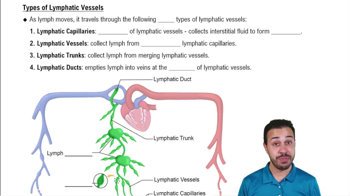
Lymphatic vessels are crucial components of the lymphatic system, responsible for transporting lymph, a fluid containing immune cells, throughout the body. Afferent lymphatic vessels carry lymph into the lymph nodes, while efferent lymphatic vessels transport it away. Understanding the directionality of these vessels is essential for comprehending how lymph nodes filter lymph and contribute to immune responses.
The hilum is the region of a lymph node where blood vessels and lymphatic vessels enter and exit. It serves as the primary site for the connection of afferent and efferent lymphatic vessels, making it a critical area for lymphatic drainage and immune cell trafficking. Recognizing the significance of the hilum helps in understanding the functional anatomy of lymph nodes.
Trabeculae are connective tissue structures within lymph nodes that provide support and organization to the lymphatic tissue. They form a framework that helps maintain the shape of the lymph node and facilitate the movement of lymph through its sinuses. Understanding trabeculae is important for grasping the structural organization of lymph nodes and their role in immune function.