Ch. 14 The Autonomic Nervous System and Homeostasis
Amerman - Human Anatomy & Physiology 2nd Edition
Amerman2nd EditionHuman Anatomy & PhysiologyISBN: 9780136873822Not the one you use?Change textbook
Chapter 14, Problem 1

Which of the following best describes the basic function of the autonomic nervous system?
a. Controls the somatic nervous system
b. Controls automatic functions to maintain homeostasis
c. Detects somatic sensory information
d. All of the above

Verified step by step guidance
1
Step 1: Begin by understanding the autonomic nervous system (ANS). The ANS is a division of the peripheral nervous system responsible for regulating involuntary physiological processes, such as heart rate, blood pressure, digestion, and respiratory rate.
Step 2: Recall the concept of homeostasis. Homeostasis refers to the body's ability to maintain a stable internal environment despite external changes. The ANS plays a critical role in maintaining homeostasis by controlling automatic functions.
Step 3: Analyze the options provided in the question. Option (a) suggests the ANS controls the somatic nervous system, which is incorrect because the somatic nervous system is responsible for voluntary movements and is separate from the ANS. Option (c) suggests the ANS detects somatic sensory information, which is also incorrect because sensory information is processed by sensory neurons, not the ANS.
Step 4: Evaluate option (b). This option states that the ANS controls automatic functions to maintain homeostasis, which aligns with the primary role of the ANS. It regulates involuntary processes to ensure the body remains in balance.
Step 5: Consider option (d), which states 'All of the above.' Since options (a) and (c) are incorrect, option (d) cannot be correct. Therefore, the best description of the basic function of the ANS is option (b).

Verified video answer for a similar problem:

This video solution was recommended by our tutors as helpful for the problem above.
Was this helpful?

Key Concepts

Here are the essential concepts you must grasp in order to answer the question correctly.

Autonomic Nervous System (ANS)

The autonomic nervous system is a component of the peripheral nervous system that regulates involuntary physiological functions, including heart rate, blood pressure, respiration, and digestion. It operates automatically, without conscious control, and is divided into the sympathetic and parasympathetic systems, which work together to maintain homeostasis.
Recommended video:
1:50
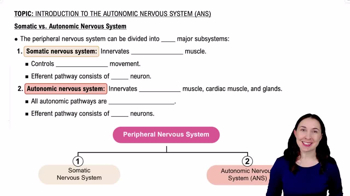
Somatic vs. Autonomic Nervous System

Homeostasis

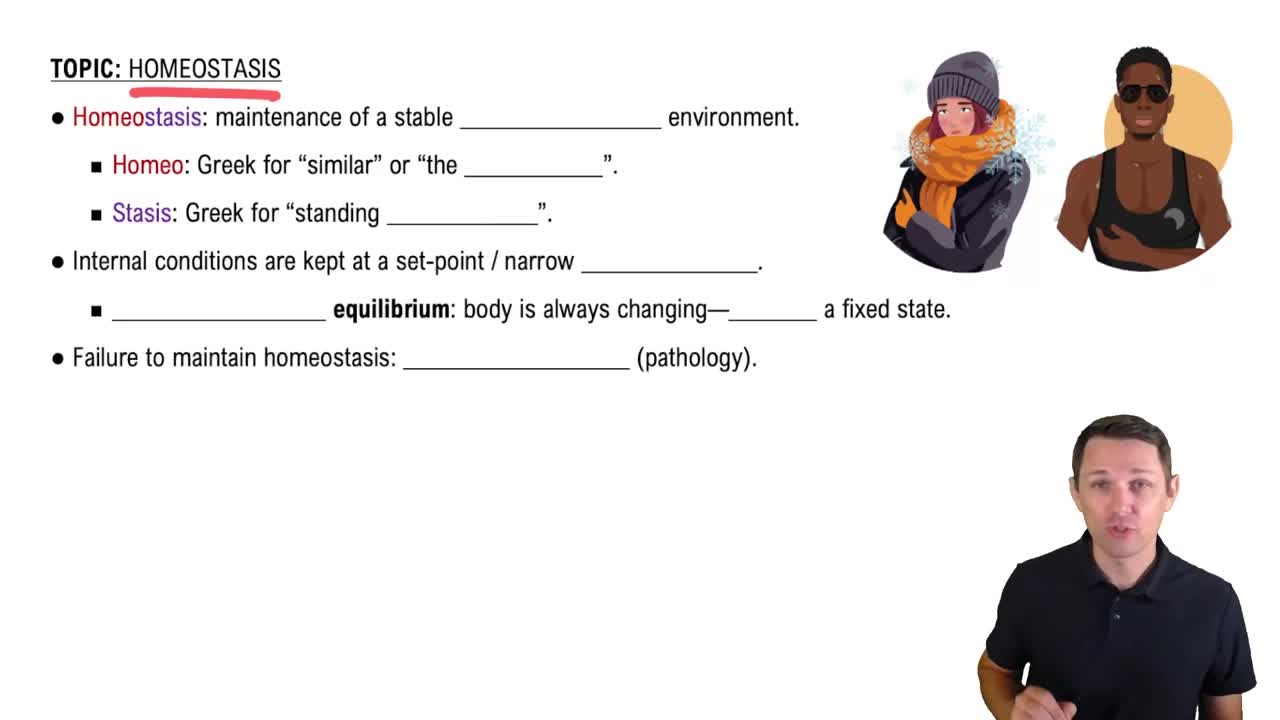
Homeostasis refers to the body's ability to maintain a stable internal environment despite external changes. This involves various physiological processes that regulate temperature, pH, hydration, and other vital conditions, ensuring that the body functions optimally. The autonomic nervous system plays a crucial role in achieving and maintaining homeostasis.
Recommended video:
Guided course
01:59
Introduction to Homeostasis

Somatic Nervous System

The somatic nervous system is responsible for voluntary movements and the transmission of sensory information to the central nervous system. It controls skeletal muscles and mediates conscious sensations, such as touch and pain. In contrast to the autonomic nervous system, the somatic system requires conscious thought and is not involved in automatic bodily functions.
Recommended video:
1:50
Somatic vs. Autonomic Nervous System