Ch. 3 Cells and Tissues
Marieb - Essentials of Human Anatomy & Physiology 13th Edition
Marieb13th EditionEssentials of Human Anatomy & PhysiologyISBN: 9780135624340Not the one you use?Change textbook
Chapter 3, Problem 1

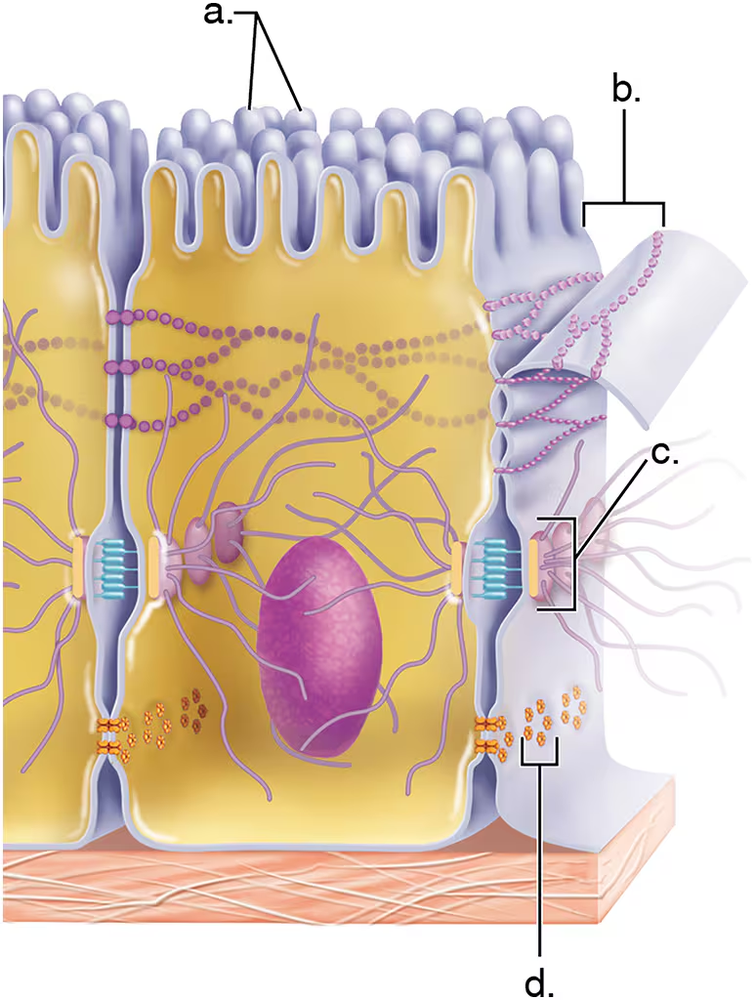
Which of the following would you expect to find in or on cells whose main function is absorption?
Illustration of a cell membrane with labeled components, highlighting structures involved in absorption processes.

Verified step by step guidance
1
Step 1: Identify the structures labeled in the image that are typically associated with absorption in cells. The image shows a cell with several specialized features: a. microvilli, b. glycocalyx, c. cilia, and d. tight junctions.
Step 2: Understand the function of each labeled structure. Microvilli (a) increase the surface area of the cell membrane, which enhances the cell's ability to absorb nutrients and other substances.
Step 3: Recognize that the glycocalyx (b) is a glycoprotein and glycolipid covering that can aid in protection and absorption by trapping enzymes and nutrients close to the cell surface.
Step 4: Note that cilia (c) are primarily involved in movement of substances across the cell surface rather than absorption, so they are less relevant for cells specialized in absorption.
Step 5: Tight junctions (d) help maintain the integrity of the epithelial barrier but do not directly contribute to absorption; they prevent leakage between cells.

Verified video answer for a similar problem:

This video solution was recommended by our tutors as helpful for the problem above.
Video duration:
2m
Was this helpful?

Key Concepts

Here are the essential concepts you must grasp in order to answer the question correctly.

Microvilli (Label a)

Microvilli are tiny finger-like projections on the surface of absorptive cells that increase the surface area for absorption. They are especially abundant in the small intestine, enhancing nutrient uptake by providing more membrane space for transport proteins.
Recommended video:
4:21
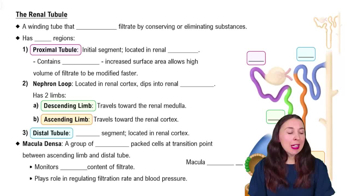
The Renal Tubule

Tight Junctions (Label d)

Tight junctions are specialized connections between adjacent cells that prevent the passage of substances between cells. They help maintain selective absorption by ensuring that materials pass through the cells rather than between them, preserving the integrity of the absorptive barrier.
Recommended video:
05:33
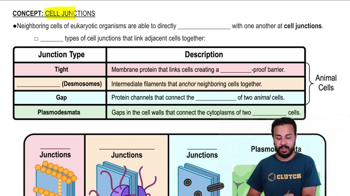
Cell Junctions

Basal Infoldings and Mitochondria (Label c)

Basal infoldings increase the surface area of the cell membrane at the base of absorptive cells, facilitating active transport. The presence of numerous mitochondria nearby provides the ATP necessary for energy-dependent absorption processes, supporting efficient nutrient uptake.
Recommended video:
04:45
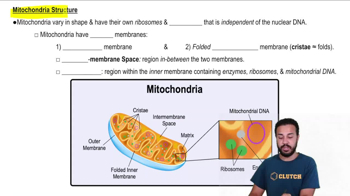
Mitochondria Structure