Lymphatic vessels: a. Serve as sites for immune surveillance b. Filter lymph c. Transport leaked plasma proteins and fluids to the cardiovascular system d. Are represented by vessels that resemble arteries, capillaries, and veins
Verified step by step guidance
1
Step 1: Understand the primary functions of lymphatic vessels. Lymphatic vessels are part of the lymphatic system, which helps maintain fluid balance, supports immune function, and transports lymph—a fluid containing white blood cells and waste products.
Step 2: Analyze option (a) 'Serve as sites for immune surveillance.' Immune surveillance primarily occurs in lymph nodes and other lymphoid organs, not directly in the vessels themselves. Lymphatic vessels transport lymph to these sites but are not the main locations for immune surveillance.
Step 3: Consider option (b) 'Filter lymph.' The filtering of lymph occurs in lymph nodes, which are small structures along the lymphatic vessels. The vessels themselves do not filter lymph; they transport it to the nodes where filtering happens.
Step 4: Evaluate option (c) 'Transport leaked plasma proteins and fluids to the cardiovascular system.' This is a key function of lymphatic vessels. They collect excess interstitial fluid and plasma proteins that have leaked from blood capillaries and return them to the bloodstream, maintaining fluid balance.
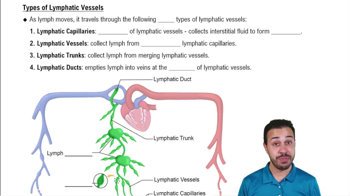
Step 5: Review option (d) 'Are represented by vessels that resemble arteries, capillaries, and veins.' Lymphatic vessels do have structural similarities to veins, including valves to prevent backflow, and include lymphatic capillaries, larger collecting vessels, and trunks, resembling the hierarchy of blood vessels.
Verified video answer for a similar problem:
This video solution was recommended by our tutors as helpful for the problem above
Video duration:
1m
Play a video:
0 Comments
Key Concepts
Here are the essential concepts you must grasp in order to answer the question correctly.
Function of Lymphatic Vessels
Lymphatic vessels are part of the lymphatic system responsible for transporting lymph, a fluid containing immune cells and waste products. They help return leaked plasma proteins and excess interstitial fluid back to the cardiovascular system, maintaining fluid balance in tissues.
Lymph nodes, not lymphatic vessels themselves, serve as sites for immune surveillance and filter lymph to trap pathogens and foreign particles. This distinction is important to understand the role of different lymphatic structures in immunity.
Lymphatic vessels include capillaries, collecting vessels, and larger trunks, resembling veins more than arteries. They have thin walls and valves to ensure one-way flow of lymph, but they do not have the thick muscular walls characteristic of arteries.