
Textbook Question
Mark the following statements as true or false. If a statement is false, correct it to make a true statement.
A goblet cell is a unicellular exocrine gland that secretes mucus.
1
views
 Verified step by step guidance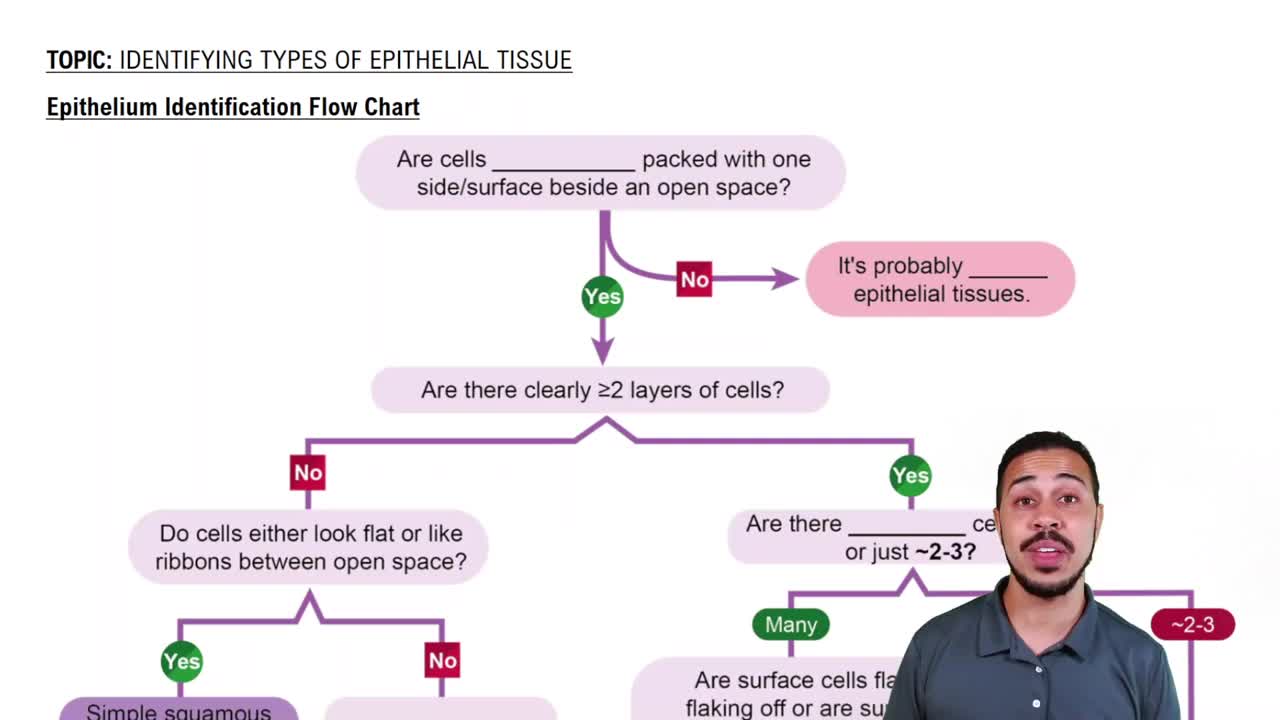
 16:19
16:19
 3:55
3:55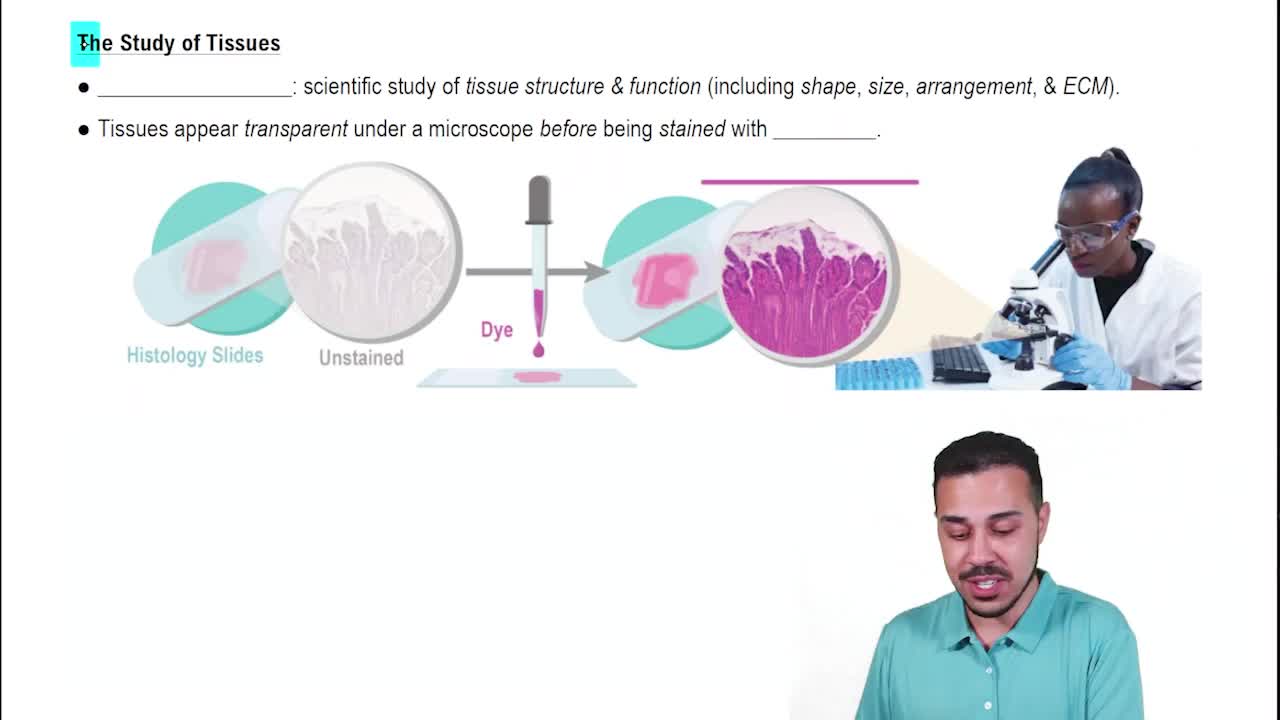 02:52
02:52Mark the following statements as true or false. If a statement is false, correct it to make a true statement.
A goblet cell is a unicellular exocrine gland that secretes mucus.
Mark the following statements as true or false. If a statement is false, correct it to make a true statement.
Stratified epithelia are specialized to allow substances to cross their cells rapidly.
Mark the following statements as true or false. If a statement is false, correct it to make a true statement.
Histology is the division of microscopic anatomy that studies the cellular level of organization.
Mark the following statements as true or false. If a statement is false, correct it to make a true statement.
Pseudostratified epithelium appears to be simple epithelium but is actually stratified.
Mark the following statements as true or false. If a statement is false, correct it to make a true statement.
Keratinocytes begin life in the stratum corneum and gradually are pushed into the stratum basale.
Compare and contrast the following pairs of terms:
Endocrine gland and exocrine gland