Name and define the three distinct processes involved in the production of urine.
Verified step by step guidance
1
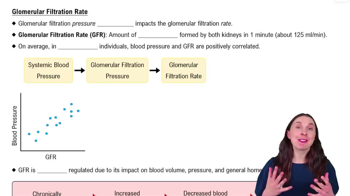
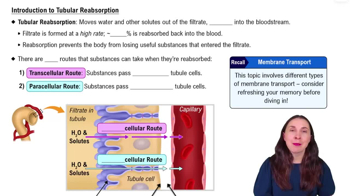
Identify the three main processes involved in urine production: filtration, reabsorption, and secretion.
Define filtration as the process where blood plasma is filtered through the glomerulus into Bowman's capsule, allowing water and small solutes to pass while retaining blood cells and large proteins.
Explain reabsorption as the movement of substances from the filtrate back into the blood, primarily occurring in the proximal convoluted tubule, where essential nutrients, ions, and water are reclaimed.
Describe secretion as the active transport of additional waste substances and excess ions from the blood into the tubular fluid, which helps in fine-tuning the composition of urine.
Summarize that these three processes work together in the nephron to form urine by filtering blood, reclaiming useful substances, and eliminating wastes.
Verified video answer for a similar problem:
This video solution was recommended by our tutors as helpful for the problem above
Play a video:
0 Comments
Key Concepts
Here are the essential concepts you must grasp in order to answer the question correctly.
Glomerular Filtration
Glomerular filtration is the first step in urine formation where blood plasma is filtered through the glomerulus into Bowman's capsule. This process separates water and small solutes from blood cells and large proteins, forming a filtrate that will be processed further.
Tubular reabsorption is the process by which essential substances like water, glucose, and ions are reabsorbed from the filtrate back into the bloodstream as it passes through the renal tubules. This ensures the body retains necessary nutrients and maintains fluid balance.
Tubular secretion involves the active transport of additional waste products and excess ions from the blood into the renal tubules. This process helps in eliminating substances not filtered initially and fine-tunes the composition of urine.