Ch. 4 Histology
Amerman - Human Anatomy & Physiology 2nd Edition
Amerman2nd EditionHuman Anatomy & PhysiologyISBN: 9780136873822Not the one you use?Change textbook
Chapter 4, Problem 3c

Describe the roles of the following components of the ECM:
Reticular fibers

Verified step by step guidance
1
Understand that the extracellular matrix (ECM) is a network of proteins and carbohydrates that provides structural and biochemical support to surrounding cells.
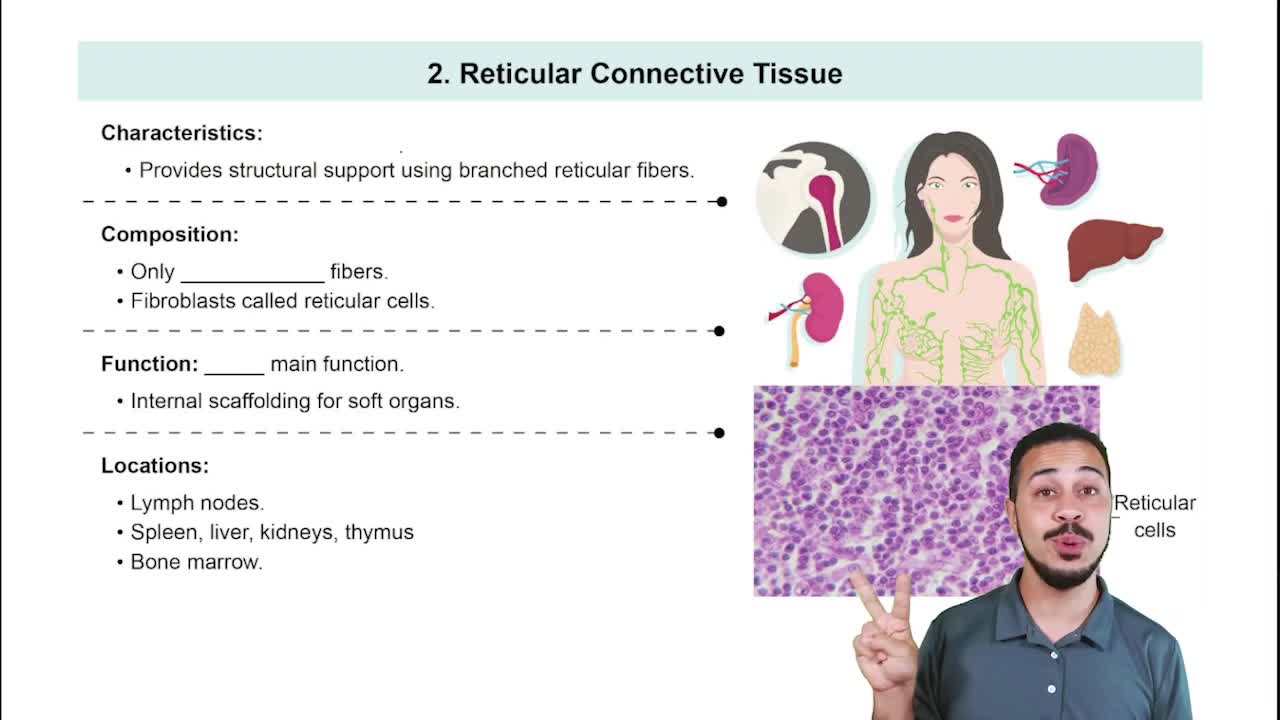
Recognize that reticular fibers are a type of fiber found in the ECM, composed primarily of type III collagen, which is thinner and more delicate compared to other collagen fibers.
Learn that the primary role of reticular fibers is to form a supportive framework (stroma) for soft tissues, particularly in organs such as the liver, spleen, lymph nodes, and bone marrow.
Note that reticular fibers create a mesh-like structure that supports cells and allows for the passage of fluids and cells, which is especially important in lymphatic and hematopoietic tissues.
Understand that reticular fibers also play a role in wound healing and tissue repair by providing a scaffold for new cell growth and tissue regeneration.

Verified video answer for a similar problem:

This video solution was recommended by our tutors as helpful for the problem above.
Was this helpful?

Key Concepts

Here are the essential concepts you must grasp in order to answer the question correctly.

Extracellular Matrix (ECM)

The extracellular matrix (ECM) is a complex network of proteins and carbohydrates that provides structural and biochemical support to surrounding cells. It plays a crucial role in tissue and organ function, influencing cell behavior, migration, and differentiation. The ECM is composed of various components, including fibers, glycoproteins, and proteoglycans, which together create a dynamic environment for cells.
Recommended video:

Reticular Fibers

Reticular fibers are a type of connective tissue fiber composed primarily of collagen type III. They form a fine, mesh-like network that provides structural support to various organs, including the liver, lymph nodes, and bone marrow. These fibers are essential for maintaining the shape and integrity of tissues, allowing for flexibility and resilience while also facilitating the movement of cells within the ECM.
Recommended video:
Guided course
04:52
Reticular Connective Tissue

Tissue Support and Organization

The organization and support provided by the ECM, particularly through components like reticular fibers, are vital for maintaining tissue architecture. This organization helps to anchor cells in place, supports cell signaling, and regulates the exchange of nutrients and waste. Proper ECM structure is essential for normal tissue function, and any disruption can lead to pathological conditions, including fibrosis and cancer.
Recommended video:
Guided course
02:19
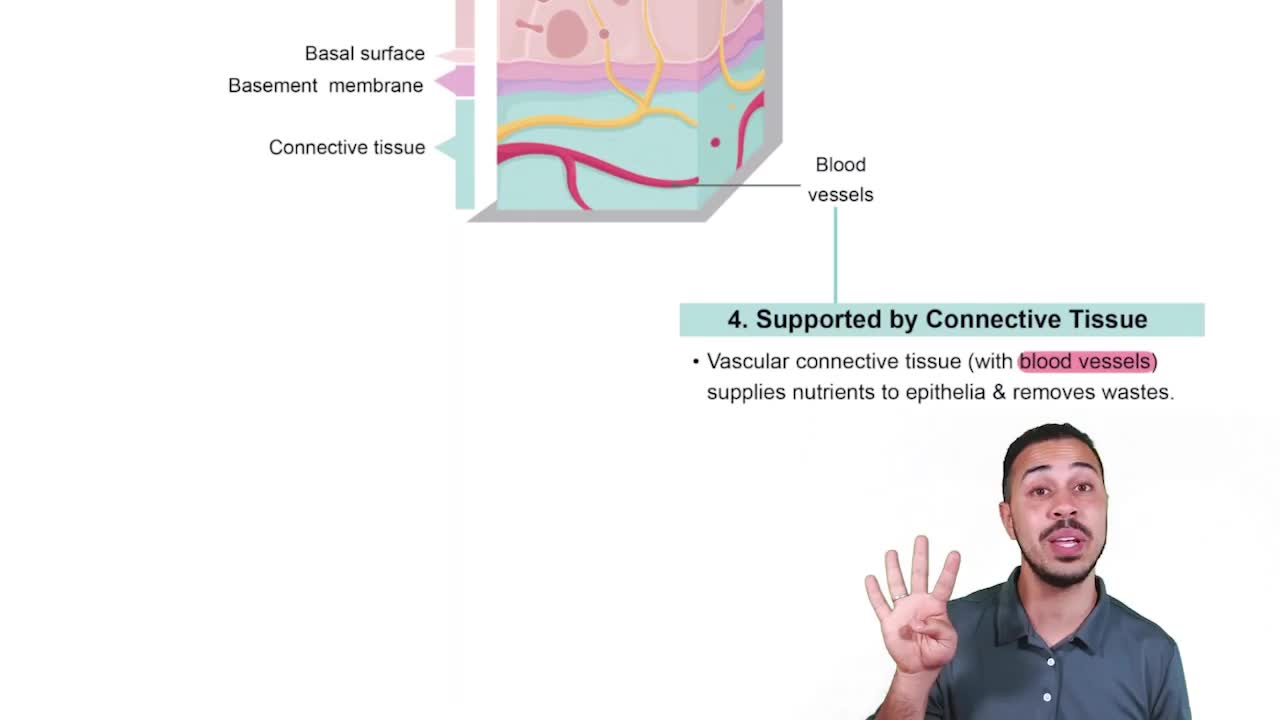
Characteristic 4: Supported by Connective Tissue