Ch. 11 Cardiovascular System
Marieb - Essentials of Human Anatomy & Physiology 13th Edition
Marieb13th EditionEssentials of Human Anatomy & PhysiologyISBN: 9780135624340Not the one you use?Change textbook
Chapter 11, Problem 11

More than one choice may apply.
Vessels involved in the circulatory pathway to and/or from the brain are the
a. Brachiocephalic trunk
b. Subclavian artery
c. Internal jugular vein
d. Internal carotid artery

Verified step by step guidance
1
Understand the circulatory pathway to and from the brain: The brain receives oxygenated blood primarily through arteries and returns deoxygenated blood via veins. Key vessels involved in this process include arteries like the internal carotid artery and veins like the internal jugular vein.
Analyze the role of the brachiocephalic trunk: The brachiocephalic trunk is a major artery that branches off the aortic arch and supplies blood to the right arm, head, and neck. It indirectly contributes to the brain's blood supply by giving rise to the right subclavian artery and the right common carotid artery.
Examine the subclavian artery: The subclavian artery supplies blood to the arms, but it also gives rise to the vertebral artery, which contributes to the brain's blood supply by forming part of the basilar artery system.
Evaluate the internal jugular vein: The internal jugular vein is a major vein that drains deoxygenated blood from the brain and returns it to the heart via the superior vena cava.
Assess the internal carotid artery: The internal carotid artery is one of the primary arteries supplying oxygenated blood directly to the brain, particularly to the anterior and middle portions of the brain.

Verified video answer for a similar problem:

This video solution was recommended by our tutors as helpful for the problem above.
Video duration:
2m
Was this helpful?

Key Concepts

Here are the essential concepts you must grasp in order to answer the question correctly.

Circulatory Pathway

The circulatory pathway refers to the network of blood vessels that transport blood to and from the brain. This includes arteries that carry oxygenated blood to the brain and veins that return deoxygenated blood to the heart. Understanding this pathway is crucial for identifying which vessels are involved in cerebral circulation.
Recommended video:
4:40
Alternative Pathway

Major Blood Vessels

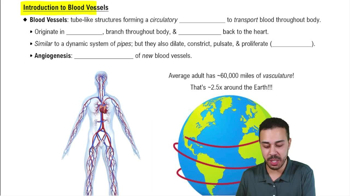
Major blood vessels such as the brachiocephalic trunk, subclavian artery, internal jugular vein, and internal carotid artery play significant roles in supplying blood to the brain. Each vessel has a specific function: the internal carotid artery supplies blood to the brain, while the internal jugular vein drains blood away from it. Recognizing these vessels is essential for answering questions about cerebral circulation.
Recommended video:
4:59
Blood Vessels

Anatomy of the Brain's Blood Supply

The anatomy of the brain's blood supply involves understanding the specific routes and connections of arteries and veins that serve the brain. This includes the Circle of Willis, which provides collateral circulation. Knowledge of this anatomy helps in comprehending how blood flow is maintained and what vessels are critical for brain function.
Recommended video:
6:37
Blood Supply to the Kidneys