Ch. 6 The Muscular System
Marieb - Essentials of Human Anatomy & Physiology 13th Edition
Marieb13th EditionEssentials of Human Anatomy & PhysiologyISBN: 9780135624340Not the one you use?Change textbook
Chapter 6, Problem 6

Which of the following muscles attach to the hip bones?
a. Rectus abdominis
b. Rectus femoris
c. Vastus medialis
d. Vastus lateralis

Verified step by step guidance
1
Step 1: Understand the anatomy of the hip bones. The hip bones, also known as the os coxae, consist of three fused bones: the ilium, ischium, and pubis. Muscles that attach to the hip bones typically connect to one or more of these regions.
Step 2: Analyze the Rectus abdominis. This muscle is part of the abdominal wall and attaches to the pubis of the hip bone. It plays a role in flexing the vertebral column and compressing abdominal contents.
Step 3: Examine the Rectus femoris. This muscle is part of the quadriceps group and originates from the anterior inferior iliac spine of the ilium, making it an attachment to the hip bone. It functions in hip flexion and knee extension.
Step 4: Investigate the Vastus medialis and Vastus lateralis. Both of these muscles are part of the quadriceps group, but they do not attach directly to the hip bones. Instead, they originate from the femur and insert into the patella via the quadriceps tendon.
Step 5: Conclude which muscles attach to the hip bones. Based on the analysis, the Rectus abdominis and Rectus femoris attach to the hip bones, while the Vastus medialis and Vastus lateralis do not.

Verified video answer for a similar problem:

This video solution was recommended by our tutors as helpful for the problem above.
Video duration:
1m
Was this helpful?

Key Concepts

Here are the essential concepts you must grasp in order to answer the question correctly.

Muscle Attachment

Muscle attachment refers to the points where muscles connect to bones, allowing for movement and stability. In the context of the hip bones, understanding which muscles attach here is crucial for comprehending their role in lower body movement and posture.
Recommended video:
Guided course
4:43
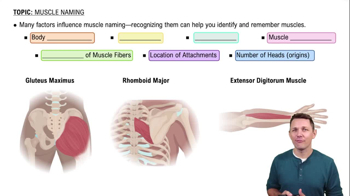
Muscle Naming

Hip Bones Anatomy

The hip bones, or pelvic bones, consist of the ilium, ischium, and pubis. These bones provide a stable base for the attachment of various muscles, including those involved in hip flexion, extension, and stabilization during activities such as walking and running.
Recommended video:
Guided course
2:21
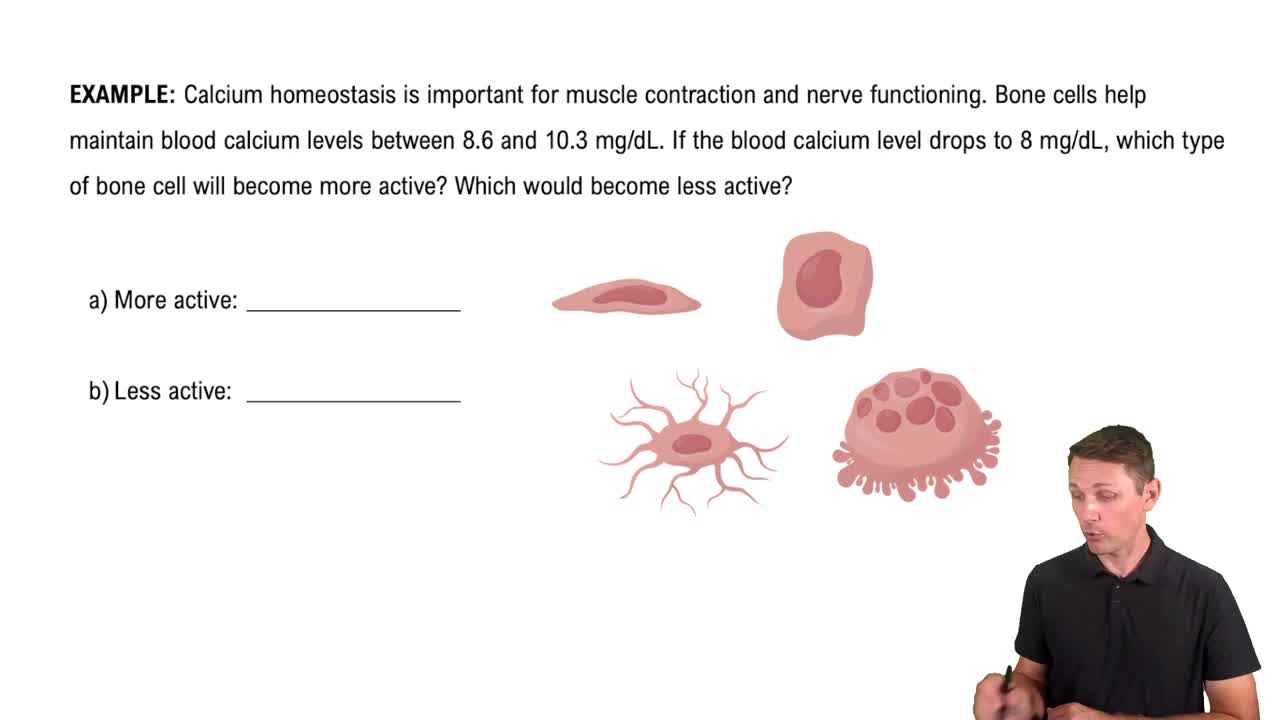
Microscopic Anatomy of Bones - Bone Cells Example 1

Quadriceps Group

The quadriceps group includes four muscles located at the front of the thigh, primarily responsible for knee extension. Among these, the rectus femoris is unique as it also crosses the hip joint, allowing it to assist in hip flexion, while the vastus medialis and vastus lateralis do not attach to the hip bones.
Recommended video:
06:04
Functional Groups