Ch. 3 Cells and Tissues
Marieb - Essentials of Human Anatomy & Physiology 13th Edition
Marieb13th EditionEssentials of Human Anatomy & PhysiologyISBN: 9780135624340Not the one you use?Change textbook
Chapter 3, Problem 3

Which of the following are possible functions of the glycoproteins in the plasma membrane?
a. Determination of blood groups
b. Binding sites for toxins or bacteria
c. Aiding the binding of sperm to egg
d. Increasing the efficiency of absorption

Verified step by step guidance
1
Understand the role of glycoproteins in the plasma membrane: Glycoproteins are proteins with carbohydrate chains attached, and they play a crucial role in cell-cell recognition, communication, and interaction with the external environment.
Analyze option (a): Glycoproteins on the surface of red blood cells are responsible for determining blood groups (e.g., ABO blood group system). This is a valid function of glycoproteins.
Analyze option (b): Glycoproteins can act as binding sites for toxins or bacteria, facilitating their attachment to the cell membrane. This is another valid function of glycoproteins.
Analyze option (c): Glycoproteins are involved in reproductive processes, such as aiding the binding of sperm to the egg during fertilization. This is also a valid function of glycoproteins.
Analyze option (d): Glycoproteins do not directly increase the efficiency of absorption; this function is more commonly associated with microvilli or transport proteins. Therefore, this option is unlikely to be a valid function of glycoproteins.

Verified video answer for a similar problem:

This video solution was recommended by our tutors as helpful for the problem above.
Video duration:
2m
Was this helpful?

Key Concepts

Here are the essential concepts you must grasp in order to answer the question correctly.

Glycoproteins

Glycoproteins are molecules composed of proteins and carbohydrates that are found on the surface of cells, particularly in the plasma membrane. They play crucial roles in cell recognition, signaling, and adhesion. The carbohydrate portion can vary greatly, allowing glycoproteins to serve as specific markers for cell identity, which is essential in processes like blood group determination.
Recommended video:
Guided course
04:39
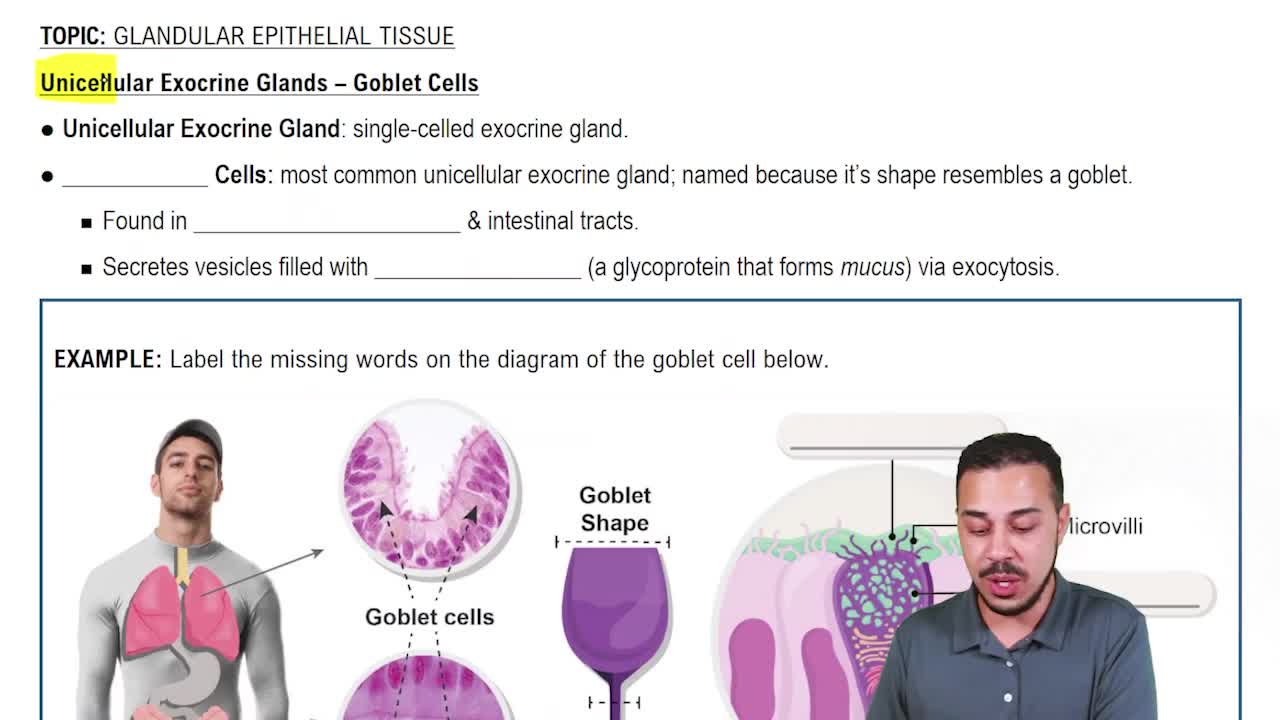
Unicellular Exocrine Glands - Goblet Cells

Cell-Cell Interaction

Cell-cell interaction refers to the ways in which cells communicate and adhere to one another, often mediated by glycoproteins. These interactions are vital for various biological processes, including fertilization, where glycoproteins on sperm bind to receptors on the egg. This specificity is crucial for successful reproduction and the formation of tissues.
Recommended video:
05:33
Cell Junctions

Receptor Function

Receptor function in the context of glycoproteins involves their role as binding sites for various molecules, including toxins, bacteria, and hormones. This binding can trigger cellular responses or facilitate entry into the cell, making glycoproteins essential for immune response and pathogen recognition. Their ability to bind specific ligands is key to maintaining cellular homeostasis and responding to environmental changes.
Recommended video:
06:04
Functional Groups