
Ch. 1 Introduction to Anatomy and Physiology
Amerman - Human Anatomy & Physiology 2nd Edition
Amerman2nd EditionHuman Anatomy & PhysiologyISBN: 9780136873822Not the one you use?Change textbook
Chapter 1, Problem L3.1

Ms. Norman presents to the clinic with right upper quadrant pain. Predict the organs and cavities that may be involved in causing her pain.

Verified step by step guidance
1
Identify the anatomical location of the right upper quadrant (RUQ) of the abdomen. The RUQ is part of the abdominal cavity and is located beneath the right side of the ribcage.
List the major organs located in the RUQ. These include the liver, gallbladder, a portion of the stomach, the duodenum (part of the small intestine), the head of the pancreas, the right kidney, and parts of the large intestine (such as the ascending colon).
Consider the common conditions or pathologies associated with each organ in the RUQ. For example, liver-related issues could include hepatitis or liver abscess, while gallbladder-related issues might include gallstones or cholecystitis.
Evaluate the role of the abdominal cavity and its subdivisions. The RUQ is part of the larger abdominal cavity, which houses digestive organs and is separated from the thoracic cavity by the diaphragm. Pain in this area could also involve referred pain from nearby structures.
Recommend further diagnostic steps to narrow down the cause of the pain. This could include imaging studies (e.g., ultrasound or CT scan), blood tests (e.g., liver function tests), or a physical examination to assess tenderness and other symptoms.

Verified video answer for a similar problem:

This video solution was recommended by our tutors as helpful for the problem above.
Was this helpful?

Key Concepts

Here are the essential concepts you must grasp in order to answer the question correctly.

Anatomy of the Right Upper Quadrant

The right upper quadrant (RUQ) of the abdomen contains several vital organs, including the liver, gallbladder, right kidney, and parts of the small and large intestines. Understanding the anatomical layout of these organs is crucial for diagnosing the source of pain, as each organ can present with distinct symptoms and conditions.
Recommended video:
Guided course
3:47
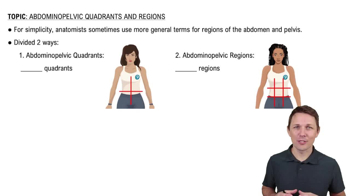
The 4 Abdominopelvic Quadrants

Common Causes of RUQ Pain

RUQ pain can arise from various conditions, such as gallstones, hepatitis, or peptic ulcers. Recognizing these common causes helps in predicting potential diagnoses and guiding further investigation, such as imaging or laboratory tests, to confirm the underlying issue.
Recommended video:
Guided course
3:47
The 4 Abdominopelvic Quadrants

Referred Pain

Referred pain occurs when pain is perceived in a location different from its source. For instance, issues with the liver or gallbladder may cause pain that is felt in the right shoulder or back. Understanding referred pain patterns is essential for clinicians to accurately assess and treat abdominal pain.
Recommended video:
1:36
The Cerebrum Example 3