
Mark the following statements as true or false. If a statement is false, correct it to make a true statement. The effects of negative feedback loops are amplified to create an escalating response.
Verified step by step guidance
1
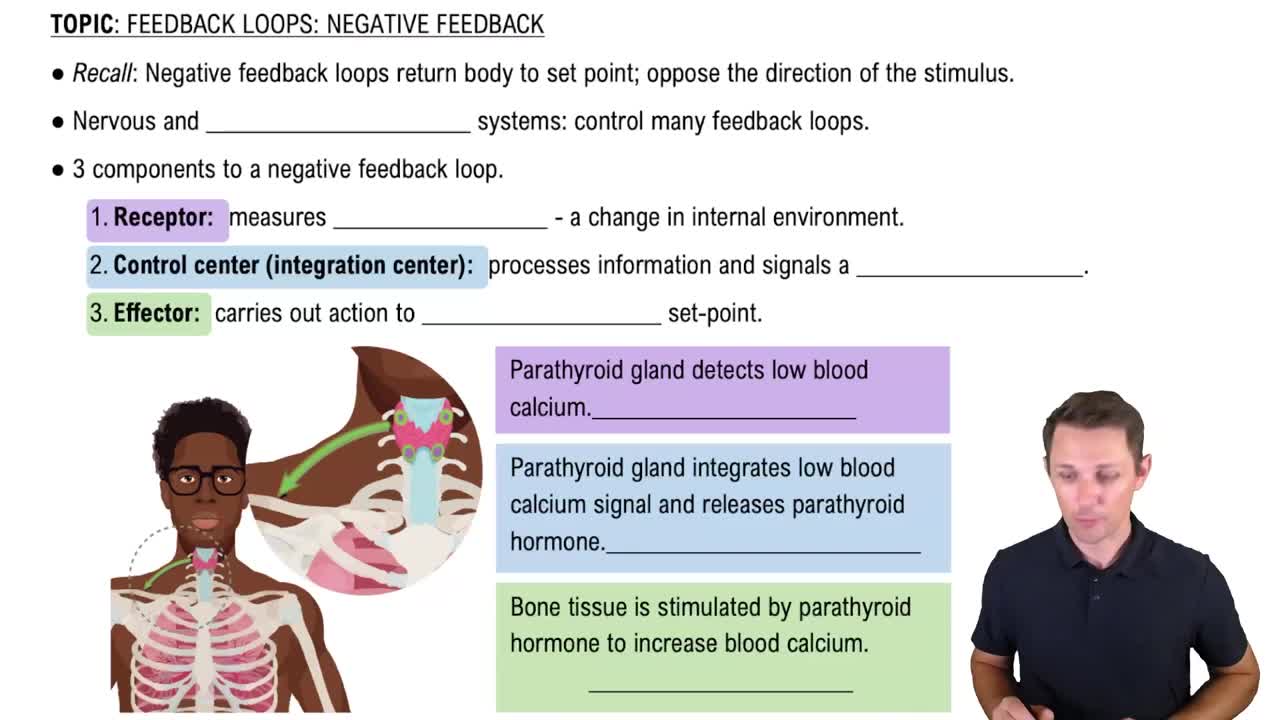
Understand the concept of negative feedback loops: Negative feedback loops are mechanisms in the body that work to maintain homeostasis by reversing a change in a physiological variable. For example, if a variable deviates from its set point, the negative feedback loop acts to bring it back to the set point, reducing the deviation.
Analyze the statement: The statement claims that the effects of negative feedback loops are amplified to create an escalating response. This description does not align with the definition of negative feedback loops, as they are designed to counteract changes, not amplify them.
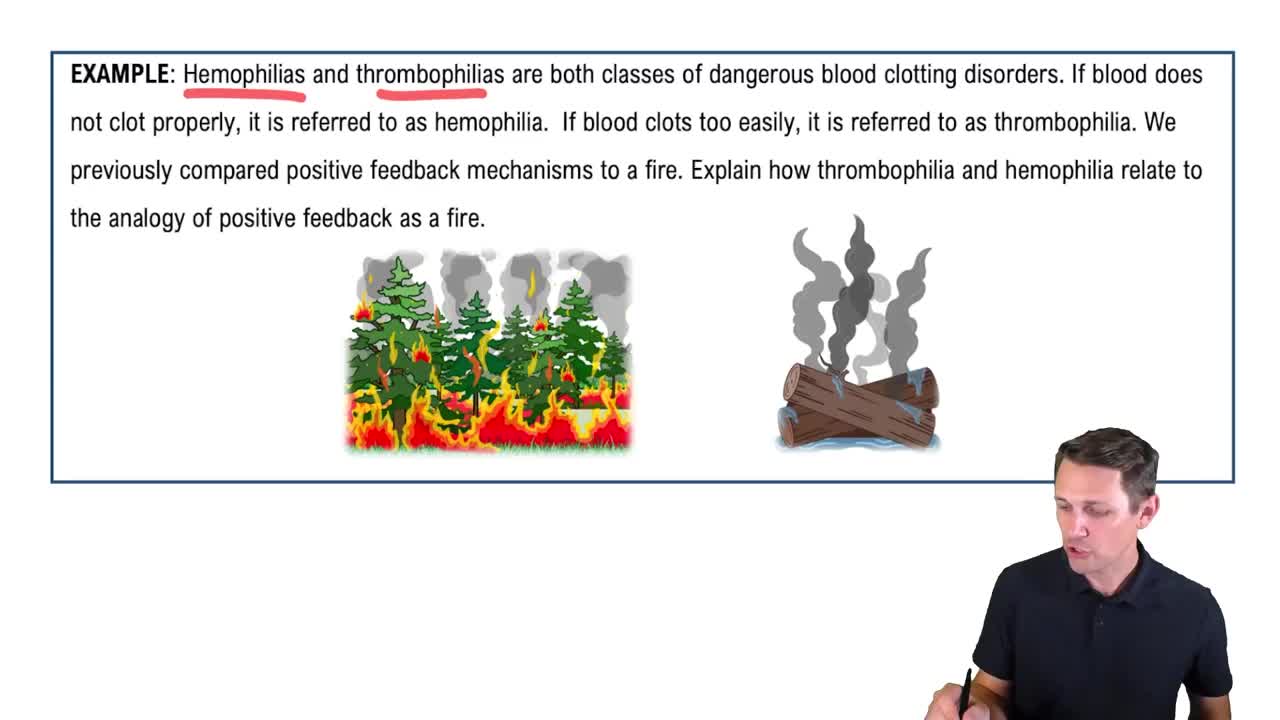
Identify the type of feedback described: The description in the statement more closely resembles a positive feedback loop, which amplifies changes and creates an escalating response. Examples of positive feedback include blood clotting and the release of oxytocin during childbirth.
Correct the false statement: Rewrite the statement to accurately describe negative feedback loops. For example, 'The effects of negative feedback loops are reduced to maintain homeostasis and stabilize physiological variables.'
Review the corrected statement: Ensure the revised statement aligns with the principles of negative feedback and accurately reflects its role in maintaining homeostasis.
Verified video answer for a similar problem:
This video solution was recommended by our tutors as helpful for the problem above
Play a video:
0 Comments
Key Concepts
Here are the essential concepts you must grasp in order to answer the question correctly.
Negative Feedback Loops
Negative feedback loops are mechanisms that counteract changes in a system, helping to maintain homeostasis. When a change occurs, these loops work to reduce the output or activity, bringing the system back to its set point. For example, in temperature regulation, if the body temperature rises, mechanisms like sweating are activated to cool it down.
Amplification refers to the process where a small change in a system leads to a larger response. This is characteristic of positive feedback loops, not negative ones. In contrast, negative feedback loops aim to stabilize a system by diminishing the effects of changes rather than escalating them.
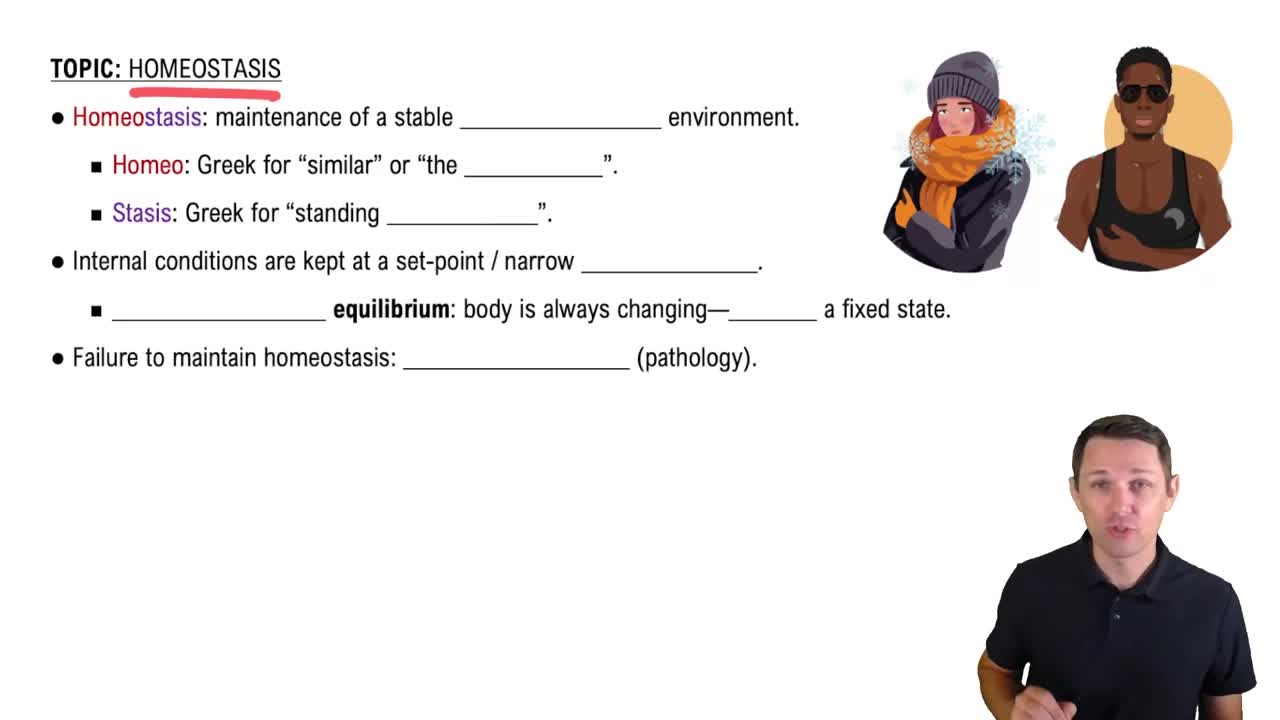
Homeostasis is the process by which biological systems maintain stability while adjusting to changing external conditions. It involves various feedback mechanisms, primarily negative feedback, to regulate internal environments, such as temperature, pH, and glucose levels, ensuring optimal functioning of organisms.